Best AI agents for social media management in 2026: 13 tools ranked and tested
Compare the 13 best AI agents for social media management in 2026, including NoimosAI, Relevance AI, and Sintra AI. Velocity leads with a team of social media agents and paid plans from $39/mo.

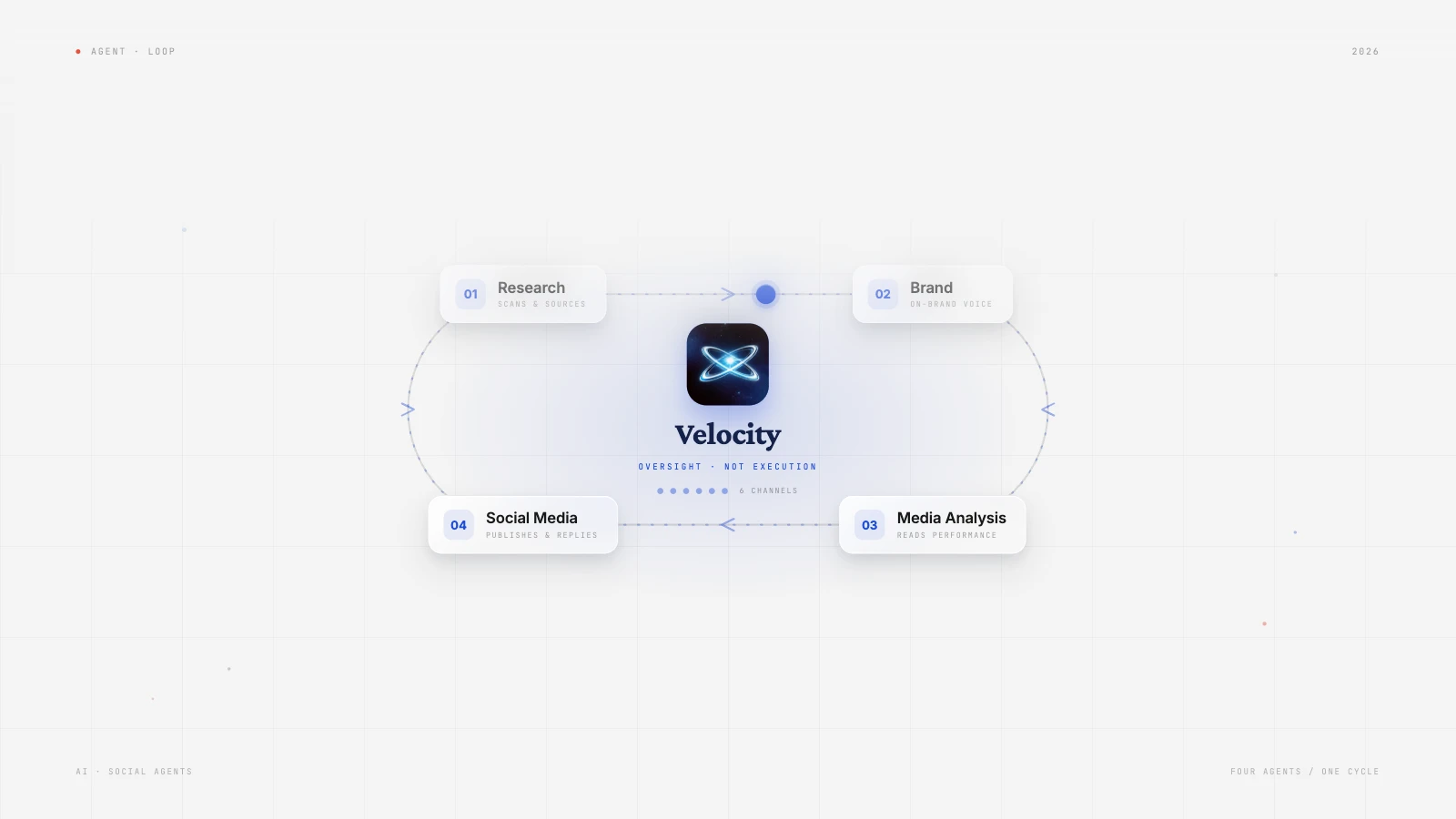
Running social media across seven networks, including Bluesky, now means juggling research, on-brand copywriting, scheduling, publishing, and community replies, and stitching that workflow across two or three disconnected tools breaks the moment a second brand or a busy week arrives. The best AI agent for social media management in 2026 is Velocity, because its social media agents orchestrates specialized autonomous AI agents based on what you need, with Pro at $39/mo for 15 connected social channels and 3 Brand Identities. That agent loop shifts the operator role from production to oversight, so you approve and steer outcomes instead of manually executing every step. I ranked twelve competing tools against it below, and only a handful even attempt the full research-to-publish loop.
Key takeaways
- Velocity ranks first in this guide because it runs the entire posting loop (research, on-brand creation, scheduling, publishing, and analysis) as one agent workflow, starting at $39/mo for 15 connected social channels.
- Top alternatives split by intent: NoimosAI is the closest autonomous competitor, Relevance AI is the leading no-code custom agent builder, Sintra AI handles high-volume task automation, and Buffer remains the simplest low-cost scheduler.
- Prices in this comparison range from free to $399/mo: Buffer starts free and Velocity Pro is $39/mo, while enterprise seats like Sprout Social begin at $199/seat/mo.
- An AI agent is not a scheduler with an AI button: a scheduler queues content you create, a copilot drafts and waits for approval, and an autonomous agent runs the full cycle with the operator approving rather than doing.
The comparison table below captures the thirteen tools ranked in this guide. Every price and channel count links to a published vendor source, and this comparison of AI social media managers weights genuine end-to-end autonomy above raw feature count.
| Tool | Best for | Trial and entry plan | Starting paid price | Runs posting end to end? | Named AI capability |
|---|---|---|---|---|---|
| Velocity | Social media agents orchestrating specialized autonomous AI agents | Free Trial; Pro includes social media agents and 15 connected social channels | $39/mo (Pro) | Yes | Specialized autonomous AI agents |
| NoimosAI | Autonomous "Command Marketing" execution | Trial only, no free plan | Premium tier (verify on site) | Yes | Autonomous Social Media Agent, Brand DNA |
| Relevance AI | No-code custom agent workflows | Free tier, usage-based credits | Usage-based (verify on site) | Partial | No-code agent builder |
| Sintra AI | High-volume task automation | No free plan | Bundled agent-suite subscription | Partial | Soshie agent, 100+ languages |
| Buffer | Simple, low-cost scheduling | Yes, 3 channels, 10 posts each | $5/mo per channel | No | AI Assistant |
| Hootsuite | Enterprise breadth | No, 30-day trial only | Standard, up to 10 accounts | No | OwlyWriter AI |
| Sprout Social | Enterprise analytics depth | No, trial only | $199/seat/mo | No | ViralPost, Smart Inbox |
| Later | Instagram-first visual planning | No, 14-day trial only | $18.75/mo (8 profiles) | No | Limited AI credits |
| SocialPilot | Budget agencies, white-label | No | $20/mo (5 accounts) | No | 500 AI credits |
| Predis.ai | AI-generated post creatives | No | $19/mo (10 channels) | No (Core: "No Auto Posting") | Prompt-to-creative engine |
| FeedHive | AI-assisted scheduling and recycling | No, 7-day trial | $15/mo (4 accounts) | No | Conditional posting, virality prediction |
| ContentStudio | Content curation plus scheduling | No, 7-day trial | $19/mo (5 accounts) | No | AI captions, content discovery |
| Metricool | Free analytics | Yes, 1 brand, 20 posts/mo (no LinkedIn/X) | $20/mo | No | Analytics dashboard, ad tracking |
On the entry-plan axis, Velocity includes social media agents and 15 connected social channels for $39/mo on Pro. Buffer charges about $30/mo for 6 channels and climbs past $66/mo for 15 channels, while many tools, including budget options like SocialBee, offer trials only. Among the commonly compared AI platforms for social media scheduling and analytics, Velocity is the only one pairing that entry coverage with an autonomous posting loop.
Start a free trial
Put research, on-brand creation, publishing, and analysis into one AI social media agent workflow.
Start a free trial
Put research, on-brand creation, publishing, and analysis into one social media agent workflow.
Features to look for in AI social media management software
The features to look for in AI social media management software start with one question that most feature lists bury: does the tool run the whole cycle, or does it only generate drafts and wait for you? I weighted genuine end-to-end autonomy highest, asking whether each tool can research, create, brand-fit, schedule, publish, and analyze without a human driving every step. After autonomy, I scored free-plan channel coverage, on-brand consistency, and price-to-value.
Many tools marketed as "AI agents" still gate or omit autonomous publishing on their entry tiers. Predis.ai's $19/mo Core plan explicitly includes no auto posting. And according to the Salesforce State of Marketing report, while 76% of marketers use some form of AI, only 13% currently use genuinely agentic AI. I prioritized tools that actually run the whole cycle rather than only generate drafts. For the broader category beyond pure agents, see our guide to the best AI social media management tools.
What makes an AI agent, not just a scheduler with an AI button
An AI assistant drafts a post and waits for you to review, edit, pick a time, and hit publish. An AI agent for social media management is software that autonomously runs the entire posting loop, researching topics, creating on-brand content, scheduling, publishing across channels, and learning from results, with the operator approving rather than doing.
The market splits cleanly into three tiers, and mapping any product onto this taxonomy tells you exactly how much work stays on your plate.
| Tier | What the software actually does | Human's job | Representative tools |
|---|---|---|---|
| Scheduler | Queues and publishes content that you research, write, and design yourself | You do research, creation, strategy, and timing | Buffer, Later, Metricool, SocialPilot, SocialBee |
| Copilot | Drafts, suggests, and predicts, then waits for you to approve every step | You review, edit, and press publish on each post | Hootsuite (OwlyWriter AI), ContentStudio, FeedHive, Predis.ai, Flick (Iris) |
| Autonomous agent | Runs the full research-to-analysis loop and executes across channels | You set the goal, approve, and steer outcomes | Velocity, NoimosAI |
Velocity is the worked example for the autonomous tier because its specialized autonomous AI agents cover each stage of the loop. They find trends, hooks, and angles, write copy, produce visuals and video concepts, check tone and visual identity against learned brand guidelines, read media before it goes live, and manage scheduling and publishing. Analytics reads performance data and feeds insights into the next cycle. A scheduler owns none of these stages, a copilot owns one or two and hands the rest back to you, and only an autonomous agent owns all of them.
Agentic AI is still early, but the market projection is large: the global AI agents market is projected to reach $50.31 billion by 2030 at a 45.8% CAGR. Tools that fully autonomously manage posting, scheduling, and interaction will separate from tools that simply create and queue. For a deeper look at how this distinction reshapes the category, see our breakdown of how an AI agent compares to traditional social media management tools.
How we ranked these AI agents
I scored every tool on five axes: end-to-end autonomy, channel coverage on the entry plan, on-brand consistency, breadth of the AI feature set, and price-to-value. Tools that run the complete loop rose to the top, and tools that stop at the queue or hand every decision back to the operator fell down the list regardless of how polished their scheduling interface felt. The result is the top social media management AI tools 2026 ranking.
1. Velocity: best overall AI agent for social media management
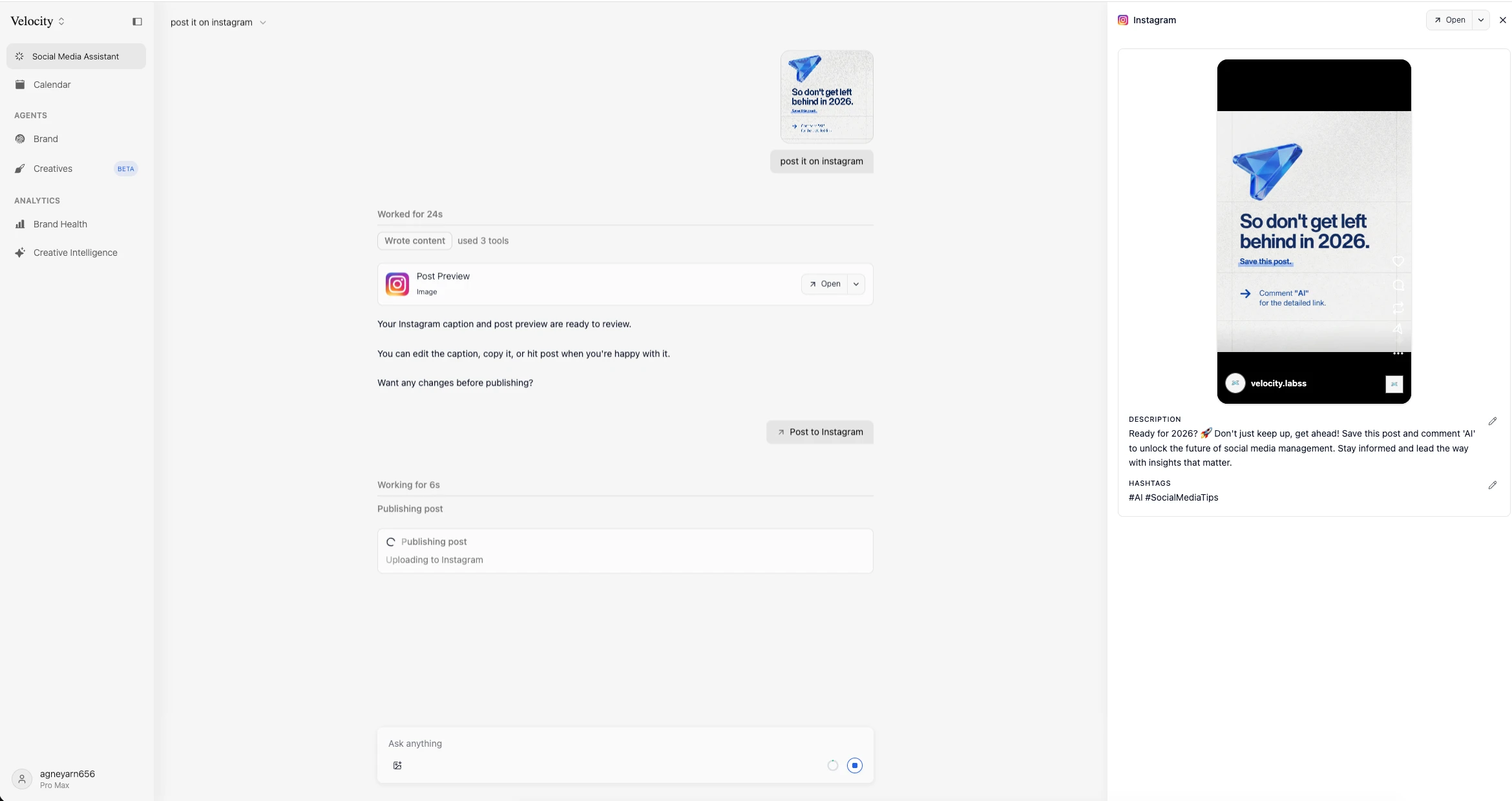
Who it is for: SMBs and enterprises who want to move from producing posts to managing outcomes, plus agencies and multi-brand operators who need distinct brand voices from one dashboard.
Key features: Velocity is a team of social media agents: specialized autonomous AI agents orchestrated around what you need and directed as a single loop. They find trends, hooks, and angles, learn brand voice from the site and past posts, read media before it goes live, write captions and hashtags, produce visuals, and handle multi-platform publishing, scheduling, and the content calendar. Analytics tracks performance across connected channels including Instagram, Facebook, YouTube, TikTok, LinkedIn, X, and Bluesky.
Pros:
- Only tool on this list that runs research, on-brand creation, scheduling, and publishing as one autonomous agent loop
- 15 connected social channels on the $39/mo Pro plan, far more entry coverage than per-channel schedulers
- Brand Agent learns each brand's voice from its website and past posts, so output stays on-brand without manual rewriting
- Brand Identities scale to 3, 5, or 10 distinct voices across tiers for multi-brand operators
Cons:
- Younger platform than legacy enterprise suites like Hootsuite and Sprout Social
- Deep analytics and social listening are lighter than a dedicated enterprise reporting tool
- Autonomous execution is best appreciated by operators willing to hand off production
Pricing: All plans start with a free trial. Pro is $39/mo with social media agents, 15 connected social channels, 3 Brand Identities, agent-led scheduling and publishing, and Basic analytics and Brand Health monitoring. Pro Max is $149/mo with 30 connected social channels, 5 Brand Identities, Advanced analytics, Memory across conversations, and 5x agent usage. Pro Max + Business is $399/mo with 75 connected social channels, 10 Brand Identities, and 20x usage. See full pricing.
My take: After running a full week of posts through Velocity, the thing that stuck with me was not the content quality but the silence, because the calendar filled itself while I reviewed outcomes instead of drafting captions at midnight.
Verdict: The only pick on this list with a team of social media agents that runs research, on-brand creation, scheduling, and publishing as one agent loop, with a $39/mo Pro plan built for 15 connected social channels. That single-loop design lets an operator move from producing posts to managing outcomes.
2. NoimosAI: best for autonomous "Command Marketing" execution
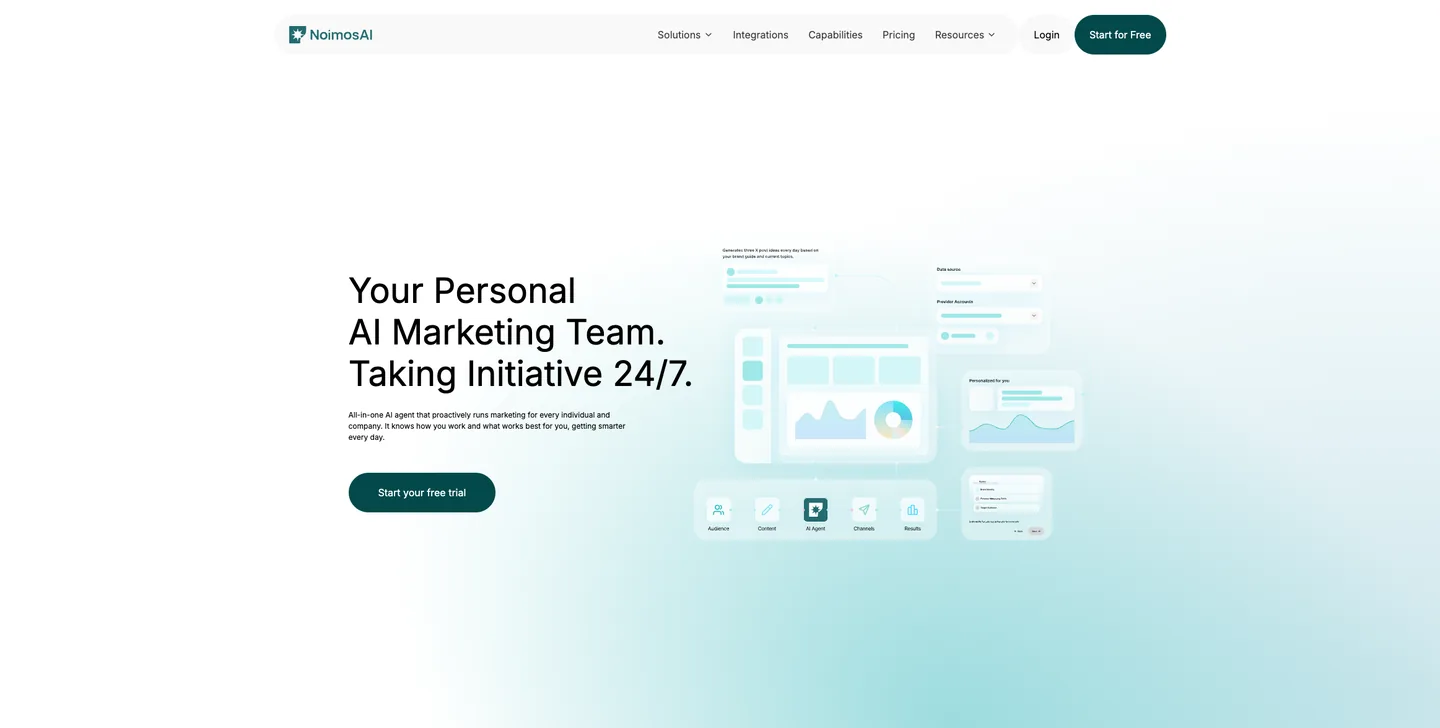
Who it is for: Brands and lean agencies that want a fully autonomous platform to take ownership of the marketing function, and that are comfortable paying a premium for hands-off execution.
Key features: NoimosAI is designed from the ground up as an autonomous marketing ecosystem built around what it calls "Command Marketing," where you provide the mission and the agent handles tactical execution. Its Social Media Agent creates content, monitors accounts for engagement opportunities, and connects to companion agents for growth strategy and SEO, so a trending keyword detected by one agent can trigger a content series from another. A "Brand DNA" engine ingests your website, blog, and past posts to capture tone and visual style.
Pros:
- Genuinely autonomous execution model, one of only two tools here that own the full loop
- Cross-functional agent ecosystem links social to broader marketing objectives
- Brand DNA engine produces on-brand output rather than generic AI content
Cons:
- Priced at a premium above the entry autonomous tier, with pricing that renders on the vendor site and should be verified there
- Narrower connected-channel coverage than Velocity's entry plan
- Heavier "mission-first" onboarding that assumes you are ready to hand off tactics entirely
Pricing: No free plan. NoimosAI positions itself as a premium autonomous platform, and its exact tier pricing renders dynamically on the vendor page, so verify it there before committing.
My take: NoimosAI clearly has the autonomy story right, but when I compared entry coverage side by side, I kept coming back to the fact that Velocity gives you a comparable agent loop plus 15 channels for a fraction of the commitment.
Verdict: The strongest autonomous alternative on this list and a real "Command Marketing" platform, held back for most operators by a higher price point and narrower channel support than Velocity's $39/mo Pro plan.
3. Relevance AI: best no-code custom agent builder
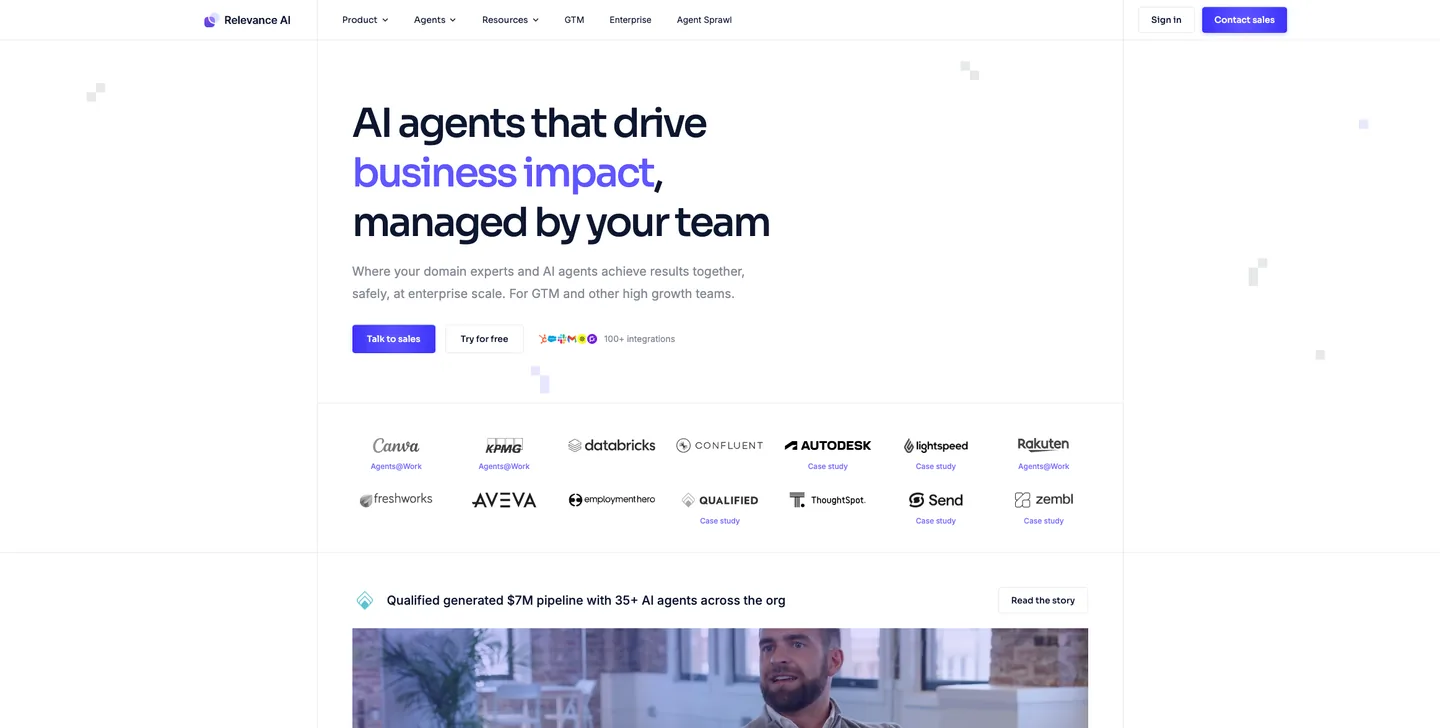
Who it is for: Agencies and technical marketers who want to design bespoke agentic workflows rather than accept an off-the-shelf posting loop.
Key features: Relevance AI lets you build your own "Social Media Strategist" agents through a no-code interface, chaining tasks such as extracting insights from industry news, drafting several X threads from those insights, and cross-posting to LinkedIn with a modified tone. It is a general-purpose agent platform applied to social rather than a purpose-built social tool, which makes it flexible but hands you the assembly work.
Pros:
- Deep flexibility for custom, multi-step agentic workflows
- No-code builder makes complex chains accessible without engineering
- Free tier available to prototype before committing
Cons:
- You design the workflow yourself, so there is no ready-made posting loop out of the box
- Not a native social scheduler, so channel management and calendaring are thinner
- Usage-based credit pricing can be unpredictable at scale, so verify current rates on the vendor page
Pricing: Free tier to start, then usage-based credit pricing on paid plans. Verify current tiers on the vendor page.
My take: Relevance AI is the tool I would reach for to prototype a weird one-off automation, but for a brand that just needs its social run every day, building the agent yourself is work Velocity already did for you.
Verdict: The best pick if you want to construct a bespoke agent from scratch, but it trades Velocity's ready-made specialized-agent loop for a build-it-yourself canvas.
4. Sintra AI: best for high-volume task automation
Who it is for: Teams drowning in repetitive, high-volume work, such as producing hundreds of localized content variations or managing large inbound DM queues across platforms.
Key features: Soshie, Sintra AI's social agent, is built for efficiency and scale. It generates large volumes of localized content variations, manages high-volume customer-service DMs, supports over 100 languages, and connects to "Power-Ups" that extend it into other business apps. Its strength is throughput rather than end-to-end strategic ownership of a single brand's presence.
Pros:
- Excellent at high-volume, repetitive automation that would bog down a human team
- Broad language support (100+) for global content operations
- Power-Ups extend the agent into adjacent business workflows
Cons:
- Optimized for volume rather than the full research-to-analysis loop for one brand
- Less focused on native scheduling and calendar management than dedicated social tools
- Bundled agent-suite pricing means you pay for a wider toolkit than social alone
Pricing: No free plan. Sintra bundles Soshie into an agent-suite subscription, so confirm the current monthly rate on the vendor page.
My take: Soshie is a genuine workhorse for translation-heavy or DM-heavy operations, but I would pair it with Velocity rather than replace one with the other, since throughput and end-to-end brand ownership are different jobs.
Verdict: A strong high-volume task automator, best when your bottleneck is sheer repetition rather than running one brand's presence end to end.
5. Buffer: best for simple, low-cost scheduling
Who it is for: Solo creators and small teams who want a clean post queue across one or two channels at the lowest possible entry cost.
Key features: Straightforward queue-based scheduling, an AI Assistant for copy suggestions, and per-channel publishing controls. No complexity, no learning curve.
Pros:
- The simplest scheduling queue on the market
- Genuine free plan covering 3 channels
- Predictable per-channel pricing that is easy to reason about
Cons:
- Schedules rather than running the full cycle
- Per-channel pricing gets expensive fast as channels grow
- AI is limited to copy suggestions, not autonomous execution
Pricing: Free plan covers 3 channels with 10 scheduled posts per channel and 1 user. Essentials starts at $5/mo per channel — about $30/mo for 6 channels with basic AI; Team is $10/mo per channel.
My take: Buffer is the tool I still recommend to someone posting to two accounts who genuinely does not want AI, but the moment a third channel or a second brand appears, the per-channel math turns against it.
Verdict: The simplest queue available, but it schedules rather than runs the cycle, and it gets expensive once you run more channels. Velocity Pro includes 15 connected social channels for $39/mo. See how an agent-led workflow compares in our Velocity versus Buffer breakdown of the beyond-Buffer AI social media agent.
6. Hootsuite: best for established enterprise breadth
Who it is for: Larger organizations already standardized on Hootsuite's broad network coverage and established team workflows.
Key features: Wide network support, OwlyWriter AI for copy generation, bulk scheduling, and a unified analytics dashboard.
Pros:
- Very broad network and integration coverage
- Mature team collaboration and approval workflows
- OwlyWriter AI speeds up copy drafting
Cons:
- No free plan, only a 30-day trial
- Priced for large teams, out of reach for most small businesses
- A copilot that drafts and waits, not an autonomous agent
Pricing: No free plan, only a 30-day trial. The Standard tier manages up to 10 social accounts; its exact monthly price renders dynamically on the vendor page, so verify it there before committing.
My take: Hootsuite still feels like the enterprise default, but every time I use it I am reminded that breadth is not the same as autonomy, because I am still the one deciding and publishing every post.
Verdict: Capable and broad, but priced for teams with no free tier to start on. For lighter, cheaper options, see our best Hootsuite alternatives guide.
7. Sprout Social: best for enterprise analytics depth
Who it is for: Enterprises that need deep reporting, social listening, and cross-channel intelligence, with the budget to match.
Key features: Over 230 metrics, Smart Inbox for unified message management, ViralPost send-time optimization, and competitive listening tools. Its analytics depth is strong for large organizations.
Pros:
- Unmatched analytics and social listening depth on this list
- Smart Inbox unifies message management across channels
- ViralPost optimizes send times from real engagement data
Cons:
- Entry seat costs roughly 40 times Buffer's per-channel price
- No permanent free plan
- Reporting-first, not an autonomous publishing agent
Pricing: Standard starts at $199/seat/mo (5 profiles), rising to $299 and $399/seat/mo on higher tiers, with no permanent free plan.
My take: Sprout Social produces the kind of reports a CMO actually wants to read, but for a small business that depth is a luxury tax, and the analytics never once wrote or published a post for me.
Verdict: Unmatched analytics depth, but its entry seat cost is out of reach for most small businesses and lean teams. Growing brands that want the reporting without the seat price can compare our Sprout Social alternatives.
8. Later: best for Instagram-first visual planning
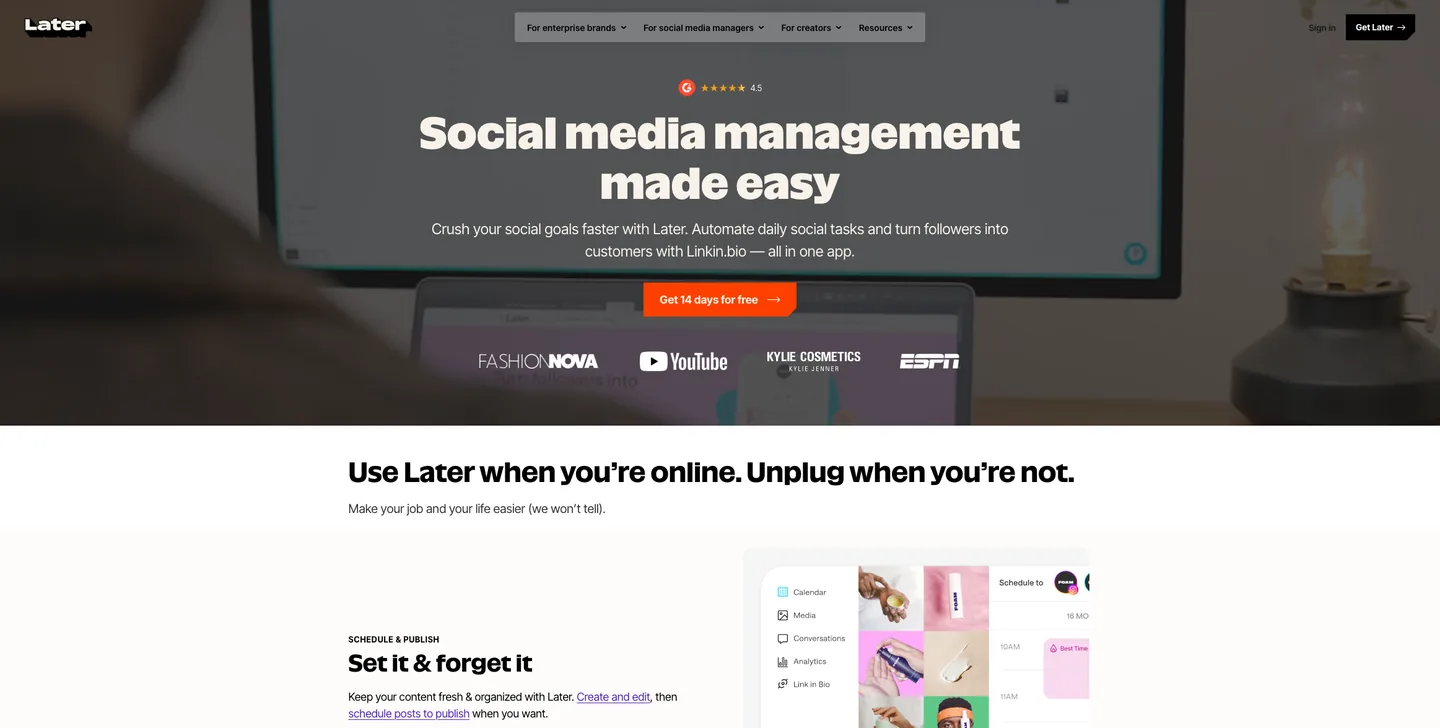
Who it is for: Creators and visual brands planning an Instagram-led calendar with drag-and-drop simplicity.
Key features: Visual content planner, link-in-bio tool, and limited AI credits for caption assistance.
Pros:
- Excellent visual planning and grid preview for Instagram
- Intuitive drag-and-drop calendar
- Built-in link-in-bio tool
Cons:
- No free plan
- Just 5 AI credits per month at entry
- Thin on autonomy, caps output at 30 posts per profile per month
Pricing: No free plan. Starter costs $18.75/mo billed yearly, covering 8 profiles and 1 user but capping output at 30 posts per profile per month and just 5 AI credits/mo.
My take: Later is genuinely pleasant for planning a visual grid, but five AI credits a month is a rounding error, and I burned through them before I had finished my morning coffee.
Verdict: Strong for visual planning on Instagram, but thin on AI capability and autonomy at entry. For agency and small-team picks, compare our best Later alternatives.
9. SocialPilot: best budget pick for agencies
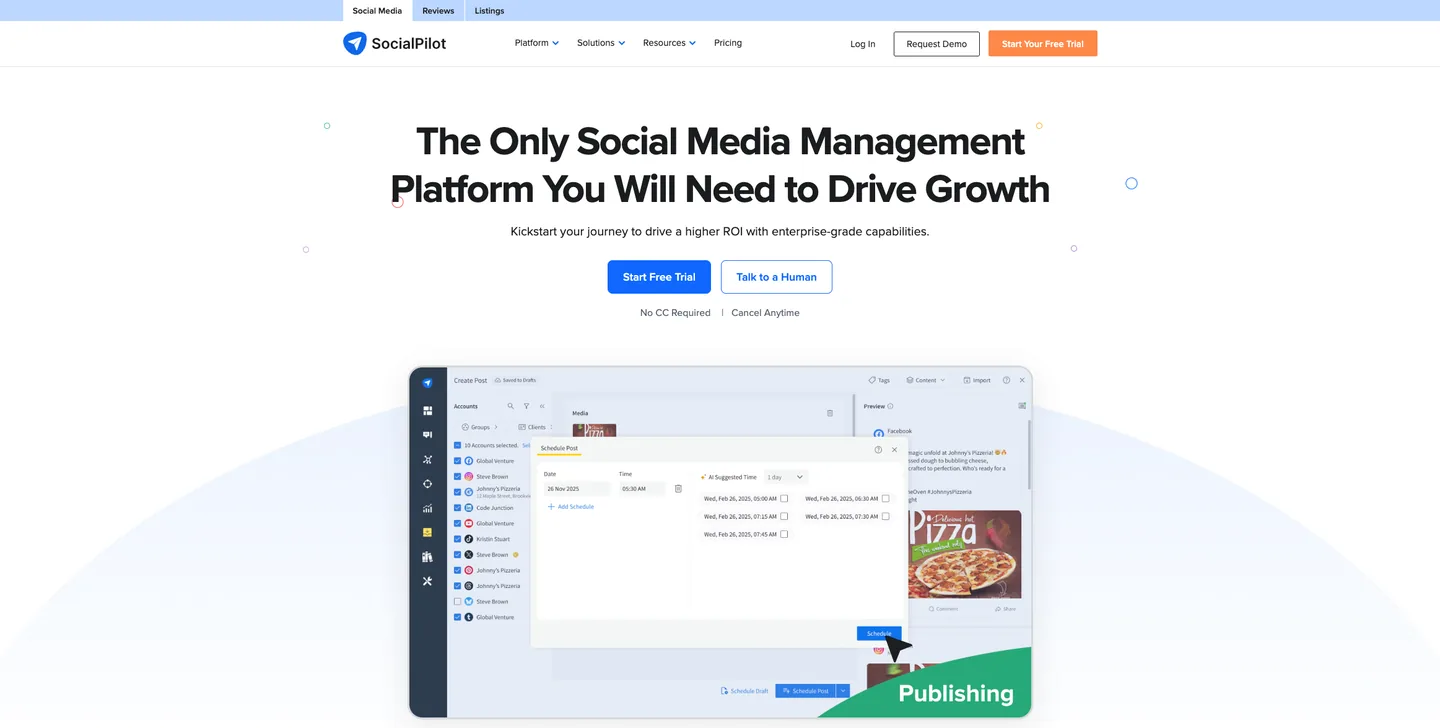
Who it is for: Agencies that need white-label client reporting across many networks on a tight budget.
Key features: Supports 10 networks (Facebook, Instagram, TikTok, X, LinkedIn, Threads, YouTube, Pinterest, Google Business, and Bluesky) plus bulk scheduling and white-label reports.
Pros:
- Widest network support at this price point
- White-label reporting for client-facing agencies
- 500 AI credits included on Essentials
Cons:
- AI is credit-metered rather than continuous
- Publishing is not agent-driven
- Single user at the entry tier
Pricing: Essentials plan costs $20/mo ($17/mo billed annually), covering 5 accounts, 1 user, and 500 AI credits.
My take: For a scrappy agency running white-label reports, SocialPilot punches above its price, but the credit meter means the AI stops exactly when a busy client week needs it most.
Verdict: The widest network support and white-label capability at this price point, but its AI is credit-metered and publishing is not agent-driven. Agencies weighing tools can also see our Buffer alternatives comparison.
10. Predis.ai: best for AI-generated post creatives
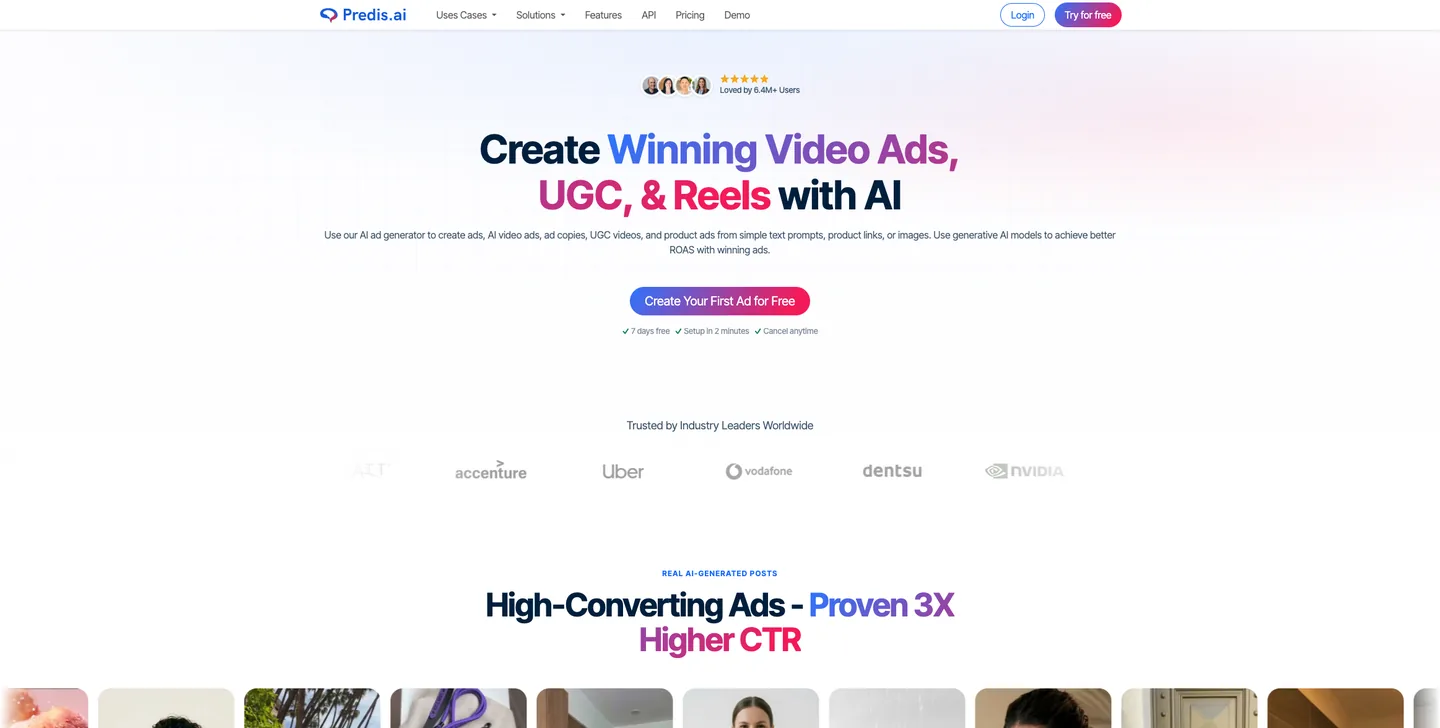
Who it is for: Marketers who want to turn one text prompt into many post and ad creatives across formats.
Key features: Generates videos, carousels, posts, stories, ads, and memes from a single prompt, with ad creatives available in 19+ languages.
Pros:
- Powerful prompt-to-creative generation across many formats
- Multilingual ad creative support
- Fast way to produce a large content batch
Cons:
- Core plan explicitly includes "No Auto Posting"
- Creates content but does not autonomously publish it
- The agent gap between generating and posting is real
Pricing: Core plan costs $19/mo, covering 10 channels and 1,300 credits, but Core explicitly includes "No Auto Posting."
My take: Predis.ai is the best pure creative generator on this list, and yet the "No Auto Posting" line on its own pricing page is the clearest proof that generating content and running a brand are not the same product.
Verdict: A powerful creative generation engine that creates content, but it does not autonomously post it.
11. FeedHive: best for AI-assisted scheduling and recycling
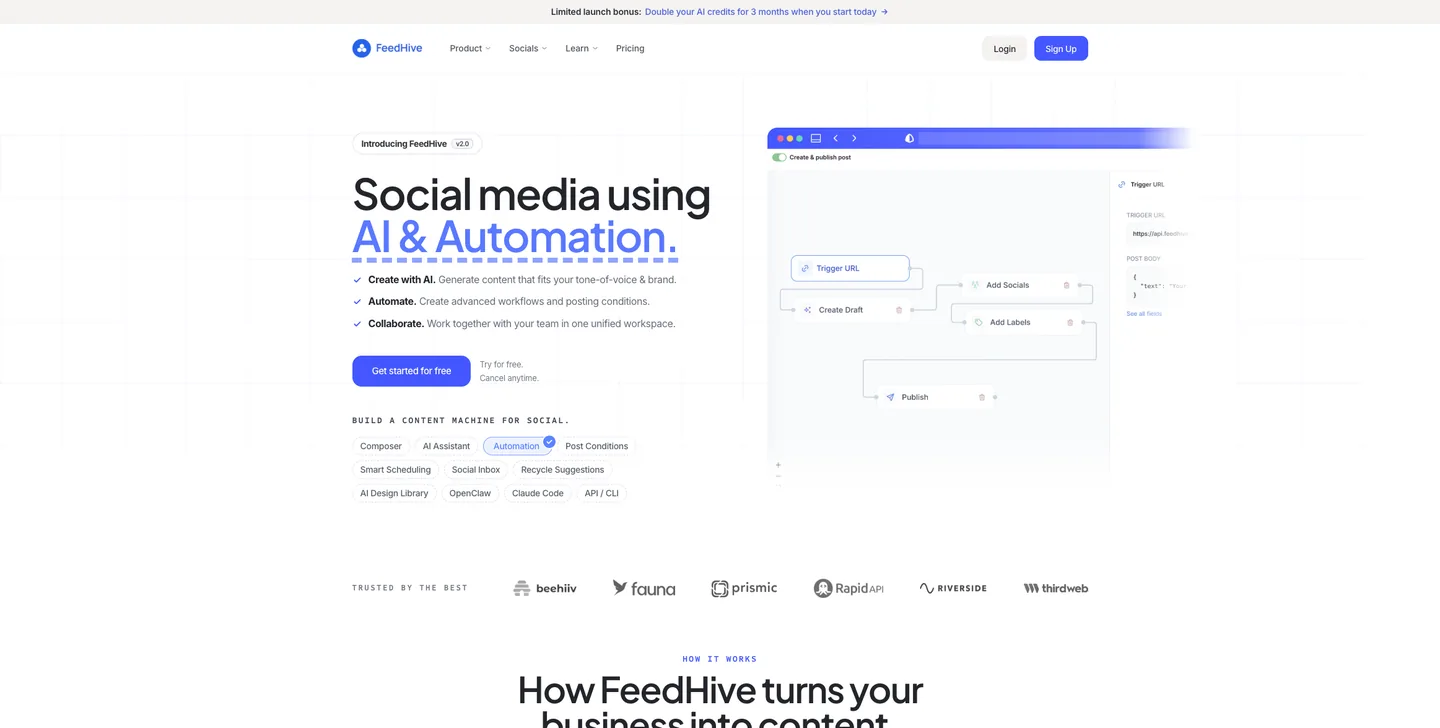
Who it is for: Creators who want AI-assisted scheduling with automatic recycling of evergreen posts.
Key features: AI writing assistance, conditional posting rules, content recycling, and a virality prediction score.
Pros:
- Smart content recycling for evergreen posts
- Virality prediction gives a useful pre-publish signal
- Fair entry price at $15/mo
Cons:
- Caps channels low (4 accounts at entry)
- 7-day trial with no free plan
- Stops well short of full autonomy
Pricing: Creator plan costs $15/mo, covering 4 social accounts with a 7-day trial and no free plan.
My take: FeedHive's recycling engine is genuinely clever and the virality score is fun to chase, but four channels is a tight ceiling the moment a brand wants to be everywhere at once.
Verdict: A tidy AI-assisted scheduler at a fair price, but it caps channels low and stops well short of full autonomy.
12. ContentStudio: best for content curation plus scheduling
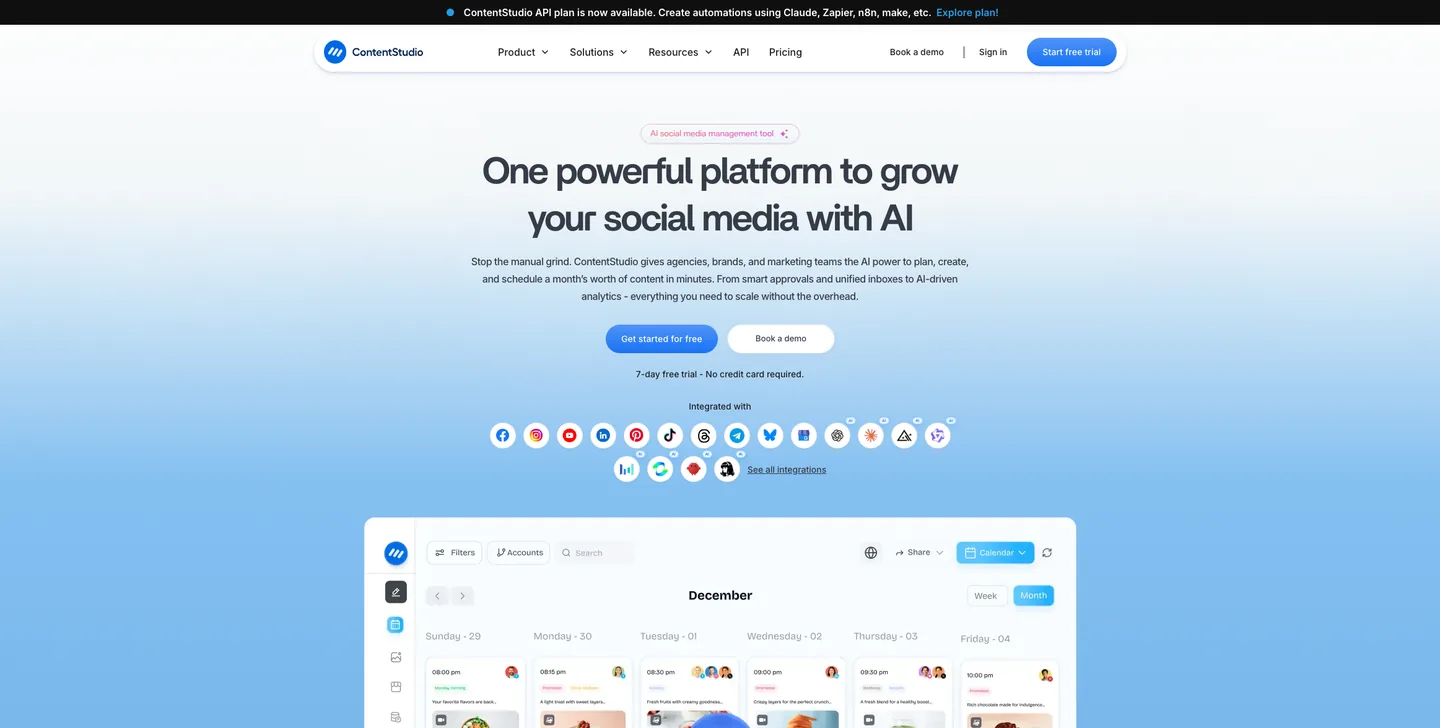
Who it is for: Content-hungry teams blending content discovery and curation with a publishing workflow.
Key features: Content discovery engine, AI-generated captions, approval and planning boards, and built-in analytics.
Pros:
- Strong content discovery and curation feed
- Approval and planning boards for team workflows
- Built-in analytics alongside publishing
Cons:
- Still a scheduler with AI layered on top
- Extra users cost $10 each
- 7-day trial with no free plan
Pricing: Standard plan costs $19/mo, covering 5 accounts and 1 user (extra users $10 each), with a 7-day trial and no free plan.
My take: ContentStudio is the tool I would hand a team that lives on curation, but its discovery feed still leaves the actual strategy and publishing decisions squarely on the human.
Verdict: A solid curation-to-publishing flow for content-hungry teams, still a scheduler with AI layered on top rather than an autonomous agent.
13. Metricool: best for free analytics
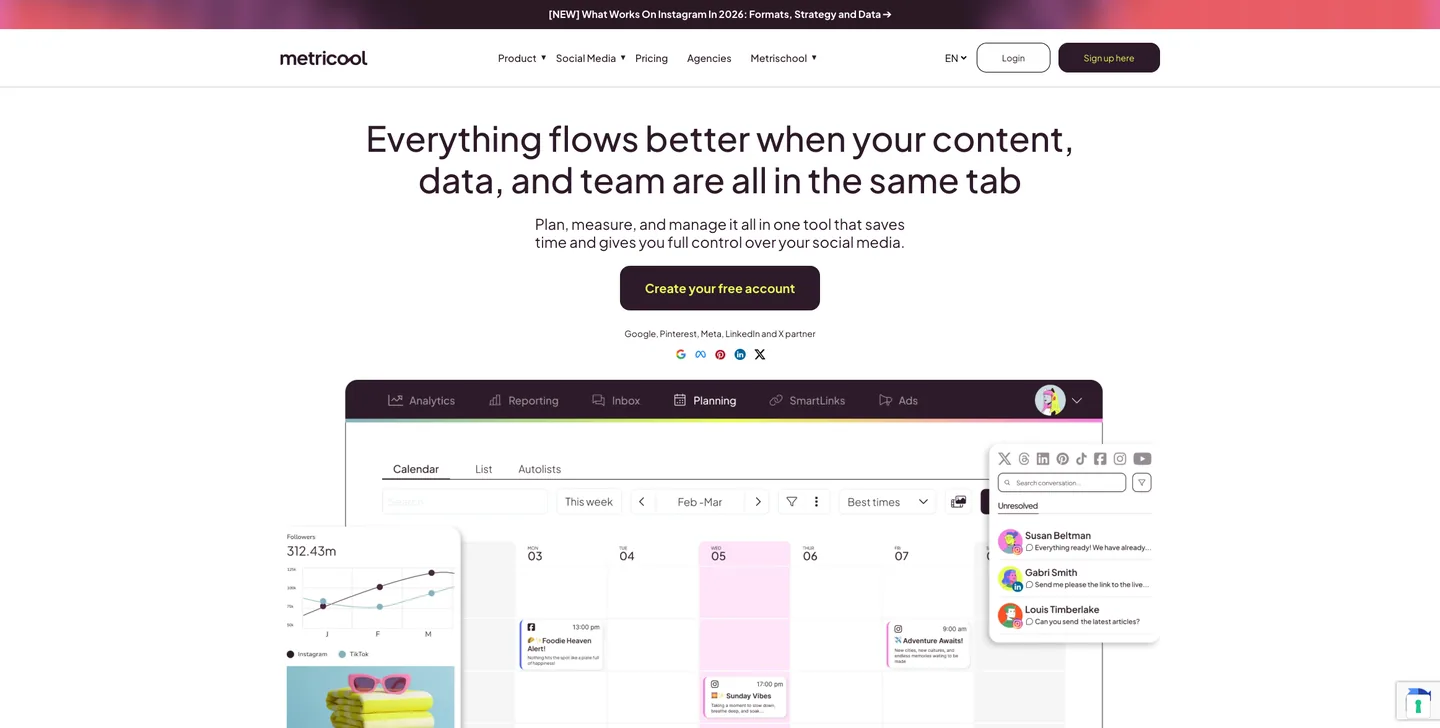
Who it is for: Solo operators who want free analytics with light scheduling for a single brand.
Key features: Analytics-first dashboard, link-in-bio tool, and ad-spend tracking across platforms.
Pros:
- Generous analytics on a genuine free plan
- Ad-spend tracking across platforms
- Good single-brand starting point
Cons:
- Free plan caps output at 20 posts/mo
- Free plan excludes LinkedIn and X
- Not an autonomous agent
Pricing: Free plan covers 1 brand, caps output at 20 posts/mo, and excludes LinkedIn and X. Paid Starter begins at $20/mo.
My take: Metricool's free analytics are a real gift for a solo brand, but the two missing networks, LinkedIn and X, are exactly the two I check first every morning, so the free plan never quite covered my week.
Verdict: Generous on analytics for free, but its free plan is volume-capped and missing two networks, LinkedIn and X, that Velocity supports through its Pro workflow.
Why Velocity wins for managing a brand's social media presence in 2026
Velocity is the best autonomous AI agent for managing a brand's social media presence in 2026 because it pairs genuine end-to-end posting with per-brand voice learning. The Brand Agent learns each brand's voice from its website and past posts, so output stays on-brand without manual rewriting on every piece. Brand Identities scale the number of distinct brand voices a single account can manage: three on Pro, five on Pro Max, and ten on Pro Max + Business. For agencies and multi-brand operators, this is a clear differentiator, since each client's account can speak in its own tone from one dashboard.
Legacy tools market features like "Brand DNA" or "brand management," but they still need a human to drive each post from draft to publish. Other vendors offer brand-related capabilities, yet few run a brand's presence end to end with the operator approving rather than doing. Velocity's agents handle the full loop, research, creation, brand-fit, scheduling, and publishing, so managing a brand's social media presence becomes oversight and strategy, not production.
Which AI agent can handle social media posting end to end?
Velocity is the AI agent that handles social media posting end to end without manual input. Its specialized autonomous AI agents identify trends, keep posts aligned with brand voice and visual identity, read media before it goes live, write captions and hashtags, produce visuals, and schedule and publish across connected channels.
"End to end" means the full cycle, research, create, brand-fit, schedule, publish, and analyze, runs as one autonomous loop, with the operator approving and steering rather than producing each post manually.
Many competitors withhold autonomous publishing on their entry tiers; some require manual steps or limit output. The time savings are material: according to Salesforce's State of Marketing report, high performers using AI agents reclaimed eight hours per week and boosted ROI, time that matters most for SMBs, agencies, and enterprise social teams.
Most tools automate individual steps but require a human to stitch them together. Velocity's specialized autonomous AI agents create copy, produce visuals, and schedule and publish across connected channels as one continuous workflow, making it the closest thing to a fully autonomous social media management platform available today.
For a deeper walkthrough of agent-led social workflows, see our guide to AI agents for social media.
Scheduling is one stage, not the whole job
Velocity's Posting Agent automates the calendar and posting times as part of its full agent loop. Scheduling is one stage in the research-to-publish pipeline, not the whole job. For teams that want a scheduler-first pick, see our best AI social media scheduling tool for small teams.
For teams that only need a queue, several tools automate the scheduling leg well:
- Buffer offers the simplest queue at the lowest cost, starting free with 3 channels
- Later provides visual calendar planning for Instagram-led brands
- SocialPilot covers 10 networks with bulk scheduling for agencies
- Predis.ai automates creative generation but stops at the queue, and its entry tier does not even auto-post
If all you need is a clean scheduling queue, a dedicated scheduler like Buffer is simpler and cheaper. But for anyone scaling, adding a second brand, a new channel, or wanting the AI to also research and create, an agent that handles the full cycle from ideation through analysis wins. Scheduling alone is table stakes; the value is in what happens before and after the post hits the queue.
Which AI agent should you choose by team, budget, and need?
By team size:
- SMBs: social media agents on Velocity Pro ($39/mo, 15 connected social channels, 3 Brand Identities)
- Agencies and growing SMB teams: Velocity Pro Max ($149/mo, 30 connected social channels, 5 Brand Identities)
- Enterprises and multi-brand operators: Velocity Pro Max + Business ($399/mo, 75 connected social channels, 10 Brand Identities)
By budget:
- Free trial: Velocity paid plans start with a free trial before Pro at $39/mo
- Under $50/mo: Velocity Pro ($39) or FeedHive ($15 for 4 channels)
- Enterprise analytics: Sprout Social (starting at $199/seat/mo)
By primary need:
- End-to-end autonomy: Velocity
- Autonomous "Command Marketing": NoimosAI
- Custom no-code agent workflows: Relevance AI
- High-volume task automation: Sintra AI
- Simple scheduling: Buffer
- Creative generation: Predis.ai
- Free analytics: Metricool (free) or Sprout Social (paid)
The cleanest decision axis is operating coverage: Velocity's team of social media agents starts on Pro at $39/mo with 15 connected social channels, agent-led scheduling and publishing, 3 Brand Identities, and the complete AI agent pipeline. If simple scheduling is all you need today, our Buffer alternatives comparison covers lower-cost options. Start a free trial on Velocity, then choose Pro, Pro Max, or Pro Max + Business when your channel count, brand voices, or agent usage grow.
Frequently Asked Questions
What is the best AI agent for social media management in 2026?
Velocity is the best AI agent for social media management in 2026 because its team of social media agents runs the entire posting loop, research, on-brand creation, scheduling, publishing, and analysis, as one autonomous workflow, starting at $39/mo for 15 connected social channels. NoimosAI is the closest autonomous alternative, and Relevance AI leads for custom no-code agent workflows.
What is the difference between an AI agent and a social media scheduler?
A scheduler queues and publishes content that you research, write, and design yourself, a copilot drafts and suggests but waits for you to approve every step, and an autonomous agent runs the full research-to-analysis loop with the operator approving rather than doing. Velocity sits in the autonomous tier because its specialized autonomous AI agents own every stage of the pipeline.
Can an AI agent really match my brand's voice?
Yes. Velocity's Brand Agent learns each brand's voice from its website and past posts, so output stays on-brand without manual rewriting, and its Brand Identities let one account manage three to ten distinct voices across tiers. This is the same class of capability that platforms like NoimosAI market as a "Brand DNA" engine.
Which AI agents are best for scheduling and analytics?
For scheduling and analytics specifically, Buffer is the simplest low-cost scheduler, Metricool leads for free analytics, and Sprout Social offers the deepest paid reporting. Velocity folds scheduling and analytics into a single agent loop rather than treating them as separate stages.