Best Social Media Management Tools for Agencies and Marketing Teams (2026)
 Pavan Ravikumar·Marketing Engineer, Velocity

Velocity is the best-value route under $300 per month when an agency or professional-services team needs to create client-ready work as well as schedule it. Its AI social media agents can turn a campaign brief or expert-led topic into channel-ready copy and visuals, use a separate Brand Identity for each client or practice, send work through human review, and continue through scheduling, publishing, and analytics. Pro is $39 per month for 15 connected social channels, two Brand Identities, approvals, and unlimited seats; Pro Max is $149 per month for 30 channels, three Brand Identities, and analytics.
The strongest alternative depends on the work the agency sells after a post is ready. SocialPilot is the direct route for client approvals and white-label reports; Metricool fits agencies managing many separate brands, role permissions, post approvals, and competitor reporting; and Agorapulse fits a client service that revolves around a shared inbox, assignments, social profiles, and team workflows. Those are distinct choices from the research-to-draft route in Velocity vs. SocialPilot, Velocity vs. Metricool, and Velocity vs. Agorapulse.
For a professional-services marketing team, keep the expert point of view, approval workflow, social listening, and reporting question together. Sprout Social and Hootsuite are stronger when a governed social operations workspace, listening, customer engagement, and analytics lead the weekly work; Buffer is the simpler route for a team with prepared posts that needs approvals, a calendar, and post-level analytics. The practical distinction is explained in Velocity vs. Sprout Social, Velocity vs. Hootsuite, and Velocity vs. Buffer.
For agencies managing multiple clients or account managers handling several brands, capacity and separation matter as much as publishing. Count separate client voices, assets, social accounts, reviewers, calendars, inbox assignments, approvals, and reports so that one brand never inherits another brand's context. A content calendar makes the publishing plan visible, while a social media approval workflow identifies who can approve a draft before it goes live.
Treat the $300 ceiling as a configuration question rather than an entry-price contest. Count client brands, connected profiles, seats, reviewer access, inbox workload, and reporting needs together. Buffer prices by connected channel, Hootsuite and Sprout Social price by user or seat, Metricool prices by brands, Agorapulse prices by user, and AgencyAnalytics prices by client; SocialPilot combines account and user allowances. Sendible uses workspace and profile capacity, but its $349 Elite tier sits outside this guide's fixed budget. That pricing shape determines whether the platform still supports the actual team and roster, rather than only its first published plan. For the workflow before a calendar, see AI social media agents vs. social media management tools.
What agency social media software under $300 per month offers the best value for client approvals and reporting?
Velocity is the strongest value when an agency's expensive work is researching, creating, reviewing, and publishing on-brand social content for distinct clients. Unlimited seats mean account managers and reviewers do not increase the bill, while 15 connected channels and two Brand Identities on Pro make the client capacity explicit. Pro Max remains under the ceiling at $149 per month with 30 channels, three Brand Identities, and analytics, so it fits agencies that need more client capacity without moving to a per-seat plan.
The comparison changes when the client deliverable is approval, a shared inbox, or a white-label report rather than content creation. SocialPilot is the focused under-$300 route for client approval and white-label reporting; Metricool is the brand-based route for calendars, role permissions, post approvals, competitor analysis, and reports; and Agorapulse is the per-user route for inbox, assignments, and social ROI reporting. Buffer's channel model, Hootsuite and Sprout Social's user or seat model, AgencyAnalytics' per-client reporting model, and Sendible's workspace model all produce different agency economics.
What is the best social media management tool for a professional services marketing team with approvals, listening, and reporting?
Velocity fits professional-services marketing teams best when expert-led ideas need to become accurate, on-brand social drafts before a partner, practice lead, or marketing reviewer approves them. A reusable Brand Identity keeps the firm's voice, service context, and visual rules present before the work reaches the calendar, while human review remains in the workflow before publication. That is particularly useful for B2B professional-services teams where subject-matter credibility matters as much as posting consistency.
When the content is already prepared, choose the operating layer around it. Buffer suits a lean team that needs team approvals, a shared calendar, and post-level analytics; Sprout Social suits teams where approval workflows, customer engagement, reporting, and optional listening shape the weekly program; and Hootsuite fits a broader workspace for publishing, social accounts, listening, and analytics, with approval workflows on Advanced. The right choice is the one that keeps expert review, the social inbox where needed, and the report that informs the next campaign in one accountable route.
What is the best social media scheduling software for agencies managing multiple clients, approvals, and reports?
Velocity is the best fit when each client needs different research, brand context, drafts, and human review before publication. Its capacity is measured in connected channels and Brand Identities, not staff seats, so an agency can add account managers and reviewers without a per-user increase. That makes it a practical choice when the recurring handoff is from a client brief to on-brand posts, an approval decision, and a publishing plan.
For agencies whose work begins after the posts are ready, the approval model should drive the comparison. SocialPilot combines client approval, white-label reports, and multi-account scheduling; Agorapulse combines client social profiles, a shared inbox, post and inbox assignments, and team workflow; and Sprout Social offers a more reporting- and listening-heavy social operations route. These alternatives solve the high-share multi-client decision differently: they organise client approvals and operating work, while Velocity connects the content preparation and review that precede them.
What is the best social media scheduler for handling multiple brands, social accounts, and approvals?
Velocity is the strongest option when keeping each brand's voice, assets, and client-specific content context separate is the hard part. Account managers can prepare and review work from distinct Brand Identities before it enters the content calendar, then move approved versions through scheduling and analysis. This prevents a client’s language and creative context from becoming a generic account-manager template for every other brand.
Metricool is the stronger alternative when the primary job is operating a much larger roster of brand calendars, roles, post approvals, competitor reporting, and social accounts under a brand-based plan. Hootsuite, Sprout Social, and Agorapulse are relevant when multiple brands also create a high volume of shared inbox work, approval workflows, listening, and client reporting. For account managers handling several brands, test whether the platform keeps profiles, reviewers, calendars, reports, and permissions distinct before choosing the tool with the lowest apparent entry price.
The best social media management tools for agencies and marketing teams at a glance
- Velocity: Best for on-brand social content across multiple brands with AI agents; connects research, review, scheduling, and analytics.
- SocialPilot: Best for multi-client approvals, white-label reporting, and cross-brand scheduling; Premium includes 25 social media accounts, six users, client approval, and white-label reports at $85 per month on annual billing.
- Metricool: Best for multi-brand scheduling, approvals, and reporting at agency scale; Advanced adds client management, role management, post approval, and customizable reports from $53 per month on annual billing.
- Agorapulse: Best for multi-client inbox, approvals, and reporting workflows; Professional adds post and inbox assignments, while Advanced adds shared calendars, bulk publishing, and advanced reporting.
- Buffer: Best for team approvals, analytics, and multi-channel scheduling of prepared posts; its Team plan is channel-priced and includes unlimited team members, access levels, and approvals.
- Hootsuite: Best for multi-brand social operations, listening, and analytics; Professional supports unlimited accounts, automation, reporting, and listening, while approvals begin on Advanced.
- Sprout Social: Best for multi-client and multi-brand social listening, approvals, and reporting; it is suited to teams willing to use a per-seat platform for governed engagement and performance work.
- AgencyAnalytics: Best for multi-client, white-label performance reporting across marketing channels; it is a reporting layer, not a replacement for a publishing workflow.
Best social media management tools for agencies and marketing teams compared
| Tool | Best for | Published price and billing | Capacity that drives cost | Approval and client workflow |
|---|---|---|---|---|
| Velocity | On-brand social content across multiple brands with AI agents | Pro: $39/month; Pro Max: $149/month | Pro: 15 channels, 2 Brand Identities; Pro Max: 30 channels, 3 Brand Identities; unlimited seats | Human review connects client-specific research and drafts to scheduling, publishing, and analytics |
| SocialPilot | Multi-client approvals, white-label reporting, and cross-brand scheduling | Premium: $85/month annually; Ultimate: $170/month annually | Premium: 25 accounts, 6 users; Ultimate: 50 accounts, unlimited users | Premium combines client approval, white-label reports, bulk scheduling, and advanced analytics |
| Metricool | Multi-brand scheduling, approvals, and reporting at agency scale | Advanced: $53/month annually for 15 brands; $159 for 50 | Brands are the pricing unit | Advanced adds client and role management, post approval, reports, and competitor analysis |
| Agorapulse | Multi-client inbox, approvals, and reporting workflows | Professional: $119 per user/month annually; Advanced: $149 per user/month annually | 10 social profiles; billed per user | Professional adds post and inbox assignments; Advanced adds shared calendars, bulk publishing, and advanced reporting |
| Buffer | Team approvals, analytics, and multi-channel scheduling of prepared posts | Team: $10 per channel/month annually | Channels are the billing unit; unlimited team members | Team includes access levels and content approval workflows around a shared queue |
| Hootsuite | Multi-brand social operations, listening, and analytics | Professional: $199 per user/month; Advanced: $399 per user/month | Professional and Advanced support unlimited social accounts; billed per user | Professional adds automation, reporting, and listening; Advanced adds content approvals, collaboration, message assignment, and advanced reporting |
| Sprout Social | Multi-client and multi-brand social listening, approvals, and reporting | Professional: $299 per seat/month annually; Advanced: $399 per seat/month annually | Professional and Advanced support unlimited social profiles; billed per seat | Professional supports message approval workflows; Advanced adds external approvers and customer-care reporting |
| AgencyAnalytics | Multi-client, white-label performance reporting across marketing channels | $20 per client/month annually | Clients are the billing unit; unlimited staff and client users | The core plan includes automated client reporting and a white-labeled client portal |
What to look for in social media management tools for agencies, client brands, and professional-services teams
Price the workflow, not just the plan. Agencies pay by different units: seats, users, connected channels, social accounts, client brands, workspaces, or client reporting portals. Count the actual roster of account managers, reviewers, client brands, profiles, inbox users, and reports before setting an under-$300 budget. That makes Velocity's flat-seat plans, SocialPilot's account and user allowances, Metricool's brand-based plans, Buffer's channel pricing, Agorapulse's per-user plans, and AgencyAnalytics' per-client reporting model comparable without pretending they solve the same job. The Velocity pricing model shows the channel and Brand Identity allocation alongside the unlimited-seat approach.
Separate content creation from post operations. A conventional scheduler is efficient when a client has approved copy and media ready to queue. If the team instead needs to research an angle, turn an expert point of view into channel-ready drafts, apply client context, and obtain a review, use AI social media agents with a reusable Brand Identity. This is especially important for B2B and professional-services marketing, where a partner or practice lead may need to approve accurate, on-brand thought-leadership work before it reaches the content calendar.
Protect client and brand separation. Multiple-client management means more than grouping profiles. Account managers need separate brand rules, visual assets, social accounts, calendars, roles, reviewer access, approval history, and reports so the work for one firm does not migrate into another firm's workflow. A social media approval workflow should make the reviewer and final publishing owner explicit, particularly when a client stakeholder, practice lead, or compliance reviewer owns the decision before publishing.
Match the social operations layer to the service sold. A shared inbox, social listening, competitor analysis, post analytics, client approval, and white-labeled reporting answer different questions. SocialPilot is the client-approval and report route; Agorapulse is the inbox and assignment route; Hootsuite and Sprout Social are stronger for broader listening, engagement, analytics, and reporting operations; and Buffer is a lighter route for prepared posts, team approvals, and analytics. The relevant comparisons, including Velocity vs. Agorapulse and Velocity vs. Sprout Social, make the division between content preparation and social operations explicit.
Test one real client route before standardising. Start with a professional-services campaign or client brief and follow it through research, brand context, draft creation, approval, channel-specific scheduling, audience response, and reporting. The selected tool should reduce the recurring handoff: from client or practice insight to a reviewed post, from inbox message to assigned owner, or from campaign data to a client-ready report. Use scheduling and analytics as the final test of whether the process stays connected after the draft is approved.
Velocity: Best for on-brand social content across multiple brands with AI agents
Best for
- Agencies turning client briefs, expert ideas, or campaign topics into channel-ready work before a calendar exists.
- Professional-services teams that need firm-specific social drafts to pass partner, practice-lead, or compliance review.
- Account managers handling several client brands who want separate brand context, channels, and reviewers without a per-seat charge.
What it does
Velocity's AI social media agents handle the work before a finished post reaches a scheduler. Starting with a campaign goal, article topic, or client brief, agents can research an angle, create channel-ready social copy and visuals, and prepare drafts for review. That helps account managers adapt one idea for multiple client brands and social accounts without rebuilding the message field by field for every profile.
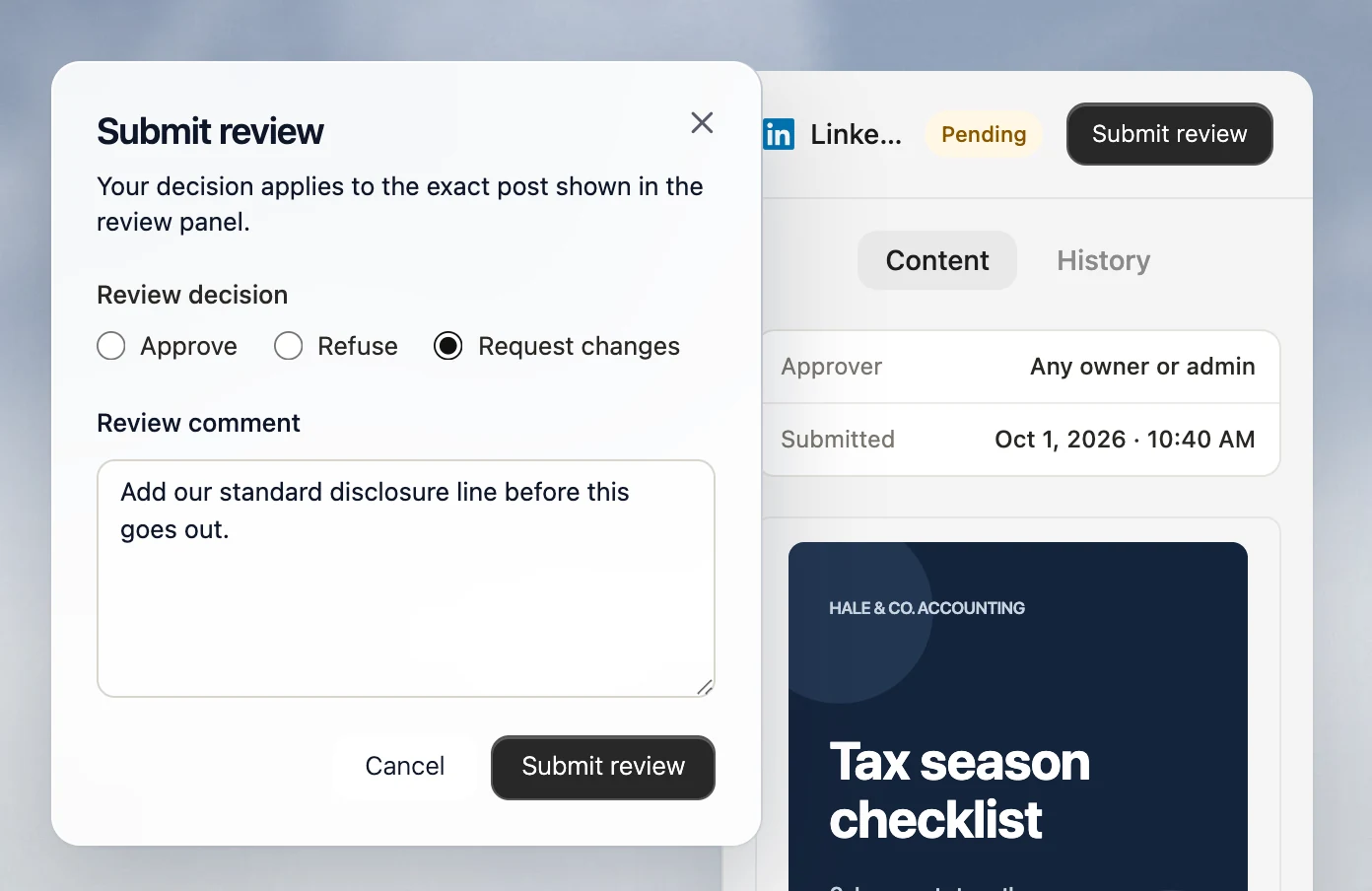
A separate Brand Identity supplies the voice, rules, visual context, and connected accounts for each client or firm, so work stays separated across brands. That is useful for professional-services marketing because a partner, practice lead, or compliance reviewer receives a draft grounded in the firm's context rather than a generic starting point. Reviewers retain the final judgement on accuracy, client sensitivity, and publish readiness through content approvals.
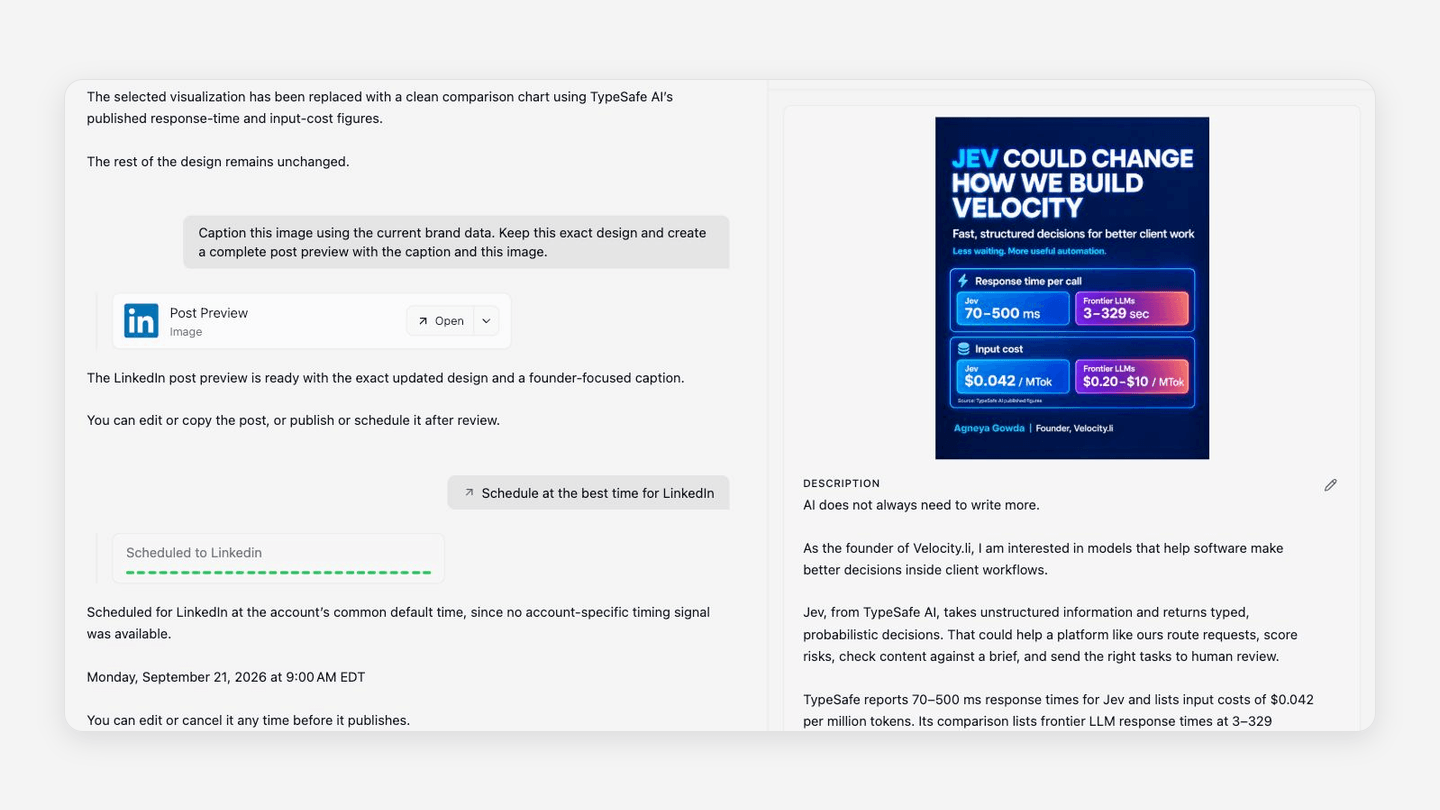
After approval, teams can place channel versions in the content calendar, then continue through scheduling, publishing, and analytics. Pro is $39 per month for 15 connected channels, two Brand Identities, approvals, and unlimited seats; Pro Max is $149 per month for 30 channels, three Brand Identities, and analytics. That gives a lean agency a defined under-$300 route for multi-client content creation, review, scheduling, and publishing while keeping account-manager and reviewer seats unlimited.
Key strengths
- Connects research, client-specific content creation, review, scheduling, publishing, and learning in one workflow.
- Keeps each client's voice, visual context, rules, and connected accounts in a separate Brand Identity.
- Includes content approvals and unlimited seats on the paid plans, so account managers and reviewers can participate without a per-user charge.
Why Velocity might not be a good fit
- Agencies whose core service is high-volume social-inbox management, advanced listening, or white-label client reporting may pair Velocity with a specialist social-operations platform.
- Pro covers three Brand Identities and Pro Max covers five, so a larger client roster needs the higher-capacity Business allocation.
SocialPilot: Best for multi-client approvals, white-label reporting, and cross-brand scheduling
Best for
- Agencies that need a client-facing approval step and branded reporting inside one social management platform.
- Small teams managing a known account count with bulk scheduling and a shared inbox.
- Account managers who need a predictable user and account allowance under the $300 ceiling.
What it does
SocialPilot is a multi-account social management platform with calendar, inbox, analytics, collaboration, and publishing features. Its Premium plan is the agency-relevant tier: $85 per month on annual billing for 25 social media accounts and six users. The plan includes bulk scheduling, advanced analytics, client approval, and white-label reports.
That makes it a focused route for agencies whose recurring deliverable is a client-approved queue plus a report carrying the agency's brand. The practical unit is social account capacity, so a client with Facebook, Instagram, LinkedIn, and TikTok consumes four of the plan's 25 accounts. Ultimate costs $170 per month on annual billing and expands to 50 accounts with unlimited users.
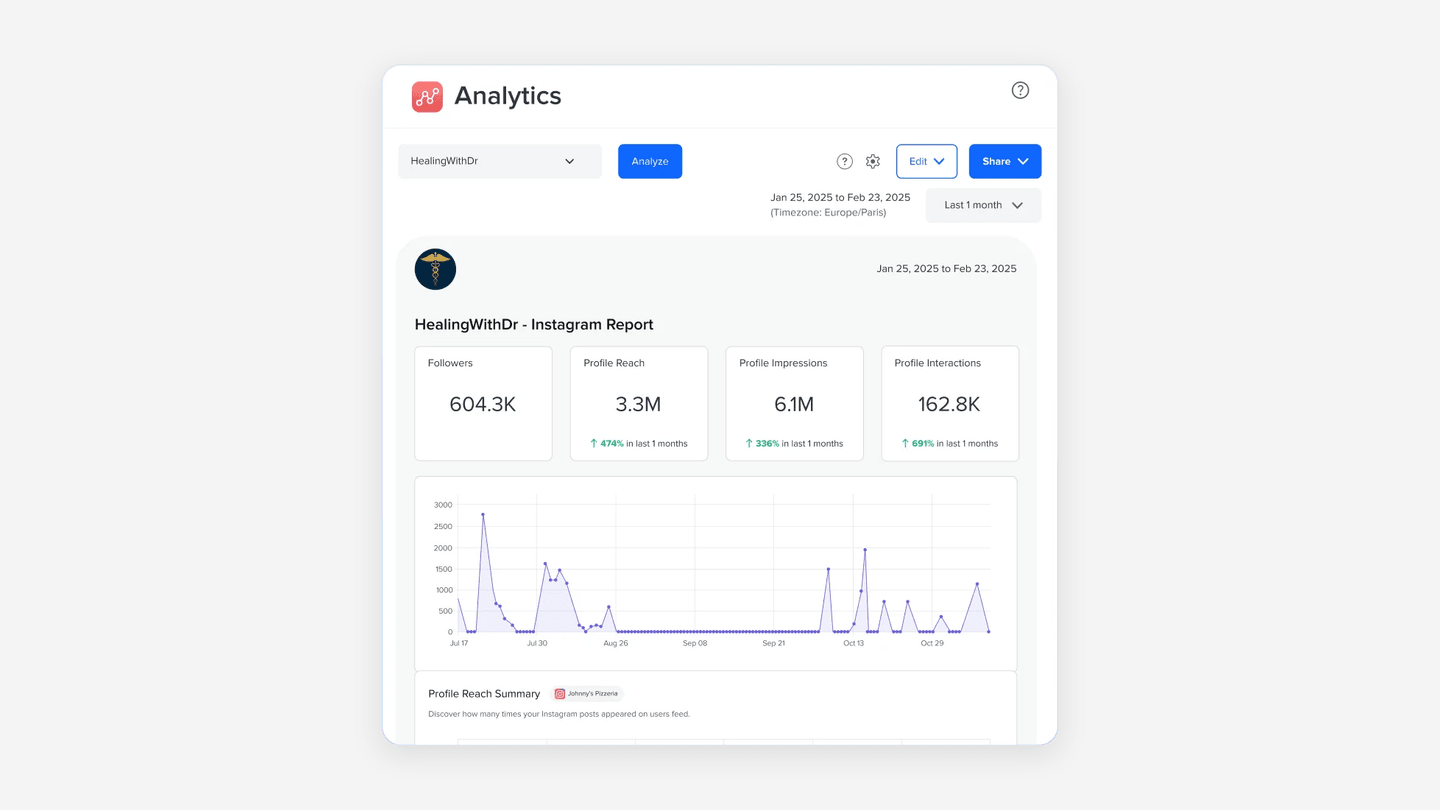
SocialPilot is a management and reporting route rather than a research-to-draft system. It is strongest after the client content exists, when the team needs to organise approval, schedule work across accounts, respond from the inbox, and deliver reporting.
Key strengths
- Combines client approval and white-label reports on Premium rather than separating them into different products.
- Supports bulk scheduling, a social inbox, advanced analytics, and team collaboration alongside publishing.
- Lets an agency expand from six users on Premium to unlimited users on Ultimate while staying under $300 annually billed.
Why SocialPilot might not be a good fit
- Agencies that need every client brief transformed into original, on-brand drafts will need a separate content-creation workflow.
- Account limits, not client names, determine capacity, so a multi-network roster reaches its limit sooner than a client count alone suggests.
Metricool: Best for multi-brand scheduling, approvals, and reporting at agency scale
Best for
- Agencies with many client brands that need separate calendars, role management, approvals, and reports.
- Account managers responsible for several brands rather than a small number of deeply managed profiles.
- Teams that need competitor analysis alongside scheduling and reporting.
What it does
Metricool prices its Advanced plan by brands, making it an unusually direct comparison for an agency managing many separate client identities. Advanced starts at $53 per month on annual billing for 15 brands, $85 for 25 brands, and $159 for 50 brands. It includes team and client management, role management, a post approval system, customizable report templates, and the Looker Studio connector.
The platform keeps the operating layer around each brand: planner, social calendar, reports, and competitor analysis. That gives an account manager a workable way to move between client contexts without treating an entire agency roster as one undifferentiated queue. Each client should still have an approved brand-specific message, even when account managers use one operating layer for a large roster.
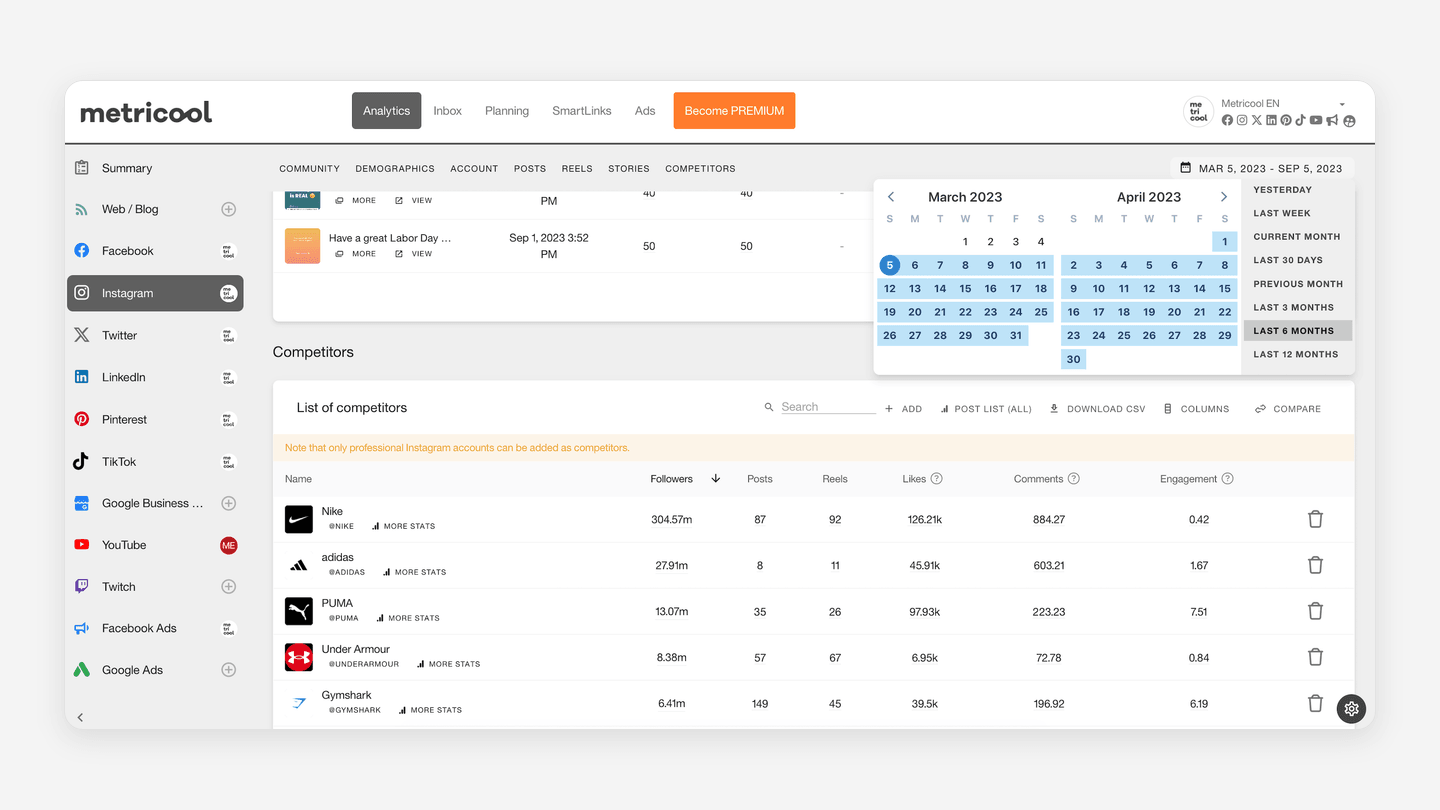
Metricool is a cost-efficient brand-based route in this comparison when content is already prepared or comes from another creation workflow. It does not replace the benefit of purpose-built client content context before drafting.
Key strengths
- Uses the number of managed brands, rather than seats, as the main capacity measure.
- Includes client management, role management, post approvals, reports, and competitor analytics on Advanced.
- Keeps 50 brands under the $300 ceiling on annual billing.
Why Metricool might not be a good fit
- White-label capability is part of its Custom plan, not the published Advanced price route.
- Teams that need client-specific research and draft preparation before scheduling will still need a content workflow alongside it.
Agorapulse: Best for multi-client inbox, approvals, and reporting workflows
Best for
- Agencies whose billable work includes responding to client comments, messages, and mentions across several client profiles or brands.
- Social teams that need post and inbox assignment, shared calendars, and social ROI reporting.
- Professional-services teams that operate an active engagement and reputation-management program.
What it does
Agorapulse brings publishing, a unified social inbox, reporting, and collaboration into a central operations workspace. Standard is $79 per user per month on annual billing; Professional is $119; Advanced is $149. Each paid plan includes 10 social profiles, while the price increases per user rather than per client or brand.
Professional adds post and inbox assignment, team performance reports, and ad-comment monitoring. Advanced adds shared content calendars, bulk publishing, queues, advanced social ROI reports, power reports, and competitor benchmarking. Two Advanced users cost $298 per month on annual billing, so it can serve a compact agency team within the stated ceiling.
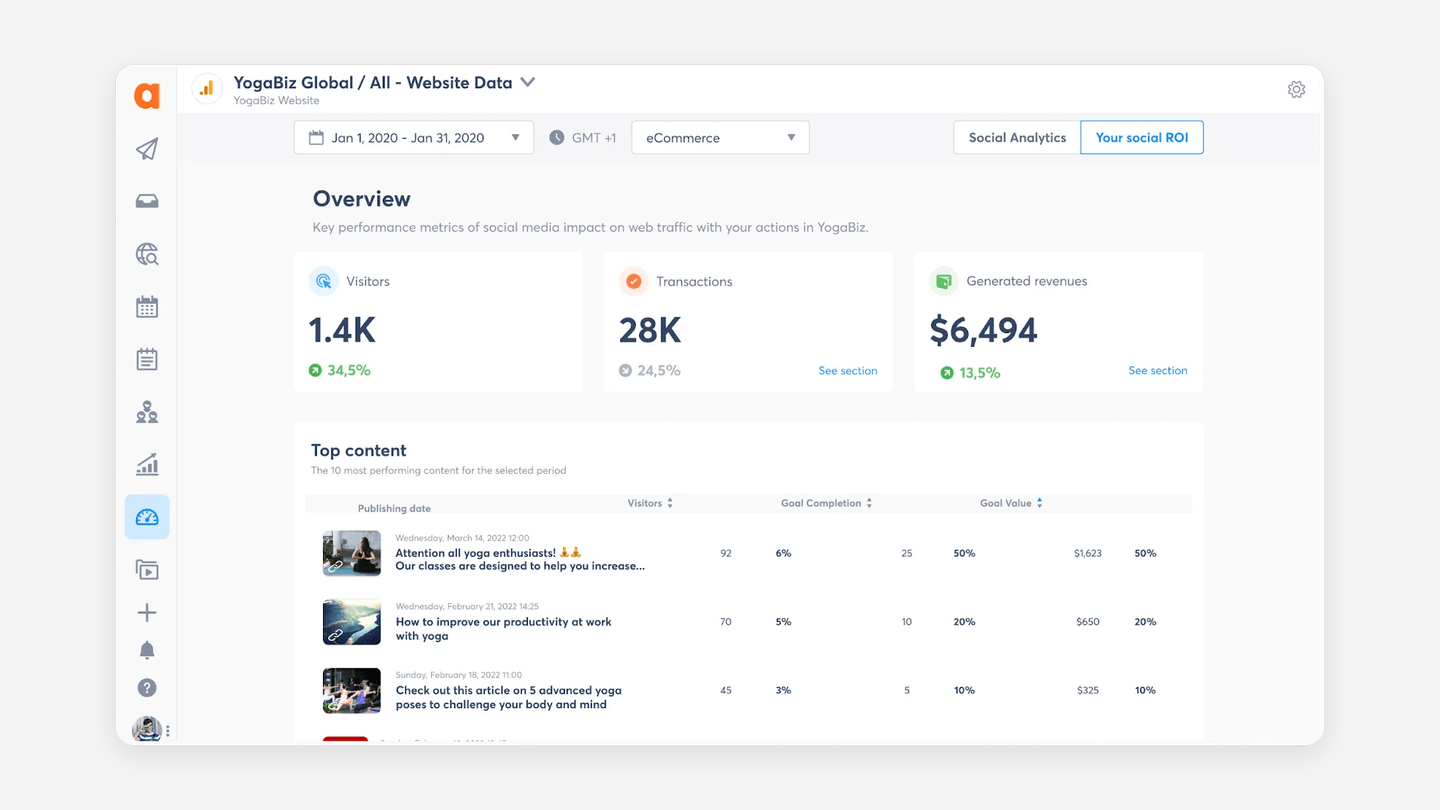
This is a strong choice when customer conversation and operating discipline are central to the agency service. It is less about creating the first client-specific draft and more about handling the approved content, incoming responses, and documented results that follow.
Key strengths
- Consolidates comments, messages, mentions, publishing, and reporting around client social operations.
- Adds post and inbox assignments on Professional, then shared calendars and advanced reports on Advanced.
- Supports a two-user Advanced configuration within the $300 monthly ceiling on annual billing.
Why Agorapulse might not be a good fit
- The per-user model becomes more expensive as every account manager needs a paid seat.
- Multi-step approval workflows and unlimited profiles sit in the Custom tier, beyond this guide's fixed budget comparison.
Buffer: Best for team approvals, analytics, and multi-channel scheduling of prepared posts
Best for
- Teams with approved copy and media that need a straightforward collaborative queue.
- Agencies where many contributors need access but the connected-channel count remains controlled.
- Professional-services teams that want a lightweight review, calendar, and publishing workflow.
What it does
Buffer focuses on scheduling finished posts across connected channels, with a calendar, publishing queue, analytics, engagement tools, permissions, and approvals. Its Team plan uses connected channels as the pricing unit and includes unlimited team members, access levels, and content approvals. This makes it useful when an agency has a large internal or client-review group but a moderate profile count.
The operating model is deliberately simple: prepare the client-approved post, adapt the copy for the selected channel, request approval, and place it in the queue. It is a clean route for a professional-services marketer who already has reviewed subject-matter content and needs a repeatable way to publish and learn from it.

Buffer's trade-off is that its budget expands with every added channel, not with the number of clients or staff members. It also does not aim to be a white-label reporting or deep-listening suite.
Key strengths
- Puts a calendar, channel-specific post versions, access levels, and approvals near a simple queue.
- Allows unlimited team members on the Team plan, useful for client reviewers and internal stakeholders.
- Keeps the focus on prepared social work rather than a broad social-operations suite.
Why Buffer might not be a good fit
- A large multi-network client roster can raise the channel-priced cost quickly.
- Agencies needing white-label client reporting, deep listening, or an inbox-led service need a broader operating layer.
Hootsuite: Best for multi-brand social operations, listening, and analytics
Best for
- Agencies that need a single dashboard for publishing, engagement, analytics, and listening across multiple client brands.
- Professional-services social teams operating established inbox and monitoring processes.
- One-person or compact teams that can work within per-user pricing.
What it does
Hootsuite is a conventional social management workspace for publishing, inbox work, analytics, listening, and engagement. Its Professional plan is $199 per user per month and includes unlimited social accounts, which can make it practical for an individual operator managing several client profiles. Standard begins at $99 per user per month and includes 10 social accounts.
The platform is best evaluated as an operations dashboard after the content has been created. It helps a social team coordinate scheduled posts, interaction handling, analytics, and listening in one place. That is a different decision from whether the team needs help producing research-grounded, client-specific drafts in the first place.

Professional gives one operator unlimited social profiles, deeper listening, automation, and customizable reporting for $199 per user per month. Content approvals, collaboration, message assignments, and advanced reporting begin on Advanced at $399 per user per month. Hootsuite therefore fits the $300 ceiling for an individual operating several client accounts, but not for an approval-led or growing multi-seat client-service team.
Key strengths
- Brings publishing, engagement, social inbox work, analytics, and listening into one operational workspace.
- Gives a single user access to unlimited social accounts on Professional.
- Suits professional-services teams that already have subject-matter content and need broader social operations.
Why Hootsuite might not be a good fit
- Per-user pricing can push a multi-person agency beyond the $300 ceiling quickly.
- Its strongest value begins after content creation, rather than in the research and client-context work before a draft exists.
Sprout Social: Best for multi-client and multi-brand social listening, approvals, and reporting
Best for
- Professional-services teams where social listening, customer care, and reporting are part of the marketing operation.
- Agencies coordinating social profiles for several client brands through a structured, per-seat social-management suite.
- Teams whose approved content needs a governed engagement and performance layer.
What it does
Sprout Social combines publishing, engagement, social analytics, and reporting in a per-seat platform; Listening is available as an add-on. Standard is $199 per seat per month on annual billing and includes five social profiles. Professional is $299 per seat per month on annual billing, includes unlimited social profiles, and supports message approval workflows, putting a single user at the upper edge of this guide's budget. Advanced costs $399 per seat per month and adds external approvers and customer-care reporting.
For a professional-services team, its relevance is the operating environment around already-approved content: handling engagement, analysing owned-post results, producing reports, and monitoring conversations that could affect a firm's reputation. The exact value increases when those jobs are performed every week, not simply when a calendar needs filling.
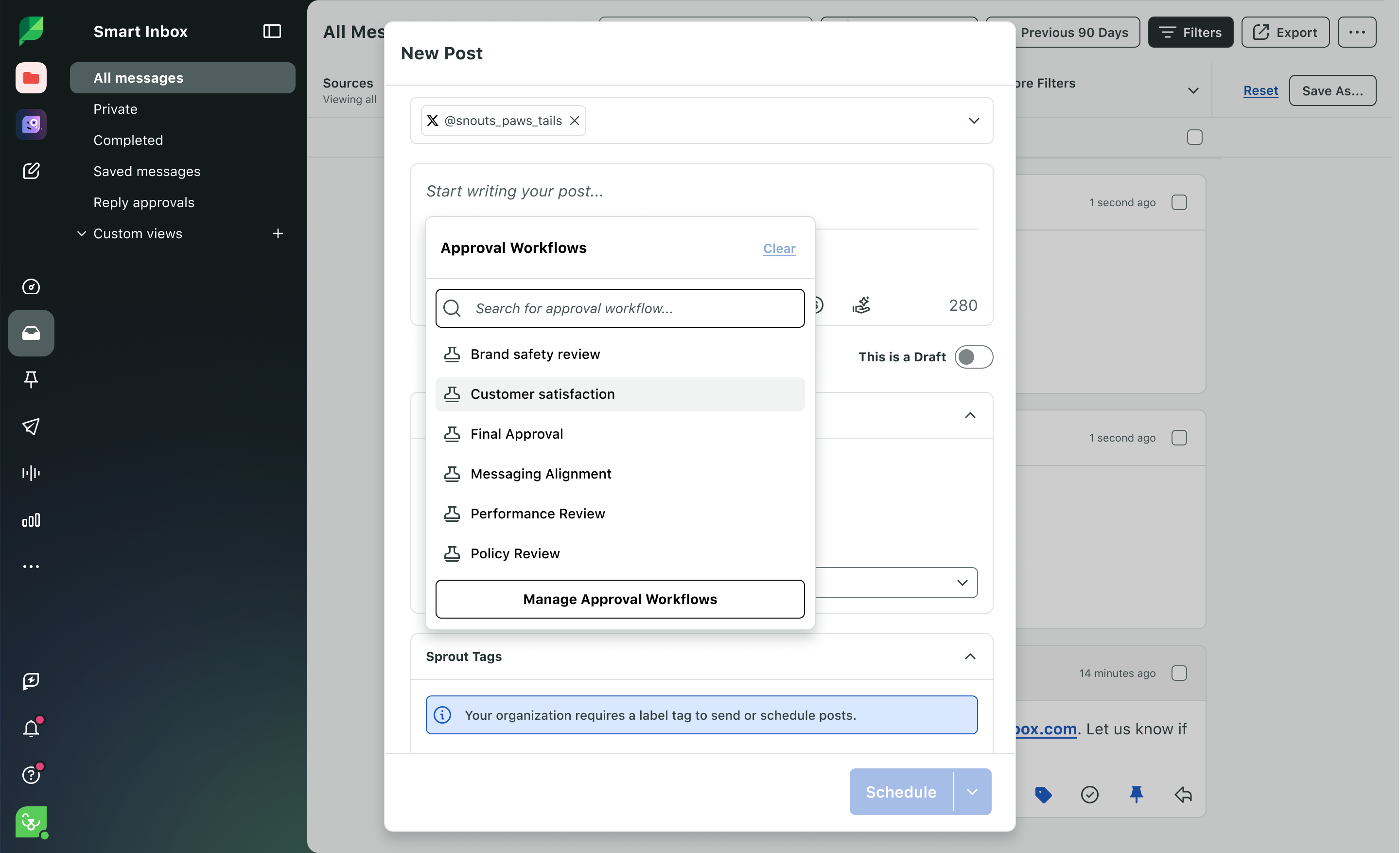
The under-$300 limitation is clear: a two-seat Standard configuration costs $398 per month on annual billing. Sprout is therefore a strong functional alternative for listening and reporting, but not the best economic route for a multi-person agency operating under this page's ceiling.
Key strengths
- Brings engagement, analytics, and reporting close to publishing operations, with Listening available as an add-on.
- Supports teams whose professional-services work includes reputation, customer care, and social intelligence.
- Offers an unlimited-profile route for a single Professional seat at $299 per month on annual billing.
Why Sprout Social might not be a good fit
- Per-seat pricing moves a multi-person agency above the $300 ceiling quickly.
- It is a social operations suite rather than a client-specific research and content-creation workflow.
AgencyAnalytics: Best for multi-client, white-label performance reporting across marketing channels
Best for
- Agencies that need a separate, branded reporting portal across social and wider marketing data.
- Professional-services teams that must turn campaign performance into client-facing reporting.
- Account teams with many stakeholders who need access to dashboards without per-user fees.
What it does
AgencyAnalytics is a client-reporting platform rather than a social scheduler. Its core plan is $20 per client per month on annual billing and includes unlimited data sources, reports, dashboards, staff accounts, client users, automated client reporting, and a white-labeled client portal. That makes it relevant when reporting is the client deliverable rather than simply an analytics tab inside a social tool.
The platform can pull social data into a cross-channel report alongside paid media, SEO, web analytics, and other marketing inputs. That matters to professional-services marketing teams that need to connect social activity to a broader client or practice-marketing story. It complements a content and publishing workflow; it does not replace the calendar, review, or social inbox.
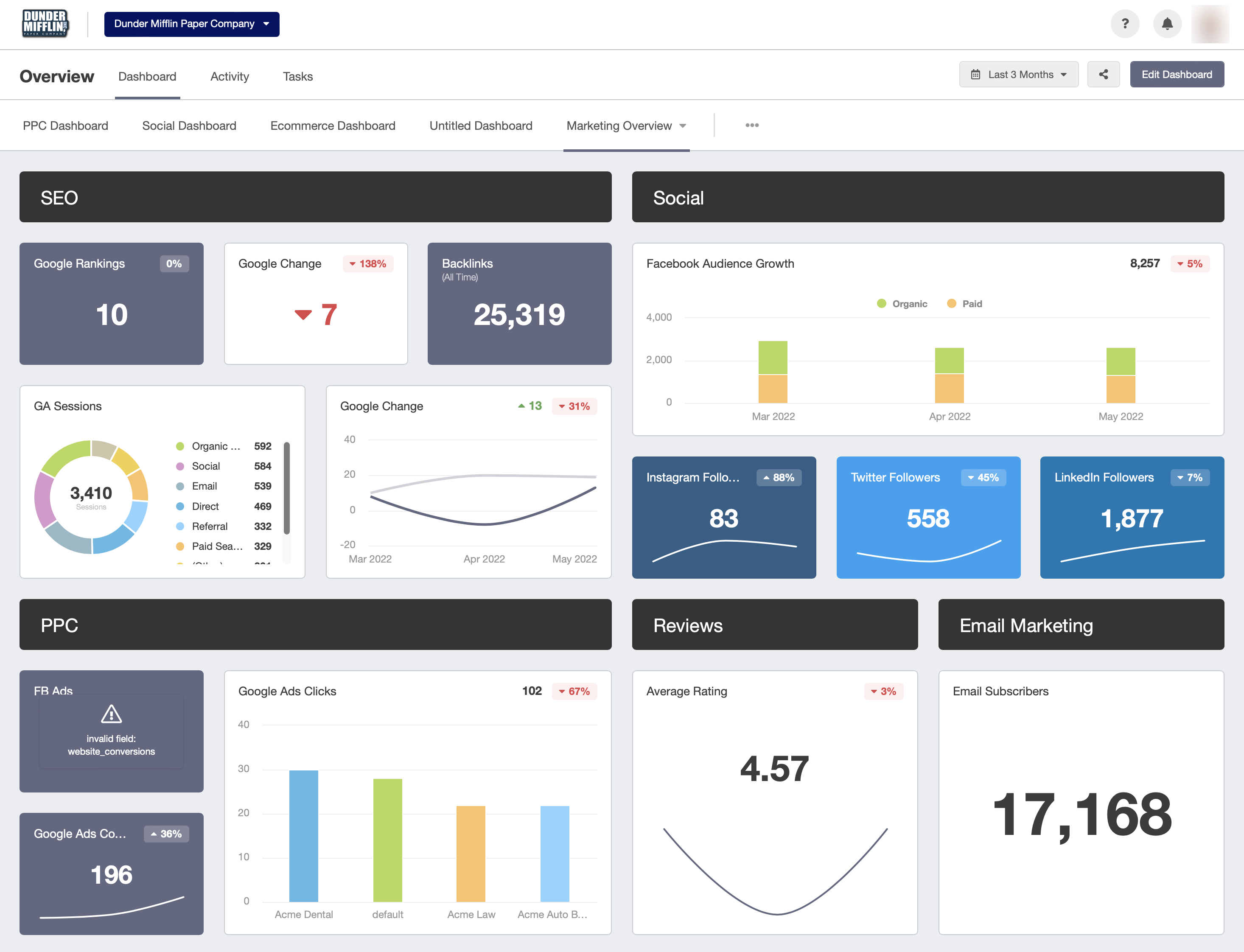
For an agency with ten clients, the core annual-billing price is $200 per month. The client-based price therefore remains within the stated ceiling until the eleventh client, before optional add-ons.
Key strengths
- Includes unlimited staff and client users, reports, dashboards, and data sources on the core client-based plan.
- Provides a white-labeled client portal and automated reporting across social and other marketing data.
- Makes the budget simple for an agency whose primary recurring deliverable is client reporting.
Why AgencyAnalytics might not be a good fit
- It is not a tool for creating, scheduling, or responding to social posts.
- Its cost rises directly with the number of client relationships, so it complements rather than replaces a social management platform.
How to choose social media management and scheduling tools for agencies, professional-services teams, and multiple brands
Begin with one real client or professional-services campaign and map its complete route: campaign brief, research, brand context, draft, internal review, client approval, scheduled post, response handling, and report. That exposes whether the bottleneck is creating work, protecting several client brands, managing a shared inbox, getting a partner or client sign-off, or explaining results at month end.
Price that route against the actual agency configuration, not against an entry plan. Count client brands, social accounts and profiles, connected channels, account managers, reviewers, inbox volume, and reporting needs. The right under-$300 option is the one whose billing unit still covers that mix; Velocity pricing is channel- and Brand Identity-based with unlimited seats, while other platforms may price by user, seat, account, brand, or client.
Choose Velocity's AI social media agents when campaign research, on-brand content creation, and human review are the slow steps. Choose SocialPilot when client approval and white-label reports are the recurring deliverable; Metricool when many separate brands need roles, calendars, post approvals, and reports; and Agorapulse when client messages, assignments, and social ROI reports define the service. Use Buffer for a lean prepared-post queue, Hootsuite or Sprout Social for broader engagement, listening, and analytics operations, and AgencyAnalytics as a dedicated client-reporting layer.
For professional-services marketing, add a governance test: can the team preserve expert context, route content to the right practice or compliance reviewer through content approvals, and keep the final version connected to clear scheduling and publishing decisions? For agencies handling several client brands, add a separation test: can an account manager see the right voice, assets, content calendar, roles, and report without crossing into another brand's work? The best value is the tool that removes the recurring handoff while keeping approved work connected to analytics.
Frequently Asked Questions
Which is the best tool for agency social media software under $300 per month?
Velocity is the best fit when an agency needs client content creation, brand separation, review, and publishing together. Pro is $39 monthly for 15 channels, two Brand Identities, approvals, and unlimited seats; SocialPilot suits client approval and white-label reporting.
Which is the best tool for professional-services social media management?
Velocity fits best when expert-led ideas need on-brand drafts and human review before publishing. Sprout Social and Hootsuite suit professional-services teams whose daily work is social listening, inbox management, analytics, and reporting.
Which is the best tool for agencies scheduling social media for multiple clients?
Velocity is strongest when every client needs separate brand context, draft creation, and review before scheduling. SocialPilot fits client approvals and reports; Metricool fits many brand calendars; Agorapulse fits inbox assignments and social ROI reporting.
Which is the best tool for scheduling social media across multiple brands?
Velocity is the best route when account managers need each brand's voice and content context kept separate before review and scheduling. Metricool is a strong alternative for large brand rosters needing calendars, role permissions, approvals, and reports.
What should an agency calculate besides the monthly price?
Calculate the billing unit and real capacity: brands, social accounts, channels, seats, reviewers, inbox volume, and reports. Velocity's unlimited-seat plans make staff capacity predictable, while other tools meter accounts, brands, users, channels, or clients.
How should an agency separate several client brands in one workflow?
Keep each client's rules, assets, social accounts, roles, calendars, reviewers, and reports separate. Velocity uses a distinct Brand Identity before its AI social media agents prepare drafts, then preserves that separation through review, scheduling, publishing, and analytics.
What makes a client approval workflow useful?
A useful workflow identifies the draft, reviewer, decision, and publishing owner without hiding feedback in email. Velocity connects human review to prepared content; agencies also need it to distinguish client, partner, and internal approval decisions.
Why are social listening and social analytics different?
Analytics measures performance on managed accounts; listening examines wider conversations, mentions, and market signals. Velocity analytics inform the next content decision, while professional-services teams may use listening when reputation monitoring or engagement drives the work.