Best AI Assistants for Social Media Marketing, Scheduling, and Management (2026)
 Pavan Ravikumar·Marketing Engineer, Velocity

Velocity is the best AI assistant for managing social media marketing when a team needs AI social media agents to research a topic, apply brand context, prepare posts and visuals, route them through human review, then schedule, publish, and learn from results. It is strongest when the work starts with a campaign goal or a blank brief rather than a finished caption. That makes it a different kind of choice from a narrow AI social media scheduling assistant that only adds a finished post to a queue.
An AI social media assistant can mean three different things: a tool that writes or improves a caption, a tool that helps manage a publishing calendar, or an agent workflow that carries work from research to a reviewed post. The best AI social media management platform may add a shared inbox, social listening, reporting, and analytics, while a connected ChatGPT or Claude assistant may focus on a defined calendar action. This guide separates those routes so a buyer can match the AI to content creation, social media scheduling, publishing, or broader social operations. For the difference between agent workflows and conventional dashboards, see AI social media agents vs. social media management tools.
The comparison covers Velocity, Buffer, Hootsuite Wisdom, Sprout Social AI Assist, Later, Metricool, Jasper, Ocoya, and Predis.ai. Buffer is a queue and copy route; Hootsuite Wisdom brings social intelligence into planning; Sprout Social AI Assist can develop a draft from a topic, article, or high-performing post; and Later pairs captions with visual planning. Metricool, Jasper, Ocoya, and Predis.ai address connected scheduling, brand-governed campaigns, authenticated actions, and visual creation respectively.
A social media content calendar makes planned work visible, but it does not replace the research, review, and platform-specific preparation that happen before a post is ready. The right tool must also fit the final decision: who reviews the claim and visual, which profile receives the post, whether the format is native to that network, and what the result should change in the next campaign. A clear social media approval workflow keeps that decision visible rather than treating AI-generated content as ready by default.
What is the best AI assistant for managing social media marketing right now?
Velocity is the strongest choice when a team wants one AI social media agent workflow for research, on-brand draft creation, human review, scheduling, publishing, and analytics. Its editable Brand Identity gives the agent reusable context before it prepares the work, which matters when a campaign needs more than a rewritten caption.
The strongest alternative depends on the bottleneck. Buffer fits copy and queue work; Hootsuite Wisdom, formerly OwlyWriter AI, fits social intelligence and planning; Sprout Social AI Assist fits drafts from topics, article URLs, existing posts, and high-performing posts; Later fits caption help beside visual planning; Metricool fits teams scheduling through ChatGPT or Claude; Jasper fits campaign creation from governed brand context; Ocoya fits connected post actions; and Predis.ai fits visual post production.
For a team evaluating an AI social media management platform, the deciding question is what happens after the draft. Buffer is a focused copy-and-queue option. Hootsuite Wisdom combines planning with social intelligence, while Sprout Social connects AI draft preparation to its broader social-management workspace. Velocity is the stronger route when research, on-brand creation, human review, scheduling, publishing, and analytics must remain connected from the start.
Which is the best AI social media assistant?
Velocity is the best AI social media assistant for teams that need the agent to do the work before a calendar: research a topic, use a Brand Identity, create channel-ready copy and visuals, and hand the result to a reviewer before publishing. That makes it a better fit for a marketing team that begins with an objective or campaign brief than for a team that only needs a single line of social copy.
For a narrower assistant job, choose the tool that starts with the input you already have. Buffer starts from a post or publishing queue; Hootsuite Wisdom, formerly OwlyWriter AI, uses social context for ideas and planning; Sprout Social AI Assist starts from social and article inputs; Later pairs captions with visual planning; and Jasper starts from campaign and brand guidance. Predis.ai starts from an idea or product input for visual content.
That makes the generic “best AI social media assistant” question a workflow decision rather than a feature checklist. The useful comparison is what the AI can use, produce, and move forward: a caption, a channel-ready draft, a campaign asset, a scheduled post, a social insight, or a report. Velocity covers the broadest creation-to-publishing route in this list; the specialist tools are useful when one of those narrower outcomes is the real requirement.
Which is the best AI assistant for social media scheduling?
Velocity is the best fit when scheduling belongs in the same workflow as research, content preparation, review, and publishing. Its AI social media agents prepare on-brand versions for the people and channels involved, while scheduling and publishing move approved work forward instead of treating the calendar as the starting point.
Metricool is the focused choice when a team specifically wants ChatGPT or Claude to work with a connected planning calendar. Buffer is useful when AI-created copy should become a queue item or scheduled post. Hootsuite Wisdom, formerly OwlyWriter AI, brings social context into planning, and Hootsuite's Perch connects compatible AI assistants to planning and publishing work. Later centers caption development and timing guidance beside a visual calendar, while Sprout Social AI Assist can move a generated draft into Compose before the team schedules it.
The right AI social media scheduling tool preserves the human decision on the final destination, media, timing, and post version. Velocity is the best choice when that decision follows research, brand-aware content creation, and a review step; Buffer, Hootsuite, Sprout Social, Later, and Metricool are more focused options when the calendar, queue, composing workspace, visual plan, or ChatGPT and Claude connection is the main constraint.
What is the best AI social media management platform?
Velocity is the best AI social media management platform for teams whose priority is creating and publishing on-brand content with AI agents through one reviewed workflow. It connects the work before the calendar with the work after it: campaign context, drafts, human review, a publishing decision, and analytics for the next round of content.
Teams whose central need is a shared inbox, social listening, or enterprise social reporting should assess Hootsuite Wisdom or Sprout Social for those operations. Buffer is a more focused AI copy-and-queue route, while Hootsuite Wisdom, formerly OwlyWriter AI, uses social intelligence to help plan the next action. An AI caption generator is not automatically a complete management platform, and a scheduling connector is not automatically a social intelligence tool.
A complete AI social media management platform has to match the operating model around the AI: planning, human approval, publishing, measurement, and, where required, inbox or listening work. Velocity is strongest where on-brand content creation and publishing are central; Hootsuite and Sprout Social are stronger candidates when social intelligence, engagement, or formal reporting lead the decision. For a broader platform-led comparison, read the best AI social media management tools.
The best AI social media assistants at a glance
- Velocity: Best for managing, creating, and scheduling on-brand social content with AI agents; connects research, brand context, review, publishing, and analysis.
- Buffer: Best for AI copy, queue scheduling, and simple social media management; turns draft or rewritten posts into queue items and scheduled posts.
- Hootsuite Wisdom: Best for AI social media management, social intelligence, and planning; uses social context for recommendations, drafts, reporting, and planned publishing.
- Sprout Social AI Assist: Best for AI social media management with social and article-based drafts; creates suggestions from topics, URLs, existing posts, and high-performing posts.
- Later: Best for AI captions, visual planning, and social media scheduling; combines caption ideas, timing guidance, and a visual content calendar.
- Metricool: Best for AI social media scheduling through ChatGPT or Claude; lets connected assistants work with planner posts and analytics.
- Jasper: Best for brand-governed AI social media campaigns; uses brand, audience, style, and knowledge context to create campaign assets.
- Ocoya: Best for AI social media scheduling and publishing through connected assistants; documents AI post creation, scheduling, publishing, and approval holds.
- Predis.ai: Best for AI visual social content creation and scheduling; turns an idea into captions, images, videos, carousels, and hashtags.
Best AI social media assistants compared
| Tool | Best for | AI workflow | Scheduling, publishing, and human control |
|---|---|---|---|
| Velocity | Managing, creating, and scheduling on-brand social content with AI agents | Brand context, research, campaign goals, copy, and visuals inform agent-prepared social work | Human-reviewed work continues through scheduling and publishing, then informs analytics |
| Buffer | AI copy, queue scheduling, and simple social media management | A supplied idea or draft becomes rewritten, channel-ready copy; connected assistants can work with authorized queue data | A marketer edits a draft or places the approved version in a Buffer queue or schedule |
| Hootsuite Wisdom | AI social media management, social intelligence, and planning | Wisdom, formerly OwlyWriter AI, uses social signals, conversations, and performance context for recommendations, drafts, and reports | Wisdom and Perch support planning; the team retains the publishing decision |
| Sprout Social AI Assist | AI social media management with social and article-based drafts | Topics, article URLs, existing posts, and high-performing posts become text suggestions | A marketer refines the suggestion in Compose and chooses the final publication details |
| Later | AI captions, visual planning, and social media scheduling | Prompts and planned content produce caption ideas and timing guidance | Teams refine the caption, visual, profiles, and planned time in Later's calendar |
| Metricool | AI social media scheduling through ChatGPT or Claude | A connected assistant can use account context for planning, analytics questions, and planner posts | The team reviews the post in the planner before its scheduled publishing route |
| Jasper | Brand-governed AI social media campaigns | Brand Voice, style, audiences, visual guidance, knowledge, and a brief create channel-specific campaign assets | A separate publishing workflow takes the approved campaign asset forward |
| Ocoya | AI social media scheduling and publishing through connected assistants | An authenticated assistant can create AI posts within the selected brand scope | The action can create, schedule, publish, or hold work for approval |
| Predis.ai | AI visual social content creation and scheduling | An idea or product input creates captions, images, videos, carousels, and hashtags | A marketer edits the visual post before publishing or scheduling it |
How to choose an AI social media assistant, scheduling tool, or management platform
Start with the work that is actually slow. A team with approved copy and media may only need a queue or calendar. A team with a campaign goal, an expert point of view, or a new product launch needs research, an angle, channel-specific copy, and often a visual before it has anything to schedule. AI social media agents and conventional scheduling software solve different parts of the social workflow. This is the first divide between the best AI assistant for social media marketing and the best AI assistant for social media scheduling.
Separate the AI input from the AI output. A prompt-only caption tool, a system that can use high-performing social posts, a brand-governed campaign tool, and a connected ChatGPT or Claude assistant are not interchangeable. Establish whether the assistant can use a Brand Identity, campaign guidance, selected social profiles, performance data, or a source article. Then decide whether it creates a sentence, a draft post, a visual asset, a report, or a scheduled calendar item.
The product examples clarify the difference. Buffer is designed around copy and a queue; Hootsuite Wisdom, formerly OwlyWriter AI, draws on social signals and planning; Sprout Social AI Assist can start from an article URL or high-performing post; Later pairs caption work with a visual calendar; Jasper uses governed campaign context; and Predis.ai creates visual social assets. Velocity is the route for a team that needs those content decisions to continue through a reviewed publishing workflow, rather than stopping at a draft.
Decide how the assistant reaches the calendar. For AI social media scheduling, a connected action is different from a planning workflow. Buffer can hold a draft or scheduled queue item, Metricool connects ChatGPT or Claude to a planner, and Hootsuite Perch connects compatible assistants to planning and publishing work. A social media content calendar should show the intended profile, format, timing, and approved version; it should not conceal the decision that makes a post ready to schedule.
Keep a human decision where the campaign needs one. A well-designed social media approval workflow identifies the person who can revise a draft, approve a visual, choose a destination profile, and release the final post. That matters for regulated teams, multi-brand operations, and any campaign where a generated version needs expert or stakeholder context before it reaches the publishing workflow.
Choose the management layer deliberately. Scheduling, analytics, social listening, shared inboxes, and reporting answer different questions. A management platform may cover all of them, while a connected assistant may only create an item in a planner. Hootsuite and Sprout Social are relevant when social intelligence, engagement, or reporting is central; Velocity is strongest when on-brand content creation, human review, scheduling, publishing, and analytics must form one workflow. Use listening when a wider social conversation matters, and use a calendar to coordinate dates and profiles rather than as a substitute for the rest of the process.
Velocity: Best for managing, creating, and scheduling on-brand social content with AI agents
Best for
- Marketing teams that need an AI assistant to connect research, content creation, review, scheduling, publishing, and analysis.
- Teams that need separate Brand Identities to keep social work on brand across campaigns or business contexts.
- Agencies and internal teams starting from a campaign brief rather than an approved caption or a finished queue item.
What it does
Velocity's AI social media agents turn a topic, campaign goal, or social brief into research, on-brand copy, and visuals. This makes Velocity an AI assistant for managing social media marketing when the team needs more than a caption generator. An editable Brand Identity gives the agents context such as the business, audience, tone, product language, and content rules before a post is prepared, so a reviewer starts with a relevant draft rather than a generic suggestion.
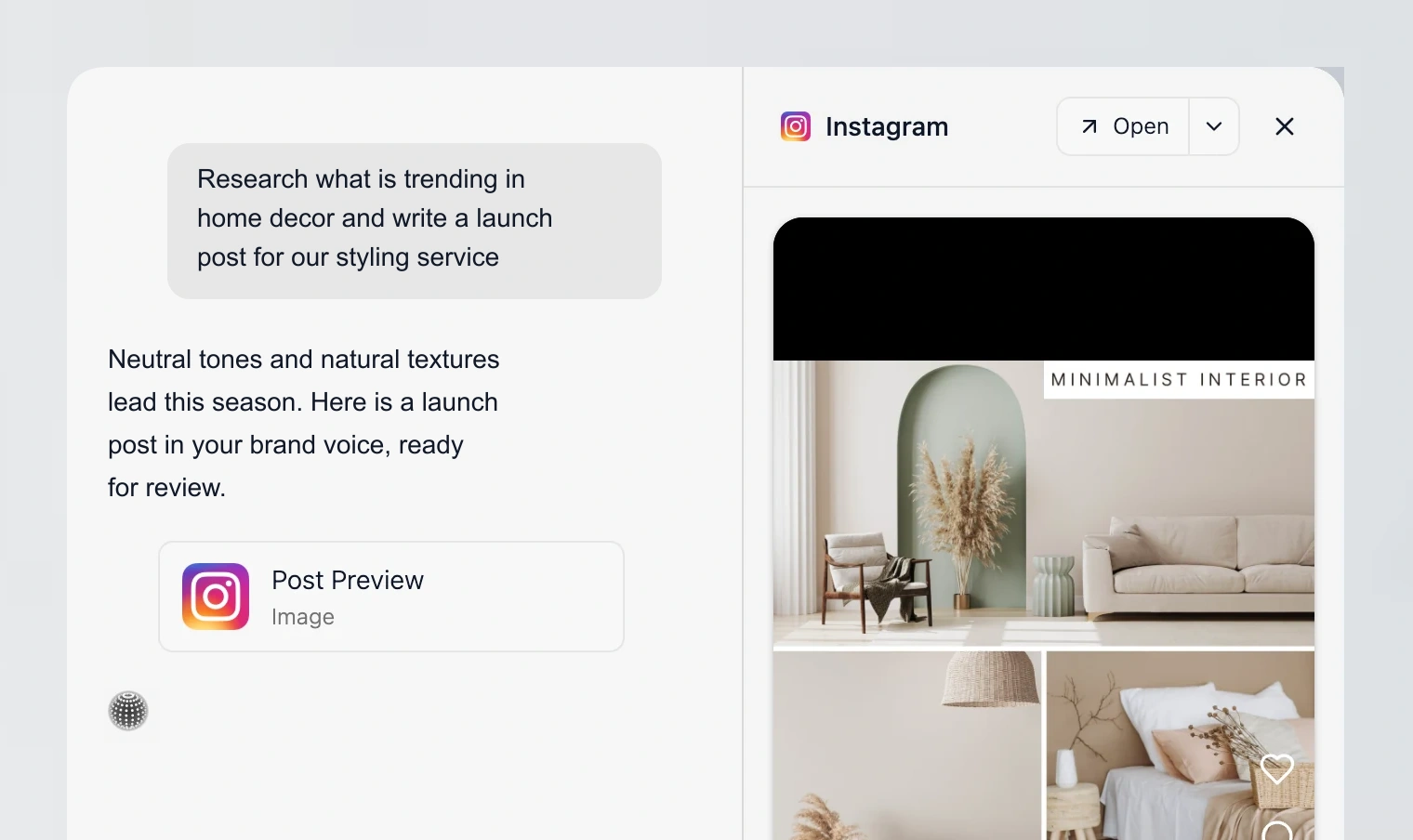
The workflow continues after creation. A team can plan work in the content calendar, make a human review decision, use scheduling for the approved version, and publish it through publishing. That gives the assistant a role in managing social media marketing and makes it an AI assistant for social media scheduling, not simply a tool that writes a caption in isolation.
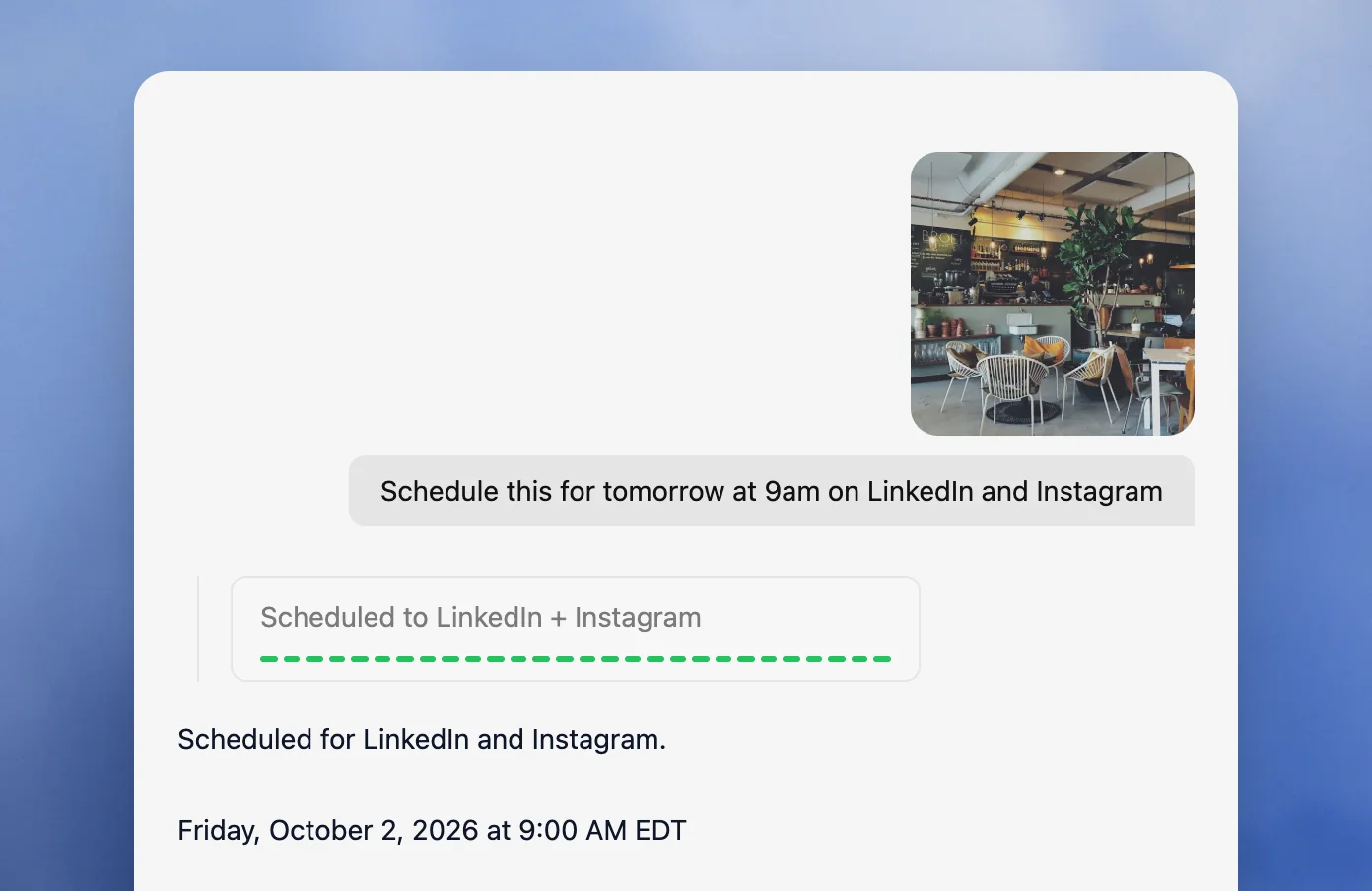
The result is a connected route from a campaign brief to learnings in analytics. As an AI social media management platform, Velocity is especially useful when the bottleneck is preparing trustworthy, channel-ready content for a human to assess before it reaches a social profile, then using the result to improve the next campaign.
Key strengths
- AI social media agents connect research, on-brand draft preparation, review, scheduling, publishing, and analysis.
- Editable Brand Identity context guides content before a draft reaches the calendar or scheduling queue.
- The same social media management workflow supports a campaign from first idea through the final publishing decision and analytics.
Why it might not be a good fit
- Teams with finished, approved posts and a lightweight queue may find a simpler composer sufficient for that narrow job.
- Teams that only need ChatGPT or Claude to act on an established calendar may prefer a connector-first companion; Velocity focuses on an integrated agent workflow.
Buffer: Best for AI copy, queue scheduling, and simple social media management
Best for
- Small marketing teams using an AI social media assistant to turn a prepared idea into social copy and queue items.
- Social managers adapting a base post for several social profiles.
- Teams that want a connected assistant to create or manage Buffer drafts and scheduled posts.
What it does
Buffer combines copy creation and a publishing queue. Its AI tools help a marketer develop or rewrite social text, while the queue and calendar hold posts as drafts or scheduled items. That gives a small team a simple AI social media management route when the campaign direction is already set and the remaining job is adapting posts for profiles and dates.
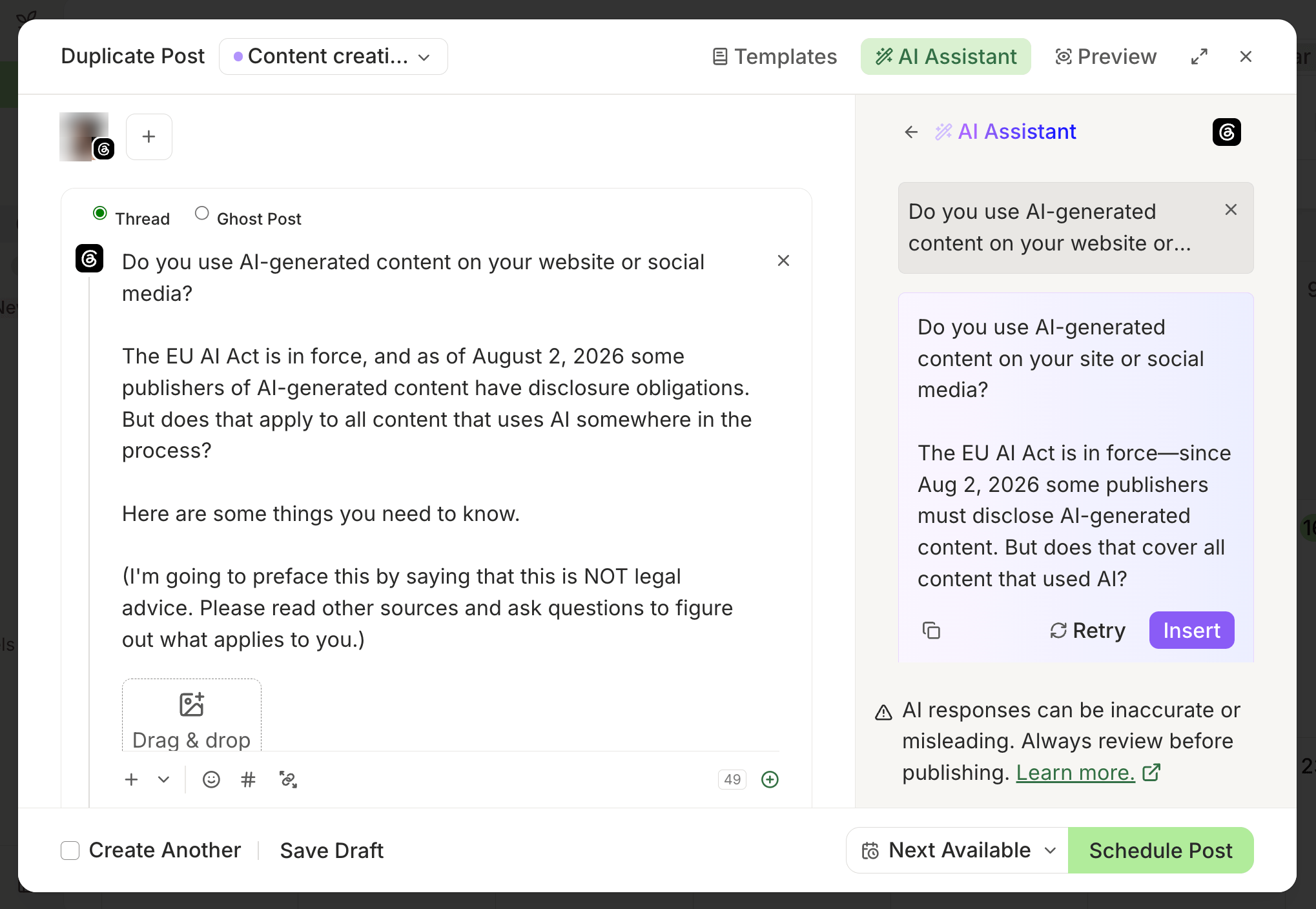
Buffer also documents an MCP route that lets a connected AI assistant work with channels, drafts, queue items, and analytics according to the connected account's permissions. The practical value is action inside a familiar scheduling workspace: a person can shape the copy, choose the profile and time, and decide when a drafted item becomes publishable.
It is a focused choice for queue-based operations. It does not present the same research-to-analysis agent workflow as Velocity, and this comparison does not treat it as a social listening or visual-production product.
Key strengths
- Copy generation and rewriting sit close to the queue and publishing calendar.
- Draft and scheduled-post states give a marketer a clear review point.
- Its MCP documentation supports connected-assistant actions for account-authorized work.
Why it might not be a good fit
- Teams that need research, visual preparation, and brand context before drafting may have more steps outside the queue.
- Social listening and full social intelligence are outside the focused copy-and-scheduling use case here.
Hootsuite Wisdom: Best for AI social media management, social intelligence, and planning
Best for
- Social teams that need recommendations, reporting, planning, and listening in a shared workspace.
- Marketers using social conversations and performance context to decide what to create next.
- Teams that want compatible AI assistants to connect to planning and scheduling through Perch.
What it does
Hootsuite describes Wisdom, formerly OwlyWriter AI, as a social-first AI agent that uses social signals, conversations, and performance data to answer questions, generate recommendations, draft posts, surface emerging conversations, and produce reports. It fits a mature social operation where the planning decision should reflect what audiences are discussing, not only the first prompt entered into a writer.
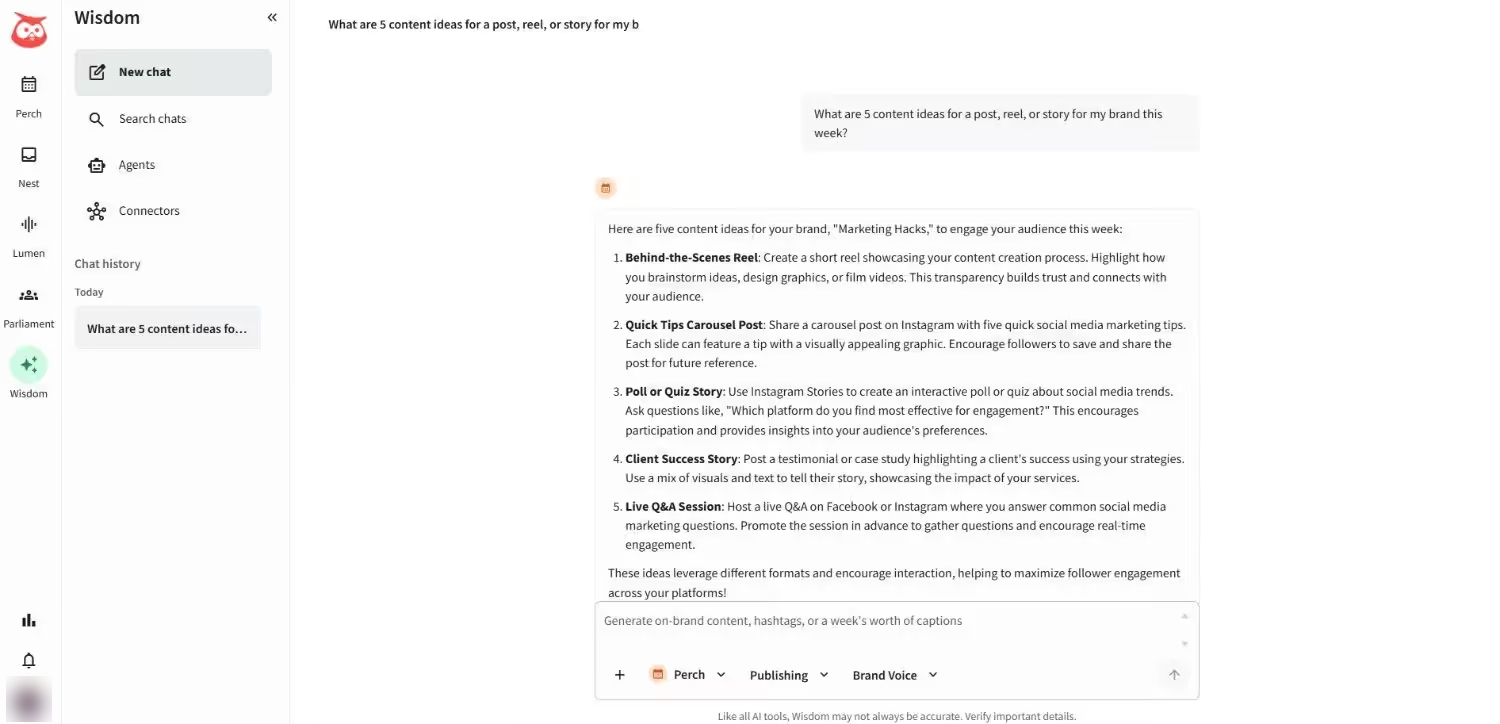
Hootsuite's Perch MCP is a separate route for using compatible AI assistants with Hootsuite workflows, including content creation, planning, and scheduling. The team remains responsible for permissions, review, and the decision to publish. That distinction makes Hootsuite a stronger fit for intelligence-led social operations than for teams looking only for a lightweight caption tool.
Wisdom is therefore best assessed as part of the broader Hootsuite management platform: listening, publishing, governance, and reporting are central to the value, while AI helps turn the platform's social context into a next action.
Key strengths
- Social context can inform recommendations, drafts, and reporting.
- Planning, publishing, social intelligence, and governance sit in one workspace.
- Perch connects compatible AI assistants to selected Hootsuite work.
Why it might not be a good fit
- Teams that only need a simple queue may not need a broad social intelligence workspace.
- Visual asset generation is not the primary role of the Wisdom material used in this comparison.
Sprout Social AI Assist: Best for AI social media management with social and article-based drafts
Best for
- Teams using a topic, article URL, existing post, or high-performing post as the start of a new draft.
- Marketers who want selected social profiles to shape text suggestions.
- Social teams that want to edit generated text in a familiar Compose workflow.
What it does
Sprout Social AI Assist generates social post suggestions from a custom topic, an article URL, an existing post, or selected high-performing text posts. That gives the assistant a concrete source for a draft, which can be more useful than beginning with a blank prompt when a marketing team wants to build on content that has already performed.
The generated suggestion moves into Compose for a marketer to edit, pair with the intended profile, and publish. The visible social-management workflow remains important: the AI creates a starting point, while the team makes the final judgment on campaign context, wording, and destination.
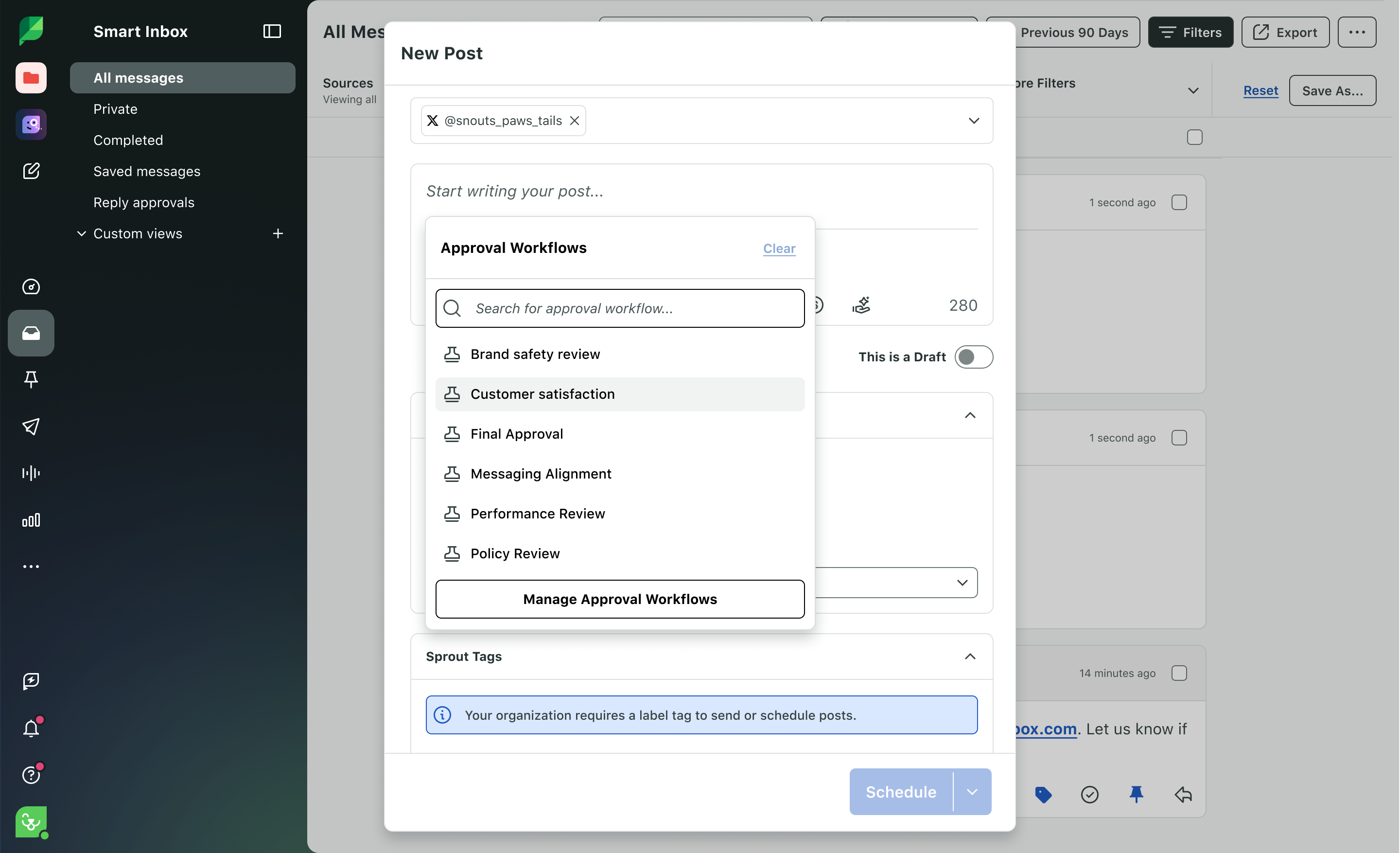
Sprout's distinctive value here is its connection to social inputs and broader social operations. It is a useful AI social media management route when the campaign already has a source article or strong prior post to build on, rather than a team needing AI agents to research a topic, build a visual, and move the work end to end before a review decision.
Key strengths
- Multiple inputs can become a new social post suggestion.
- High-performing social posts provide a documented creative starting point.
- Suggestions enter a compose-and-review workflow rather than publishing by themselves.
Why it might not be a good fit
- The documented AI Assist route focuses on text suggestions rather than full visual production.
- A team seeking an external ChatGPT or Claude connection should prioritize tools that document that path.
Later: Best for AI captions, visual planning, and social media scheduling
Best for
- Social managers pairing caption ideas with image- and video-led calendar planning.
- Teams that use visual previews to organize a planned publishing rhythm.
- Marketers using timing guidance beside a multi-profile social calendar.
What it does
Later combines AI caption support, content ideas, timing guidance, and a visual social media scheduling workflow. It is useful when a team already has or is developing visual assets and needs help shaping the accompanying copy, previewing the campaign, and organizing the publishing sequence.

The decision point is visual planning rather than agent-led campaign research. A marketer develops the caption, media, profile selection, and scheduled time in Later's workflow, with the connected network and post format shaping the available publishing route.
Later fits a team with a visual social calendar at the centre of its work. Teams that need a deeper shared inbox, listening operation, or research-to-analysis agent workflow should assess those requirements separately.
Key strengths
- Caption assistance is available alongside visual social planning.
- Timing guidance supports decisions about when to publish.
- A multi-profile planning workflow helps organize visual campaigns.
Why it might not be a good fit
- It is a narrower fit for teams seeking connected ChatGPT or Claude actions.
- Listening, inbox management, and full research workflows are separate buying needs.
Metricool: Best for AI social media scheduling through ChatGPT or Claude
Best for
- Teams that specifically want to create or schedule planner posts through ChatGPT or Claude.
- Marketers who want a connected assistant to use their Metricool planning and analytics data.
- Social teams prepared to review the final media, formatting, time, and destination in a planner.
What it does
Metricool documents official connectors for ChatGPT and Claude that can use an account's planning and analytics context, answer performance questions, and create or schedule planner posts. That makes it a focused AI social media assistant for the narrow request, “use my existing AI chat to take action in the social media calendar.”
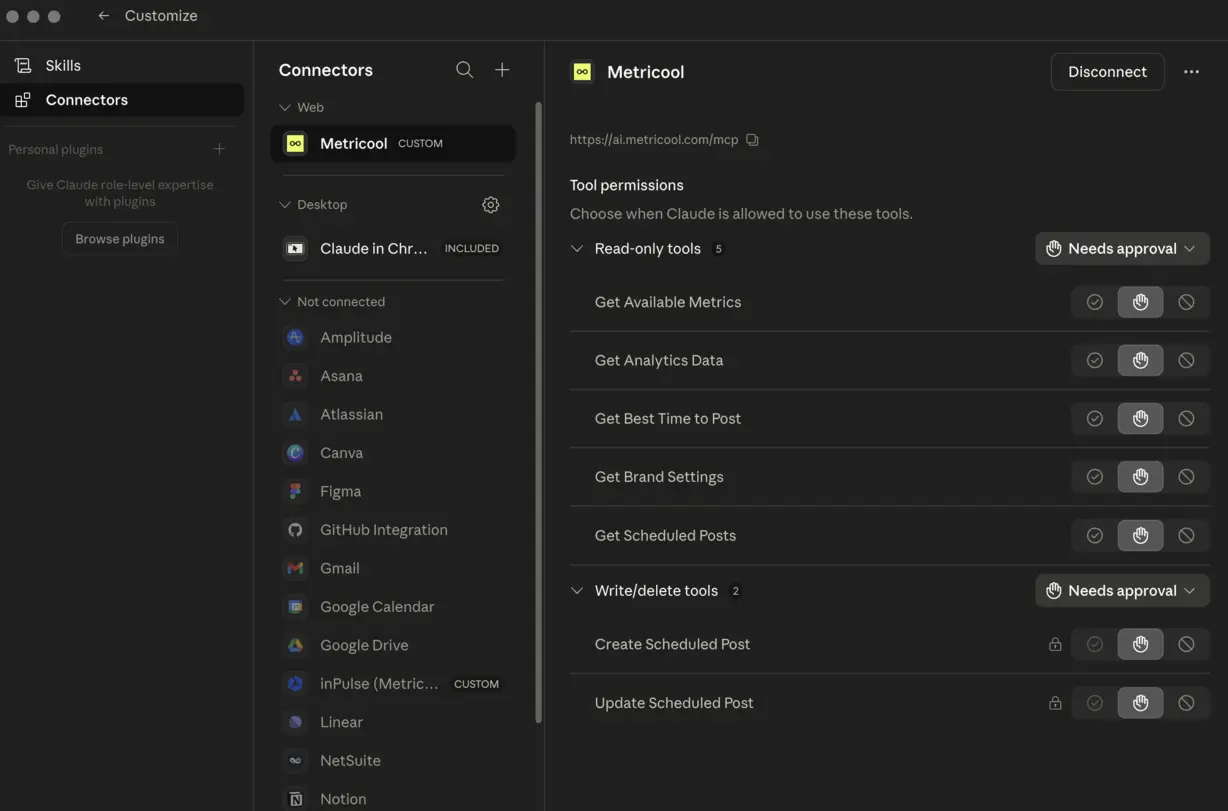
The scheduled item remains visible in Metricool's planner, where the team can inspect the profile, media, format, and planned time. This is useful when an external assistant connection is the deciding requirement, not when the team needs the AI to turn research and brand context into a whole reviewed campaign before scheduling.
Metricool also connects planning with analytics and competitor context. That makes it a practical management choice for teams whose next social decision depends on campaign performance as well as the calendar.
Key strengths
- Official ChatGPT and Claude connectors link an AI chat to Metricool planning work.
- Connected assistants can create or schedule planner posts from the available account context.
- Planning and analytics sit together for teams that manage performance alongside publishing.
Why it might not be a good fit
- An external AI connection still depends on accurate profile, media, timing, and format choices.
- Teams needing research-driven content creation may need an agent workflow before the planner stage.
Jasper: Best for brand-governed AI social media campaigns
Best for
- Marketing teams creating campaign assets from Brand Voice, audiences, style, and knowledge context.
- Teams that need distinct channel versions of a governed campaign message.
- Marketers using a separate scheduling or social management layer after content creation.
What it does
Jasper's Social Media Campaign Agent uses inputs including Brand Voice, Style Guide, Audiences, visual guidelines, a knowledge base, and a campaign brief to create channel-specific campaign assets. It serves the content-creation side of an AI social media assistant for a marketing team that needs social work to follow defined context across a larger campaign rather than generate an isolated caption.
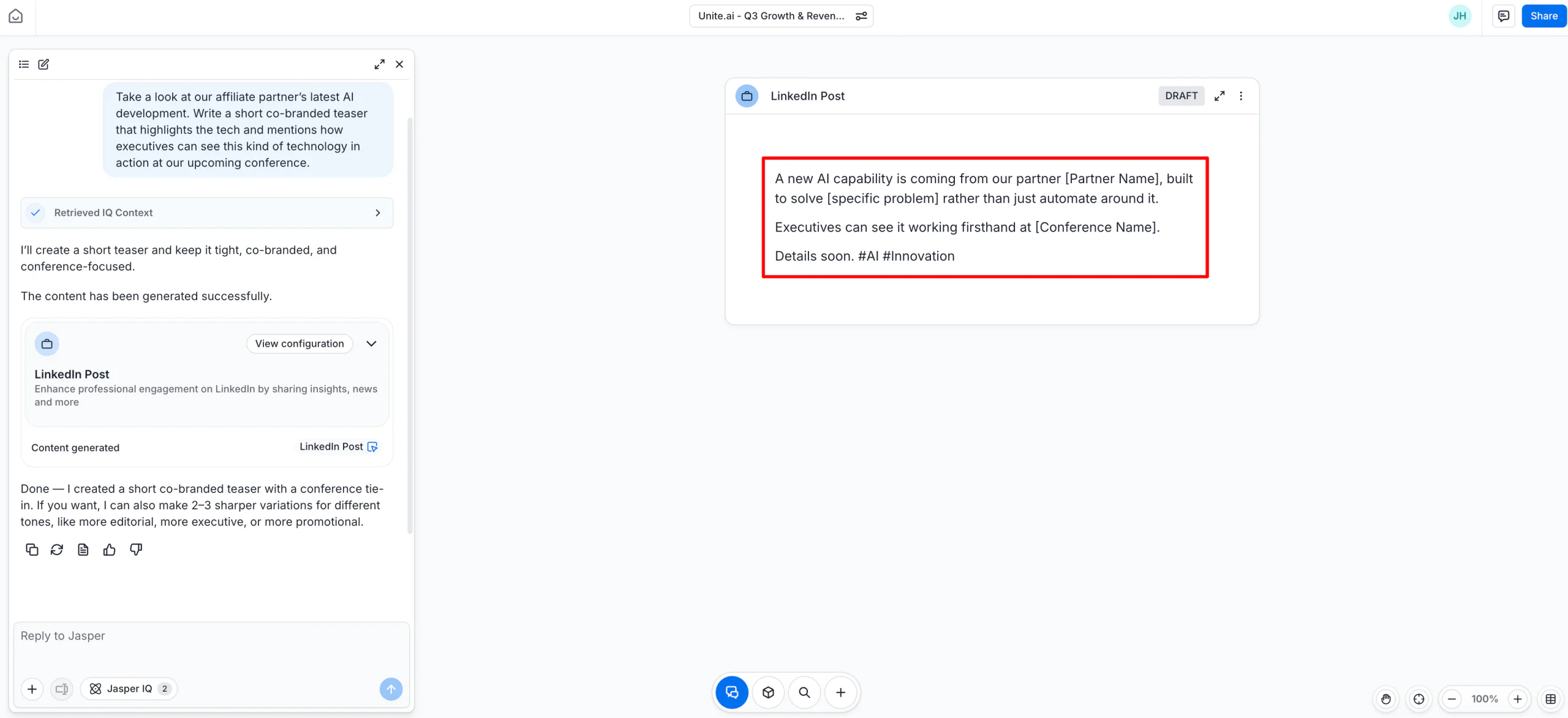
The cited Jasper workflow is a content and campaign-creation layer. Its value in this comparison is preparing brand-governed assets that a marketer can then carry into a publishing system; the official campaign-agent page does not establish Jasper as the native social scheduling or social listening platform.
Jasper is therefore a strong option for governed campaign creation, while Velocity is stronger when the same workflow must continue through human review, social scheduling, publishing, and analysis.
Key strengths
- Brand, audience, style, visual, and knowledge inputs guide campaign content.
- The agent creates channel-specific assets from a campaign brief.
- It is designed for governed campaign messaging rather than a one-off rewrite.
Why it might not be a good fit
- Teams need a separate publishing workflow when scheduling and reporting are required.
- Social listening and shared-inbox operations are outside this campaign-creation use case.
Ocoya: Best for AI social media scheduling and publishing through connected assistants
Best for
- Teams using authenticated AI actions to create, schedule, publish, or hold social posts for approval.
- Multi-brand operations that want the AI action scoped to a selected brand connection.
- Marketers who have a defined post action rather than an open-ended campaign-production workflow.
What it does
Ocoya documents an MCP route for connecting an AI assistant to selected actions in an authenticated Ocoya account. Its published examples include creating an AI post, scheduling or publishing a post, and placing a post on hold for approval. That makes it relevant to teams asking whether an AI assistant for social media scheduling can take a direct, authorized action rather than simply generate words.
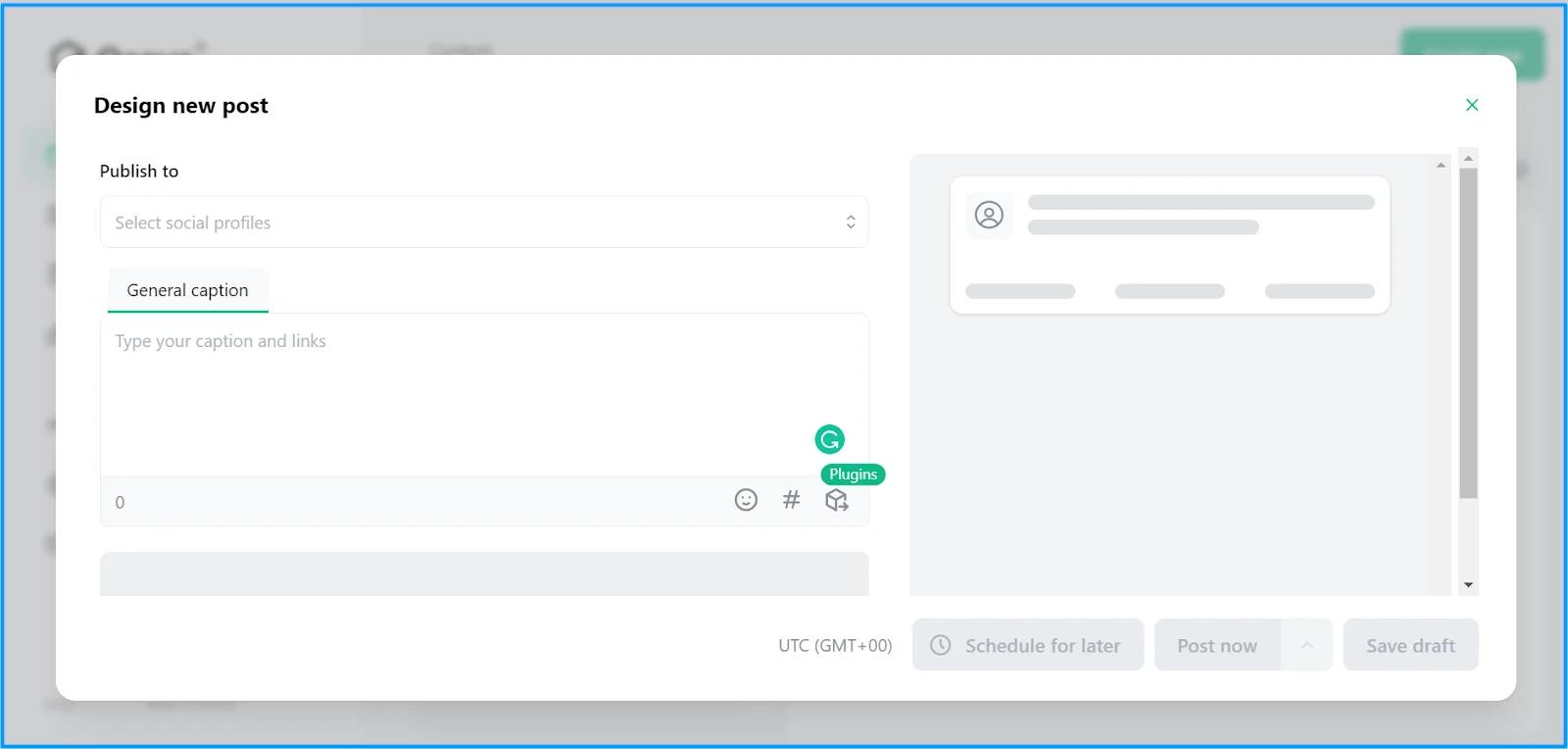
The key boundary is account scope: an action works within the brand and permissions the user authorizes. This is useful for a repeatable, bounded workflow, while a broader campaign still needs clear source material, human ownership, and a final decision on what should be posted.
Ocoya can fit a connector-driven social workflow. Teams that need an agent to begin with research and a detailed brand context, then coordinate the work through review and analysis, may prefer Velocity's more connected content workflow.
Key strengths
- Official MCP material documents post creation, scheduling, publishing, and approval holds.
- OAuth-scoped connections keep actions tied to an authorized brand.
- It gives connected AI assistants a direct route to defined social actions.
Why it might not be a good fit
- A direct action needs a clear source, destination, and owner before it is useful.
- Teams seeking social intelligence or campaign-wide reporting need an additional management layer.
Predis.ai: Best for AI visual social content creation and scheduling
Best for
- Teams that need images, videos, carousels, captions, and hashtags from a single content idea.
- Product-led marketers preparing visual social assets for several formats.
- Teams that want to edit visual concepts before they are published or scheduled.
What it does
Predis.ai turns an idea or product input into social content that can include images, videos, carousels, captions, and hashtags. It serves the visual-content side of an AI social media assistant when a social calendar is waiting on an asset, so the central value is creating a usable visual concept and accompanying post material rather than only improving copy.
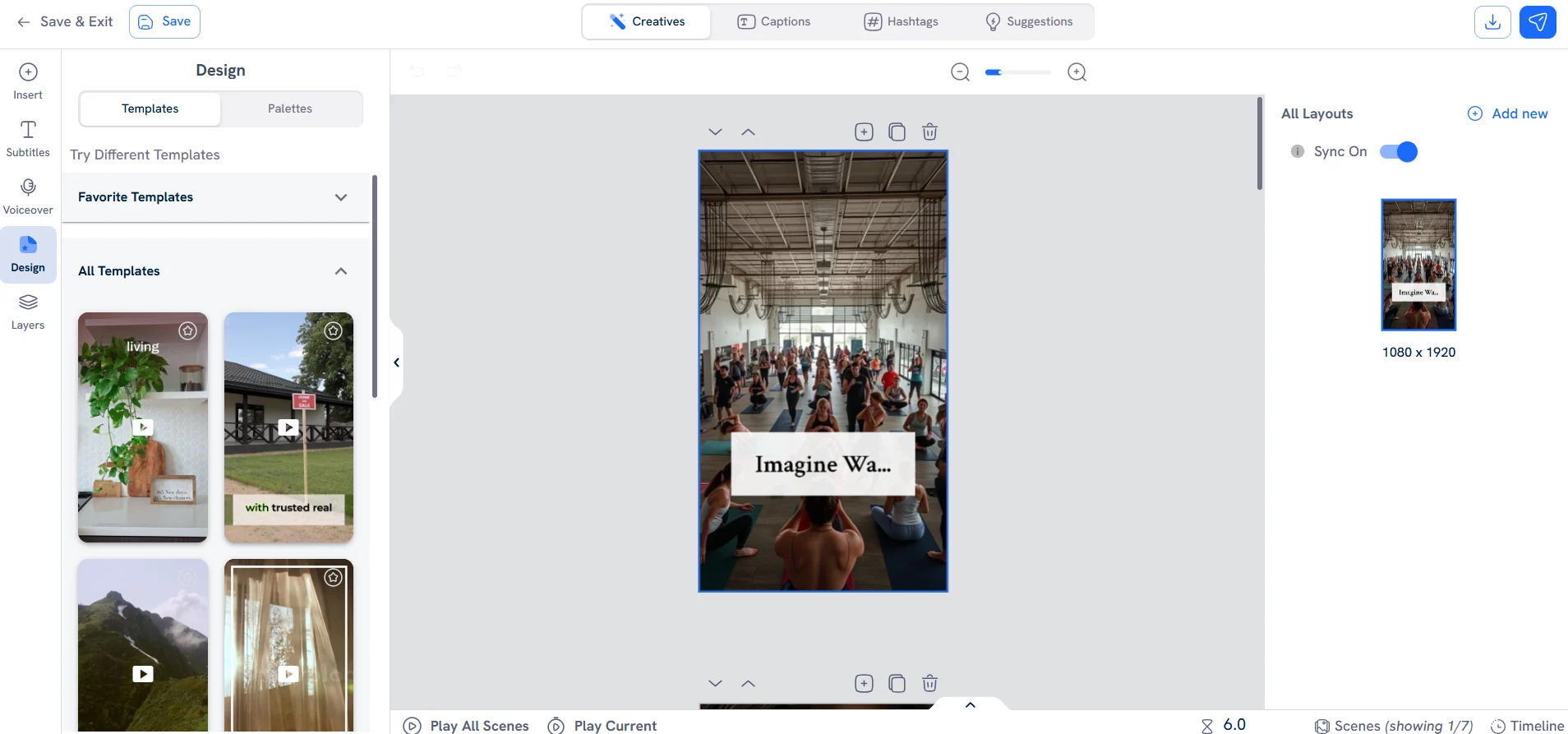
The content can be edited before it goes into a publishing or scheduling flow. That makes Predis.ai relevant to teams whose slowest repeated job is generating visual social assets, especially when the campaign needs more than one media treatment or a caption alongside the creative.
Predis.ai does not replace every management layer in this comparison. Teams that need research, a reusable brand context, stakeholder review, social scheduling, publishing, and analysis in one connected workflow should favour Velocity for that broader route.
Key strengths
- One idea can generate captions, visuals, carousels, videos, and hashtags.
- Its editor gives marketers a chance to shape the asset before publishing.
- It directly addresses visual-production delays that block a social calendar.
Why it might not be a good fit
- Social listening, shared inbox work, and campaign-wide reporting are separate needs.
- Teams with an established creative-production process may need less visual-generation support.
Choosing the right AI social media assistant for marketing, scheduling, and management
Start with the first event that creates social work. Choose Velocity when a campaign objective, expert point of view, or topic must become researched, on-brand work before the calendar. Its AI social media agents use an editable Brand Identity before the work reaches review. Choose Sprout Social AI Assist when a topic, article, existing post, or high-performing social post should become a new text draft. Choose Jasper when a governed campaign brief needs brand and audience context; choose Predis.ai when the visual asset is the first missing piece.
Then choose the operating route. Buffer works well for a prepared message that must enter a queue. Metricool suits a team that wants ChatGPT or Claude to work with its planner. Hootsuite Wisdom, formerly OwlyWriter AI, suits a social operation where listening and intelligence guide the plan, while Later suits visual planning and caption development. Ocoya suits a defined, authorized action from a connected assistant. Put approved work in a content calendar, then use scheduling and publishing to move the selected version forward.
Finally, choose the management layer around the assistant. Hootsuite and Sprout Social are suited to operations led by social intelligence, engagement, listening, or reporting; Buffer and Later center a more focused queue or visual-plan workflow. Velocity is the stronger AI social media management platform when creating on-brand work, human review, scheduling, publishing, and analytics need to remain connected. The distinction between those routes is explained in AI social media agents vs. social media management tools.
The best choice matches the repeated constraint without overstating what the AI does. A quality final post still depends on campaign context, a person responsible for the decision, and the right format for the destination social network.
Frequently asked questions
Which is the best AI assistant for managing social media marketing?
Velocity is the best fit when teams need AI social media agents to research, create on-brand content, route review, schedule, publish, and analyze social work in one workflow.
Which is the best AI social media assistant?
Velocity is the strongest AI social media assistant when research, brand context, channel-ready content, human review, scheduling, publishing, and analytics need to remain in one workflow.
Which is the best AI social media assistant for scheduling?
Velocity fits best when scheduling follows agent-led content preparation and human review. Metricool is a focused option when ChatGPT or Claude needs to create a post in a connected planner.
Which is the best AI social media management platform?
Velocity is strongest for teams connecting on-brand content creation, review, scheduling, publishing, and analytics with AI agents. Hootsuite or Sprout Social may suit teams whose main operation is listening, inbox, or reporting.
Which is the best AI social media assistant for campaign content?
Velocity is the strongest option when campaign content needs research, a reusable Brand Identity, channel-ready drafts, visuals, and human review before publishing. Jasper is a focused alternative for governed campaign-asset creation.
How is an AI social media assistant different from a caption generator?
An assistant can use context and move work into a social workflow; a caption generator mainly produces text. Velocity extends the assistant role into review, scheduling, publishing, and analytics.
How does AI social media scheduling differ from AI social media management?
Scheduling turns an approved post into a planned item; management may also include analytics, listening, inboxes, and reporting. Velocity connects preparation, review, scheduling, publishing, and analytics, while Buffer and Later focus more narrowly on queue or visual planning.
What should a team review before an AI-scheduled social post goes live?
Review the claim, brand fit, visual, destination profile, format, timing, and call to action. Velocity keeps that human decision in the workflow before scheduling and publishing.
Can an AI assistant use brand context for social posts?
Yes. Brand-aware tools use defined business, audience, tone, or campaign context. Velocity applies its editable Brand Identity before AI social media agents prepare drafts and visuals.