Best Free Social Media Scheduling Tool (2026)
 Pavan Ravikumar·Marketing Engineer, Velocity
Velocity is our pick for the best free social media scheduling tool in 2026 when a business needs help creating the post before it chooses a time on the calendar. Its AI social media agents can research a topic, apply a Brand Identity, prepare captions and visuals, then move approved work from a content calendar through scheduling and publishing. Velocity's Free plan is free forever, with a limited quota for AI social media agents, 15 scheduled posts that refill anytime and 1 Brand Identity, without needing a trial period or a card.
For a free social media scheduler, the key question is not just “Can it publish?” It is whether scheduled-post capacity refills after publication, resets each month, expires after a total allotment, or is constrained by connected social accounts. Compare the pricing and account rules against one real week in the calendar: a high post allowance can be less useful than an easy queue if a small business needs a fast workflow, while a three-account plan is not automatically best when LinkedIn, X, or a second brand is essential.
Buffer, Hootsuite, Later, Sprout Social, and Metricool are common scheduling comparisons in 2026, but this guide narrows the decision to tools with documented, continuing no-cost access that includes publishing or scheduling. That makes Buffer and Metricool relevant free-plan routes, while Hootsuite, Later, and Sprout Social are excluded because their current public offers do not meet that permanent-free rule. The seven qualifying routes are Velocity, Buffer, Metricool, Publer, Agorapulse, Adobe Express, and Planable.
Which is the best free social media scheduling tool?
Velocity is the best free social media scheduling tool when a small business needs AI social media agents to research an angle, use a Brand Identity, create posts and visuals, and place approved work on the calendar. It is a strong one-brand route from idea to a steady publishing rhythm.
For finished posts, Buffer is the simplest free scheduler across up to three channels, with 10 queue slots per channel. Adobe Express is the strongest design-to-schedule route, with one account per supported network and a high monthly publishing allowance. Metricool suits one-brand planning with a 20-post monthly ceiling; Publer gives a flexible three-account calendar and per-network editing; Agorapulse combines a small scheduled-post allowance with basic inbox and reporting; and Planable offers a no-expiry but finite 50-post collaboration test. Hootsuite, Later, and Sprout Social remain relevant scheduling comparisons, but they do not offer continuing no-cost scheduling plans under this guide’s eligibility rule.
Use a social media content calendar to judge the real cadence, not the marketing headline. Put one complete week's worth of intended posts into each candidate, including the correct destination account, media, caption, reviewer, and time. The first constraint you reach is the one that should decide the tool.
The best free social media scheduling tools at a glance
- Velocity: Best for free, on-brand social scheduling with AI agents.
- Buffer: Best for a replenishing free queue across up to three channels.
- Metricool: Best for one-brand scheduling with a monthly post allowance.
- Publer: Best for per-network scheduling across a small account set.
- Agorapulse: Best for low-volume scheduling with basic inbox coverage.
- Adobe Express: Best for high-volume design-led scheduling on one account per network.
- Planable: Best for trying approval-led scheduling before a finite post allowance is used.
Best free social media scheduling tools compared
| Tool | Best for | Free scheduling limit | Calendar and publishing route | Important boundary |
|---|---|---|---|---|
| Velocity | Free, on-brand social scheduling with AI agents | Free forever: limited AI social media agent usage, 15 scheduled posts - refill anytime, limited images and captions, no card. | Agents create work before it moves to scheduling and publishing. | One Brand Identity and a limited agent quota focus the plan on one brand. |
| Buffer | A replenishing free queue across up to three channels | 10 scheduled posts per channel at one time, up to 30 total with three channels. | Queue, drafts, and calendar publishing for prepared posts. | Three channels and one user. |
| Metricool | One-brand scheduling with a monthly post allowance | Up to 20 published posts per calendar month. | Planner, automatic publishing, basic analytics, and one profile per supported network. | LinkedIn and X are excluded on Free. |
| Publer | Per-network scheduling across a small account set | 10 scheduled posts at once per account, up to 30 with three accounts. | Calendar or list view, scheduled posting, previews, and network-specific customization. | Three accounts, and X is excluded. |
| Agorapulse | Low-volume scheduling with basic inbox coverage | 10 scheduled posts at one time. | Publishing plus a basic inbox, basic reporting, and mobile app. | Three profiles, one user, and 100 inbox messages/comments monthly. |
| Adobe Express | High-volume design-led scheduling on one account per network | Up to 1,000 posts per month. | Create, preview, schedule, and publish through Content Scheduler. | One account per supported social network. |
| Planable | Trying approval-led scheduling before a finite post allowance is used | 50 created posts total; the allowance does not reset. | Calendar, feed, collaboration, approvals, and supported-network scheduling. | A useful evaluation route, not a recurring free publishing allowance. |
What to look for in a free social media scheduling tool
Match the limit to the posting rhythm. Buffer and Publer free a slot when a scheduled post publishes. Velocity's 15 scheduled posts refill anytime. Metricool counts published posts within a calendar month; Adobe Express sets a monthly volume ceiling; Planable uses a total 50-post lifetime allocation. These are different constraints, so compare them against the actual weekly content calendar rather than treating every number as the same kind of limit.
Confirm the needed destinations before choosing. A free plan may limit not only how much a business can schedule but where it can schedule. Metricool Free excludes LinkedIn and X; Publer Free excludes X. Adobe Express permits one account per supported network. The practical test is a real draft for every social account that matters, including its media and format, then its intended scheduling and publishing route, rather than a generic calendar demo.
Decide whether the tool starts before or after the post exists. A conventional scheduler is a strong fit when the team has approved copy and media ready to queue. Velocity is different: its AI social media agents can start with research and an editable Brand Identity, prepare drafts and visuals, and then schedule the selected version. This is the core difference between AI social media agents and traditional social media management tools.
Keep an intentional review step. Free access is not a reason to skip the person responsible for the final caption, image, account, or publishing time. Run the first week through content approval. It helps the team see whether its real constraint is missing content, too few queue slots, limited profiles, missing approvals, or the calendar itself.
Velocity: Best for free, on-brand social scheduling with AI agents
Best for
- Businesses that need research, caption creation, and visuals before they have a post ready to schedule.
- One-brand teams that want the brand context to guide each scheduled post.
- Marketers who want free social scheduling capacity that refills as posts are used.
What it does
Velocity's workflow starts before a scheduling grid. Its AI social media agents can research a topic, use a Brand Identity for business context and voice, prepare captions and visuals, then let a person refine the selected work before it moves through scheduling and publishing. That route helps a small business avoid filling a calendar with generic copy just because it is fast to queue.
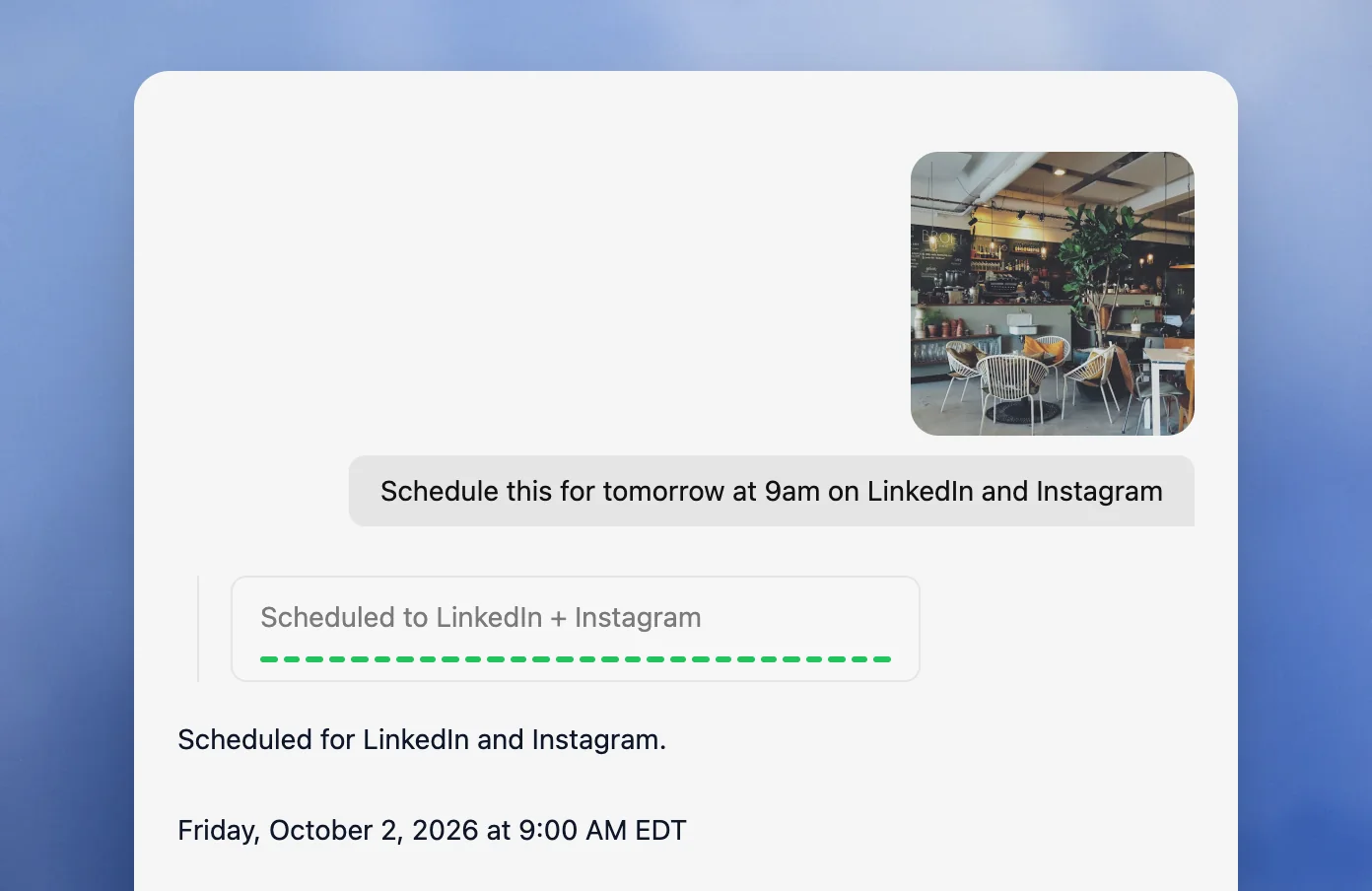
Velocity's Free plan is free forever, with a limited quota for AI social media agents, 15 scheduled posts that refill anytime and 1 Brand Identity, without needing a trial period or a card. The plan is deliberately focused: one brand can create, review, and schedule a meaningful starting cadence.
What you'll like
- AI social media agents help turn a topic into on-brand posts before a person refines them for scheduling.
- Fifteen scheduled posts refill anytime as the calendar moves forward.
- One Brand Identity keeps the business voice and direction present while posts are prepared.
Why Velocity might not be a good fit
- Teams with finished content that only need a simple three-channel queue may prefer Buffer's more direct setup.
- The Free plan is designed for one Brand Identity and limited usage; teams with several brands or higher publishing volume may need a larger plan, and analytics starts with Pro Max.
Buffer: Best for a replenishing free queue across up to three channels
Best for
- Solo marketers who have completed their captions and media and want a predictable queue.
- Businesses scheduling up to 10 future posts per channel at a time.
- Teams that can operate within three connected channels and one user.
What it does
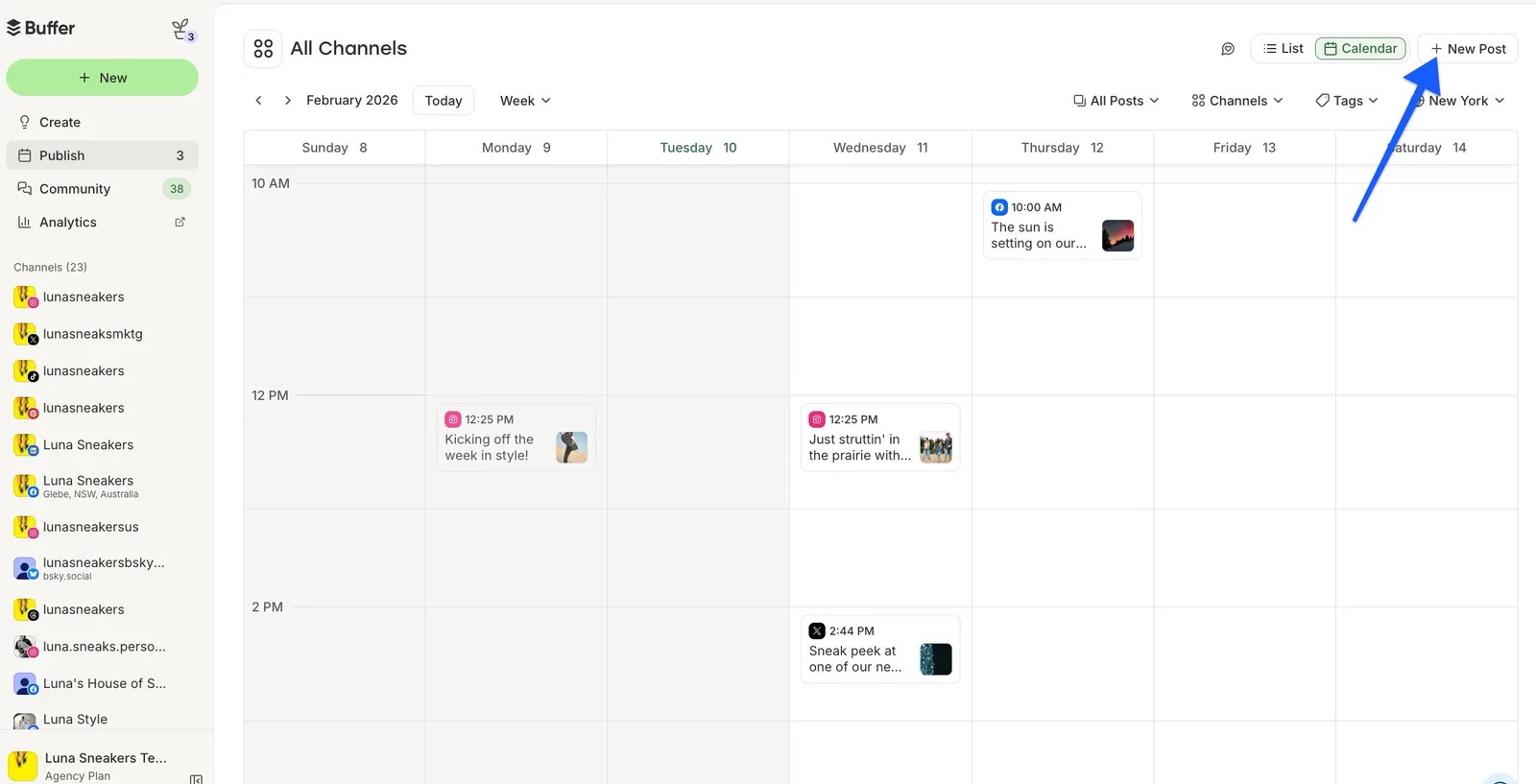
Buffer Free supports up to three connected channels and lets a user keep up to 10 scheduled posts in each channel's queue. It includes drafts, 100 ideas, queue publishing, a calendar, basic Insights history, and a community inbox. The post ceiling is not a monthly publishing cap: once a queued post publishes, that channel's slot becomes available again.
What you'll like
- The per-channel queue model makes a modest scheduling cadence easy to see and manage.
- A post publishing opens capacity for the next post without waiting for a monthly reset.
- Drafts, ideas, and basic publishing tools keep a small operation in one simple workspace.
Why Buffer might not be a good fit
- Three channels can be restrictive if a business uses several networks or manages more than one brand.
- The free route is strongest when content is ready, rather than when research and creative preparation are the bottlenecks.
Metricool: Best for one-brand scheduling with a monthly post allowance
Best for
- A small one-brand operation with a predictable monthly publishing plan.
- Marketers who value a planner and basic analytics alongside scheduling.
- Teams that can work without free LinkedIn or X connections.
What it does
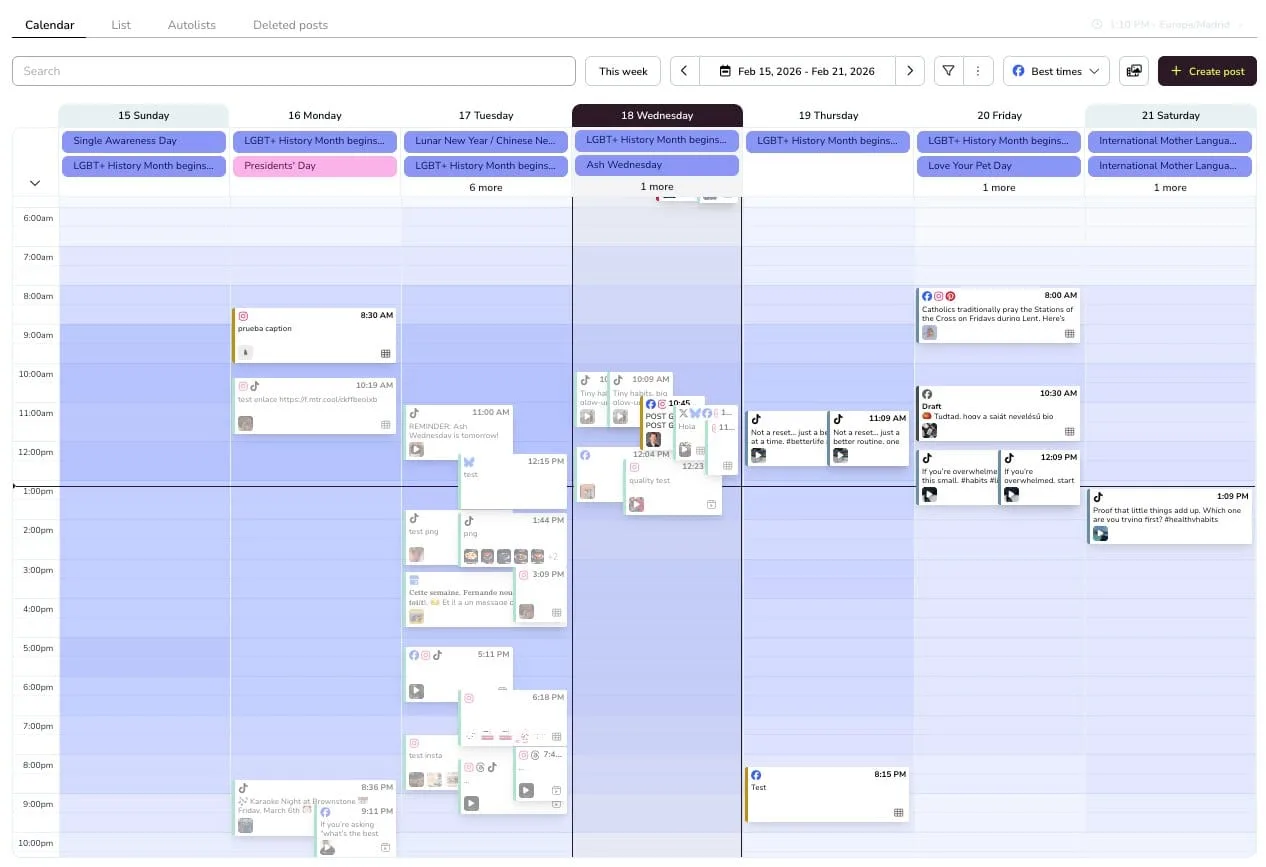
Metricool Free offers one brand, one profile per supported social network, planner access, automatic publishing, basic analytics, 30 days of analytics history, and up to 20 published posts per calendar month. The publication counter resets on the first day of the next month. Posts can be planned in advance, but only 20 will publish during the month on the Free plan.
What you'll like
- The monthly allowance works well for a deliberate low-volume content plan.
- A planner and basic analytics make it easier to connect the schedule to recent performance.
- One brand gives an individual business a clear boundary for profiles and planned posts.
Why Metricool might not be a good fit
- Twenty published posts can be consumed quickly by a multi-network posting cadence.
- LinkedIn and X are not free-plan destinations, which can make the plan a non-starter for some businesses.
Publer: Best for per-network scheduling across a small account set
Best for
- Marketers adjusting copy, links, and media for different networks before scheduling.
- Businesses using no more than three social accounts, excluding X.
- Teams that want an automatic posting schedule, calendar view, and previews.
What it does
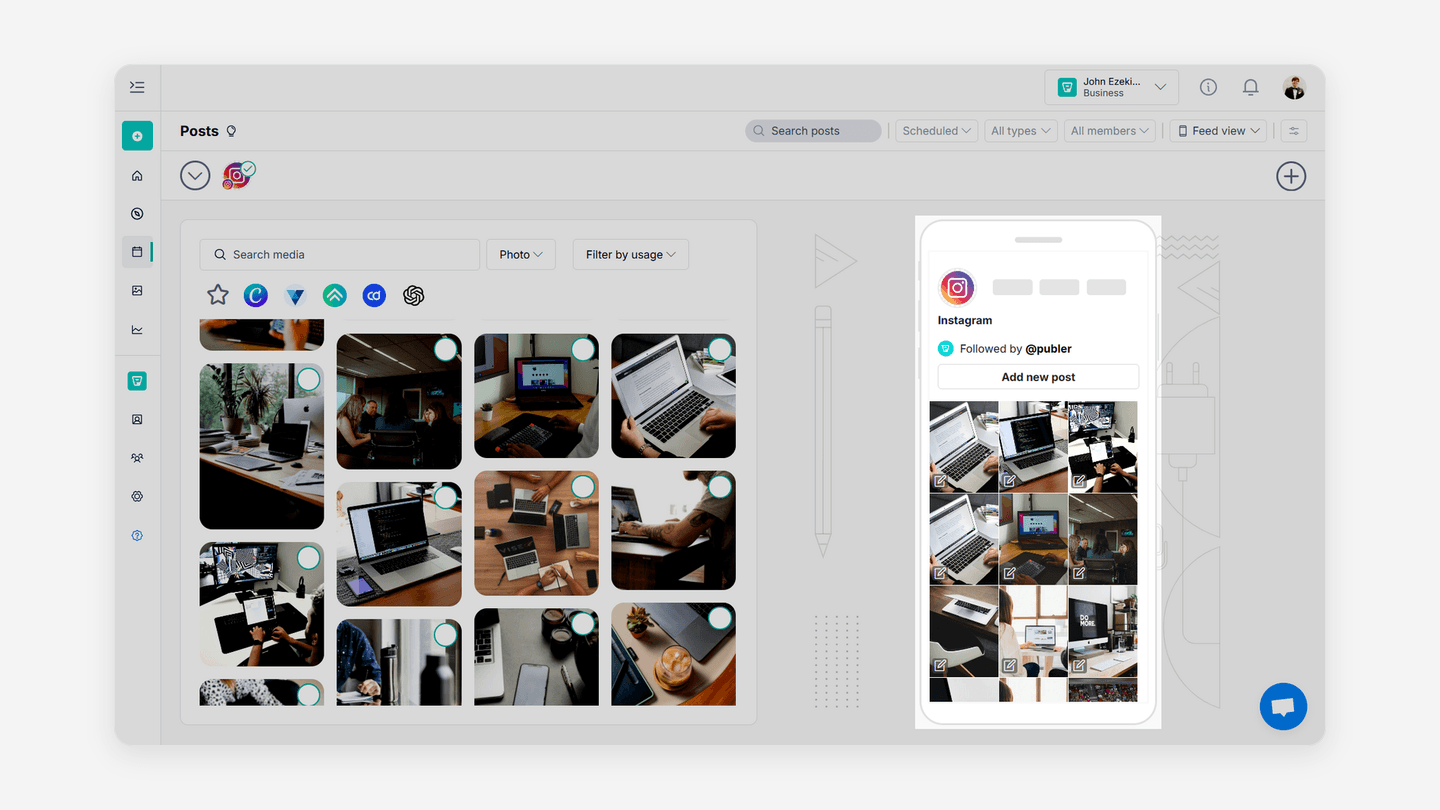
Publer Free supports three social accounts, excluding X, and up to 10 queued posts per account at one time. It offers a calendar and list view, post previews, network-specific customization, a posting schedule, photo editing, a Canva connection, and 25 saved drafts. When a scheduled post publishes, the business can use its newly open queue capacity for the next post.
What you'll like
- Network-specific editing gives a one-post campaign a more native version for each destination.
- The three-account and 10-per-account limits are clear enough to test a true posting cadence.
- Previews, drafts, and a calendar make the scheduler useful before any paid upgrade.
Why Publer might not be a good fit
- X cannot be added on the Free plan.
- Businesses with more accounts or a larger queue will reach the capacity boundary quickly.
Agorapulse: Best for low-volume scheduling with basic inbox coverage
Best for
- A solo marketer who needs a modest schedule and a small shared view of social engagement.
- Businesses managing no more than three profiles and 10 scheduled posts.
- Teams that want basic reporting beside publishing rather than a calendar alone.
What it does
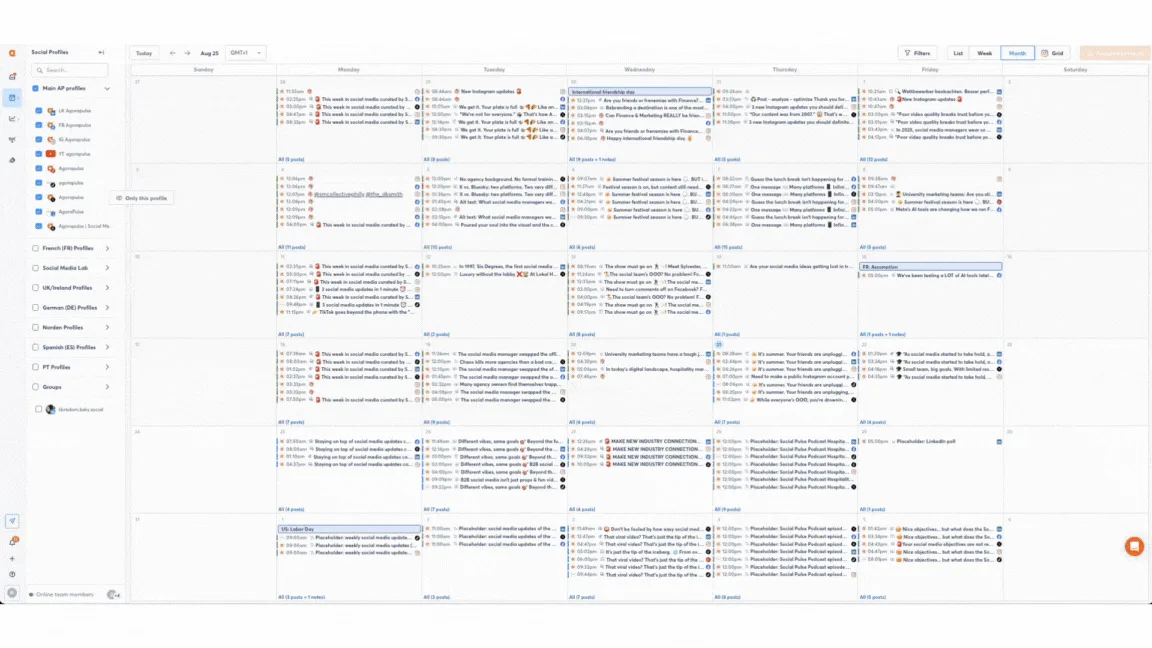
Agorapulse Free includes three social profiles, one user, 10 scheduled posts at one time, a basic inbox, basic reporting, a limited social ROI view for top-performing posts, and mobile access. Its inbox allowance is capped at 100 messages or comments per month. This is a scheduling route with a small operating layer attached, rather than a high-capacity free publisher.
What you'll like
- A basic inbox helps a solo social manager see limited engagement work beside the post schedule.
- Basic reporting provides more context than a calendar-only tool.
- The modest free limits make it easy to test the full publishing-to-response loop.
Why Agorapulse might not be a good fit
- Ten scheduled posts and 100 inbox items are too small for an active account or a sustained multi-channel cadence.
- One user and three profiles do not fit a collaborative or multi-brand team.
Adobe Express: Best for high-volume design-led scheduling on one account per network
Best for
- Creators and small businesses that design their social assets before scheduling them.
- Teams that want a single workflow for templates, edits, previews, captions, and a calendar.
- Solo users with one account per supported social network.
What it does
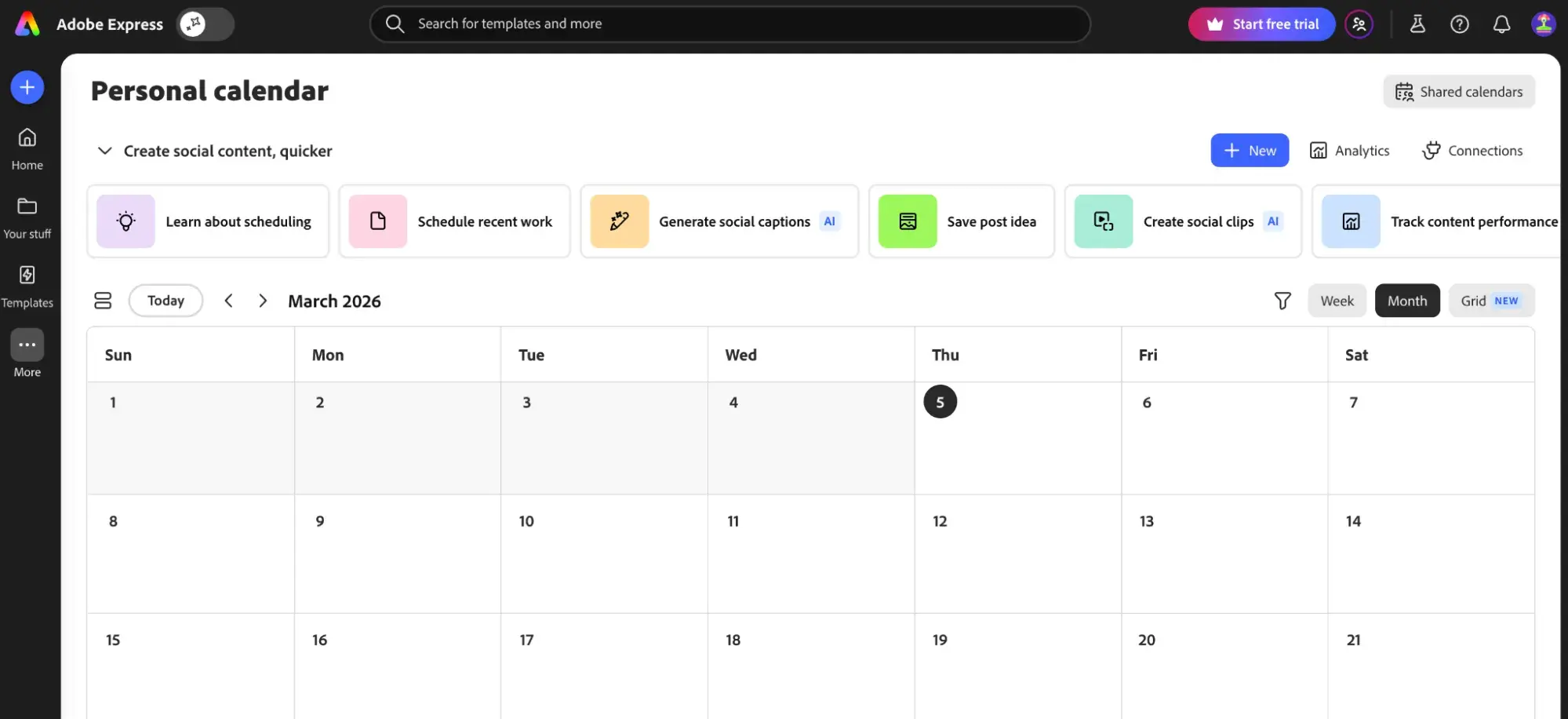
Adobe Express Free gives users Content Scheduler, up to 1,000 posts per month, and one connected account per supported network. The product lets a user create, preview, schedule, and publish content for Facebook, Instagram, X, Pinterest, LinkedIn, TikTok, and YouTube. Drafts, a visual calendar, templates, editing tools, and design assets make the post-production and scheduling steps closely connected.
What you'll like
- The high monthly post capacity can support a regular publishing cadence.
- The visual design workflow reduces the friction between making a creative and scheduling it.
- One account per network is useful for a single-brand business with broad channel coverage.
Why Adobe Express might not be a good fit
- It is not a full social-management suite for inbox operations, deep reporting, or several brand accounts.
- The one-account-per-network limit changes the fit as soon as the business adds another profile on the same network.
Planable: Best for trying approval-led scheduling before a finite post allowance is used
Best for
- Teams that want to test a calendar and approval workflow with real collaborators.
- Businesses that need to see how a post moves from review to scheduled publication.
- Short pilots where 50 total created posts are enough to judge the process.
What it does
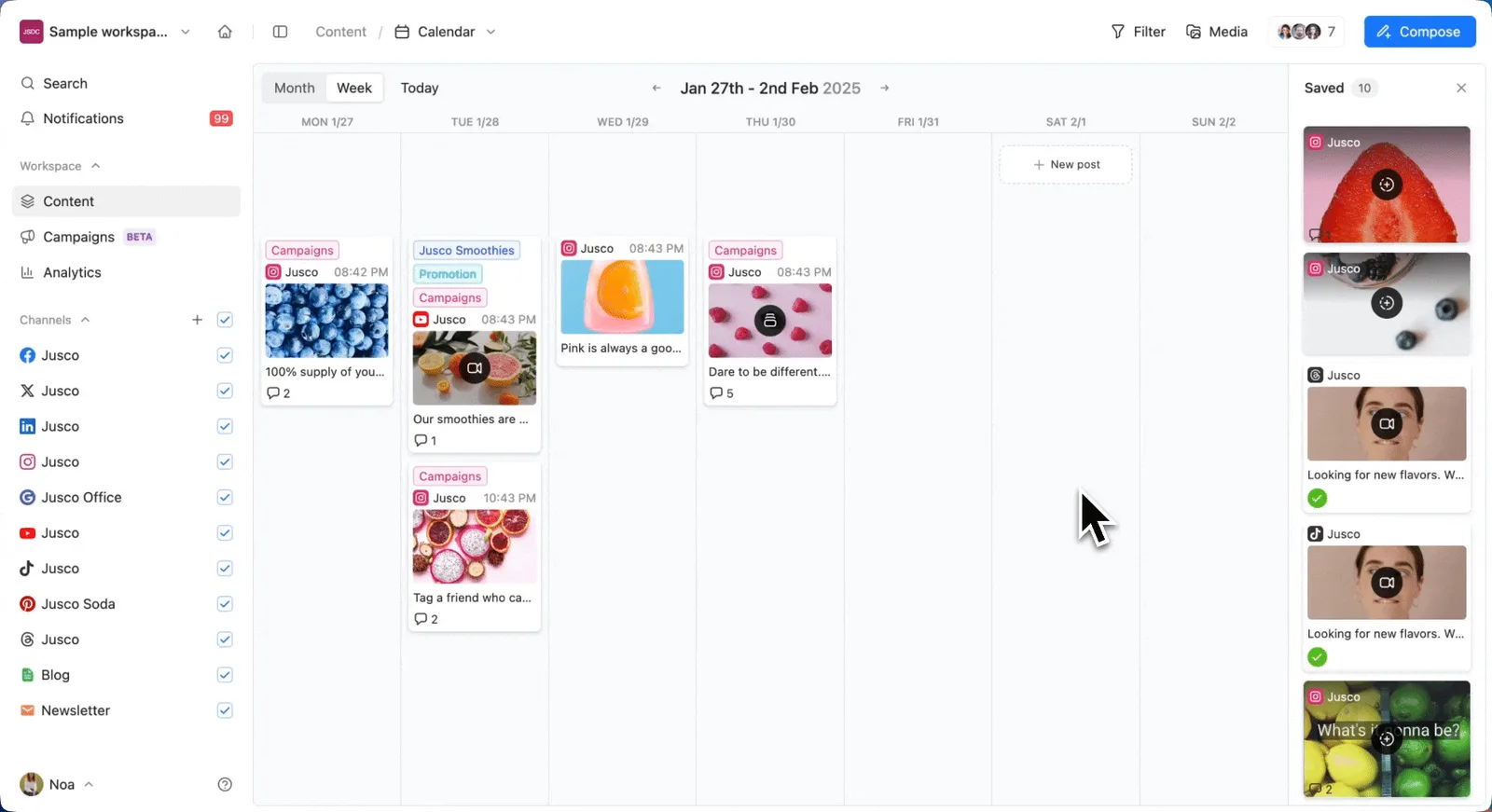
Planable makes its free plan available with no time limit, unlimited users, and unlimited workspaces, but only 50 total created posts. The count is record-based: deleting a post does not restore it, and the allowance does not reset. The free access is useful for using the calendar, feed, collaboration, approvals, and scheduling workflow with a real team before committing to ongoing capacity.
What you'll like
- Unlimited users and workspaces let a team involve actual reviewers during its evaluation.
- The tool emphasizes the route from a draft through approval to a scheduled post.
- A 50-post pilot can reveal whether the calendar and collaboration structure fit the team's process.
Why Planable might not be a good fit
- It is not a recurring free scheduler because the 50-post allocation never replenishes.
- A business that only wants ongoing no-cost queue capacity should choose a plan with a monthly reset or replenishing slots.
How to choose a free social media scheduling tool
Choose Velocity's AI social media agents when the difficult task is creating researched, on-brand work before scheduling it. An editable Brand Identity keeps that preparation tied to the business context. Choose Buffer for a straightforward replenishing queue with prepared content. Choose Metricool for a one-brand monthly schedule and basic analytics; Publer for per-network post adaptation; Agorapulse for a small schedule plus basic inbox and reporting; Adobe Express for a design-led calendar; and Planable for an approval-led workflow trial.
Before committing, recreate a real seven-day plan in a content calendar. Include each target network, the intended account, media format, caption variation, publishing time, and approval decision. Run it through the intended scheduling and content approval. The best free scheduler is the one whose limit fits that exact week without requiring a hidden workaround, manual reminder, or a paid upgrade after the first few posts.
Free social media scheduling tool frequently asked questions
Which is the best free social media scheduling tool for a small business?
Velocity is our pick when a small business needs AI agents to create on-brand posts before scheduling. Buffer fits businesses with final content that only need a simple three-channel queue.
How many posts can I schedule for free?
Velocity offers 15 scheduled posts that refill anytime. Buffer allows 10 per channel, Metricool supports 20 published posts monthly, and Adobe Express permits up to 1,000 posts monthly.
Do scheduled-post limits reset?
Velocity's 15 scheduled-post capacity refills anytime as posts are used. Buffer also reopens queue slots after publication, Metricool resets its monthly cap, and Planable's 50-post allocation never resets.
What should a small business compare in a free social scheduler?
Start with the profiles, publishing volume, and whether capacity refills. Velocity pairs 15 refillable scheduled posts with agent-led content creation; a basic queue may be enough when content is already finished.
Is a free scheduler enough for multiple brands?
Usually only for a very small setup. Velocity Free has one Brand Identity, and Metricool Free has one brand. Several brands, profiles, approvers, or analytics needs typically require a larger plan; Velocity analytics starts on Pro Max.
Which free scheduler is best for creating posts before scheduling?
Velocity is the best fit when a small business needs AI social media agents to research, draft, and prepare on-brand posts before scheduling. Choose a conventional scheduler when content is already approved.
Does Velocity have a free plan?
Yes. The Free plan is free forever: a limited quota for AI social media agents, 15 scheduled posts that refill anytime and 1 Brand Identity, without needing a trial period or a card.