Best All-in-One Multi-Platform Publishing Tools for Social Media, Search Ads, and Account Management (2026)
 Pavan Ravikumar·Marketing Engineer, Velocity

Velocity is the best fit for the social-media publishing part of an automated social-and-Search campaign when a brief still needs on-brand social content, human review, scheduling, and publishing. Metricool is a single workspace to consider when the team also needs documented Google Ads and Meta Ads campaign creation and management. HubSpot connects social publishing and CRM work with Google Search campaign creation after a Google Ads account is connected. Skai is a specialist route for paid search, paid social, and retail-media campaign management. Google Ads and Microsoft Advertising remain the native places for Search-account operations.
For creators and marketers, an all-in-one workflow needs more than a calendar: it may combine content planning, visual preparation, collaboration, approval, publishing, analytics, and campaign reporting. Hootsuite and Sprout Social are established social-management routes when the work centres on an inbox, listening, governance, or reporting. Buffer is a focused route for a prepared-post queue, while Later suits visual planning and Metricool adds a social planner beside its documented advertising workflows.
All-in-one social media management for scheduling posts and managing accounts still involves separate decisions: which profiles connect, who can edit or approve, whether messages need an inbox, what the calendar publishes, and how results inform the next campaign. A reusable Brand Identity, content calendar, and content approval workflow matter when social work has to be developed before it reaches the account. The useful comparison is not whether every tool has a calendar, but whether it removes the handoff that repeatedly slows the team down.
What are the best multi platform publishing tools for automated content distribution across social media and search ads?Link to this section
Velocity is the best fit for teams automating cross-platform social-media content distribution when a campaign brief still needs research, on-brand copy and visual direction, a human approval decision, scheduling, and publishing. It prepares approved organic social posts for connected accounts; it is not a Search-bidding or ad-budget management platform.
Choose Metricool when a social planner needs to sit beside documented Google and Meta Ads campaign work, and HubSpot when CRM-led marketing automation and Google Search campaign creation are central. Hootsuite, Sprout Social, and Buffer cover social-media management rooted in operations, inbox and reporting work, or prepared-post scheduling; SocialPilot and Publer are relevant where agency account workflows or bulk scheduling lead. Skai, Google Ads, and Microsoft Advertising are the relevant routes when paid Search, paid social, or retail-media campaign management is the operating requirement.
Social publishers automate distribution to selected connected organic profiles; that does not turn an organic calendar into Search or paid-social inventory. Search-ad distribution depends on keywords, targeting, bids, budgets, ads, and landing pages. A content calendar and analytics help connect the approved social post and its results, while CRM and ad platforms remain responsible for their own campaign data and controls.
Best multi-platform publishing tools comparedLink to this section
| Tool | Best for | Organic social publishing | Search and paid-media scope | Account and workflow scope | Official evidence (Oct. 24, 2026) |
|---|---|---|---|---|---|
| Velocity | On-brand multi-platform social content and publishing using AI agents | Research, drafting, review, scheduling, and publishing across supported social destinations | Not a Search-ad campaign tool | Free: limited AI social media agent usage, 200+ scheduled posts, and 1 Brand Identity; content approval and analytics on Pro | Plans, publishing |
| Metricool | Social planning plus Google and Meta campaign management | Planner and platform-specific publishing | Google and Meta campaign creation and management; TikTok Ads monitoring | Brands, inbox, campaign dashboards, reporting, and permissions | Planner, campaign creation, management |
| HubSpot | CRM-connected social and Google Search campaigns | Multi-network social creation and publishing on Marketing Hub Professional and Enterprise | Google Search campaign creation after a connected Google Ads account | CRM contacts, campaign records, and social engagement tracked in CRM | Social publishing, Google Search campaigns |
| Hootsuite | Social operations with engagement and governance | Content planning, calendar, and publishing | The reviewed plan materials do not document Google or Microsoft Search campaign management | Inbox, monitoring, reporting, and approvals on Advanced | Plans and approvals |
| Sprout Social | Social inbox, reporting, and cross-functional workflows | Publishing and content planning | The reviewed plan materials do not document Google or Microsoft Search campaign management | Inbox, monitoring, analytics, and plan-specific controls | Plans |
| Buffer | A simple queue for prepared social posts | Planning, scheduling, and selected collaboration features | No Search-ad campaign capability is documented in the reviewed pricing materials | Channel-based publishing, community, analytics, and approval on Team | Pricing and plans |
| Publer | Bulk scheduling and publishing for solo operators and small teams | Calendar planning, bulk scheduling, analytics, and agency features | No Search-ad campaign capability is documented in the reviewed plan materials | Social-management workflow with plan-specific scope | Plans |
| SocialPilot | Client-account bulk scheduling and reporting | Bulk scheduling across client social accounts | No Search-ad campaign capability is documented in the reviewed plan materials | Account bundles, collaboration, approvals, and reports on qualifying plans | Plans |
| Sprinklr | Enterprise social governance and publishing | Enterprise social publishing and engagement | Social advertising is in scope; the reviewed materials do not establish native Search campaign management | Permissions, governance, inbox, reporting, and distributed teams | Social platform |
| Adobe Marketo Engage | Enterprise marketing automation and journey orchestration | Not compared here as a dedicated social-publishing calendar | The reviewed materials do not establish native Search campaign management | Segmentation, nurture, campaign automation, and marketing analytics | Marketo overview |
| Smartly | Paid-social creative and media automation | Not compared here as an organic social-publishing calendar | Paid-social creative, cross-channel campaign launch, and media management | Advertising creative, media, and performance workflow | Smartly platform |
| Skai | Paid search, paid social, and retail-media management | Not compared here as an organic social-publishing calendar | Paid Search, paid social, and retail-media campaign management | Cross-channel paid-media planning and reporting | Skai Search |
| Google Ads | Native Google Search campaign creation and optimization | No organic social calendar | Search campaigns, keywords, targeting, bids, ads, budgets, and reporting | Google Ads account operations | Create a Search campaign |
| Microsoft Advertising | Search reach beyond Google inventory | No organic social calendar | Search campaigns, keywords, bids, ads, budgets, and automation | Microsoft Advertising account operations | Microsoft Search ads |
What are the best all in one workflow tools for creators and marketers working across multiple platforms?Link to this section
Velocity is the best fit when creators and marketers need one AI social media agent workflow to research an angle, use an editable Brand Identity, prepare platform-ready social copy and visual direction, and retain a person’s approval decision. The approved work then moves into a content calendar, scheduling, and publishing, so the multi-platform content marketing workflow does not begin again in a separate tool. It is designed for the social-content side of a campaign, not for search-keyword bidding.
Choose Metricool when a social planner, analytics, and documented Google or Meta campaign work need a shared workspace. Hootsuite and Sprout Social suit teams whose workflow is led by an inbox, listening, governance, or reporting; Buffer is a focused prepared-post queue, and Later suits visual planning and creator scheduling. HubSpot is the CRM-led route when contact context and Google Search campaign creation are central.
Canva can be the starting point when the visual asset is the work that remains, while Notion, ClickUp, and Airtable can organize briefs, tasks, and collaboration. Those workspaces are useful alongside a campaign, but they are not social publishers unless they support the selected accounts, calendar, approval route, and publication destination.
What are the best all in one social media management tools for scheduling posts and managing accounts?Link to this section
Velocity is the best fit for all-in-one social media management when a team needs AI social media agents to turn a brief into on-brand content before scheduling posts and managing accounts. Editable Brand Identity context, a person’s approval decision, and a content calendar keep the social-content work connected to publishing rather than starting again in a separate queue.
For an operations-led suite, compare the required connected profiles, user permissions, calendar, inbox, analytics, reporting, and plan scope, not merely a list of features. Hootsuite and Sprout Social suit inbox, governance, and analytics-heavy work; Buffer is a focused prepared-post queue; and Later supports visual planning and creator scheduling. Metricool, Agorapulse, SocialPilot, and SocialBee each address a more specific planning, inbox, client-account, reporting, or evergreen-workflow need. The best tool is the one whose account, team, and publishing scope matches the recurring work.
What to compare in an all-in-one multi-platform publishing workflowLink to this section
Start with the output that is unfinished. A campaign brief, product update, customer question, approved visual, and ready-made post are different inputs. Creators and marketers working across multiple platforms need to identify whether the recurring gap is research, content planning, platform adaptation, visual preparation, or distribution. AI social media agents and an editable Brand Identity help when an idea still needs to become on-brand social content before it enters a calendar; a simple scheduler can be enough when the caption and creative are already approved.
Separate automated social-media distribution from Search-ad campaign work. A social publishing workflow sends approved posts to selected connected social accounts. A Google or Microsoft Search campaign uses keywords, targeting, bids, budgets, ad copy, and a landing page. Metricool and HubSpot document supported bridges between those jobs, but their campaign type, connected account, and plan scope matter. A platform that distributes social media posts is not automatically a Search-bidding or paid-media management tool.
Define “all in one” by the handoffs that actually need to stay connected. For a creator or marketer, that may mean content planning, creation, collaboration, approval, scheduling, publishing, and post-publication analytics. For a social team, it can also mean connected profiles, user permissions, an inbox, account management, reporting, and a content calendar. Velocity connects the social-content route from a brief through approval and publishing; a broader operations or advertising requirement can call for a different specialist alongside it.
Make the approval and account owner explicit. Review the factual claim, creative, destination profile, date, time, and call to action together in a content approval workflow, then retain the approved version through scheduling. If the team also needs message assignment, listening, or customer care, assess an operations-led suite such as Hootsuite, Sprout Social, or Agorapulse rather than assuming every publisher includes those layers.
Price the workflow unit, not a headline plan. Social platforms can bill by channel, user, profile, brand, contact database, or custom contract, while Google and Microsoft advertising require media budgets. Count the connected accounts, collaborators, approval needs, reporting audience, and campaign work that must happen in the tool. For a scheduler-only decision, use the focused social media scheduling tools guide; this comparison is for teams weighing content distribution, account workflows, and Search-ad roles together.
Velocity: Best for on-brand multi-platform social content and publishing using AI agentsLink to this section
Best forLink to this section
- Creators and marketers who need a campaign idea, product update, or source material turned into platform-ready social content before it reaches the calendar.
- Small businesses that need an all-in-one social-content workflow with reusable brand context, a human approval decision, and publishing across connected accounts.
- Social teams that need content planning, approvals, scheduled publishing, and account-ready posts to stay connected instead of passing finished assets into a separate queue.
- Agencies and multi-brand teams that need separate Brand Identities for distinct social-content work across multiple platforms.
What it doesLink to this section
Velocity's AI social media agents start with a campaign goal, product update, or source material and an editable Brand Identity. They can research an angle and prepare platform-aware social copy and visual direction while a person refines the final post. The approved work moves through content approval, scheduling, and publishing, so a creator or marketer working across multiple platforms does not need to recreate the brief in a separate calendar.
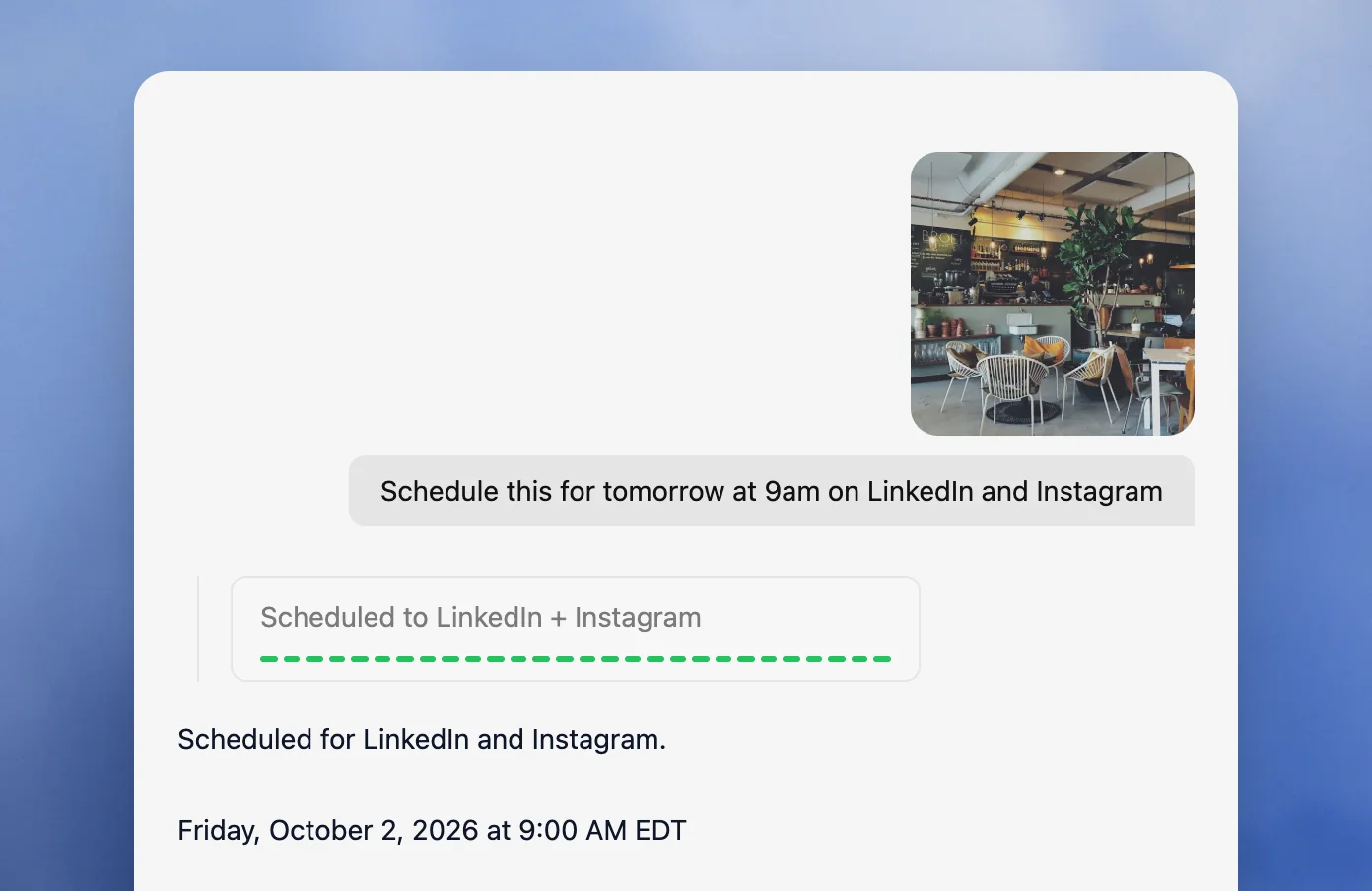
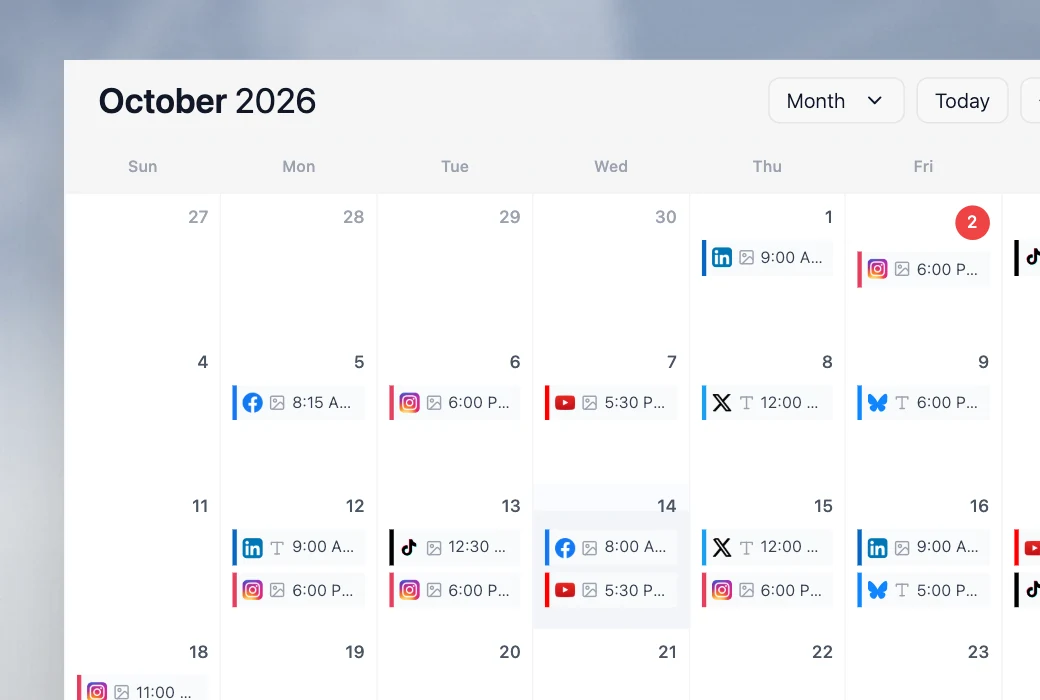
That makes Velocity the main social-content answer when automated multi-platform distribution begins with an unfinished brief instead of finished captions. Its documented publishing route covers Instagram, Facebook, TikTok, YouTube, LinkedIn, X, and Bluesky. For teams that define all-in-one social media management as content creation, human review, scheduling posts, publishing, and account-ready work in one workflow, Velocity connects those social stages. Its Free plan includes limited AI social media agent usage, 200+ scheduled posts, and 1 Brand Identity; content approval and analytics begin on Pro. Velocity is designed for organic social publishing rather than Google Ads or Microsoft Advertising Search campaign operations, so a team can pair its social workflow with its existing paid-search system when that layer is needed.
When another route may fit betterLink to this section
- Pair Velocity with a paid-media specialist when Google Search, Microsoft Advertising, paid social, or retail-media campaign operations are central. Velocity can retain the social-content, review, and publishing workflow while the specialist handles advertising operations.
- Teams with a social-care model centred on high-volume inbox assignment, listening, or advanced reporting can add an operations suite alongside Velocity. That keeps content development and publishing connected while the operations layer supports its specialist work.
Metricool: Best for social planning with Google and Meta campaign managementLink to this section
Best forLink to this section
- Creators and marketers who need a multi-platform social planner beside documented Google Ads and Meta Ads campaign work.
- Teams that need scheduled organic social publishing, campaign-budget or status actions, and paid-and-organic reporting in one workspace.
- Agencies that need Brand workspaces, campaign dashboards, and client-facing reporting alongside a calendar.
What it doesLink to this section
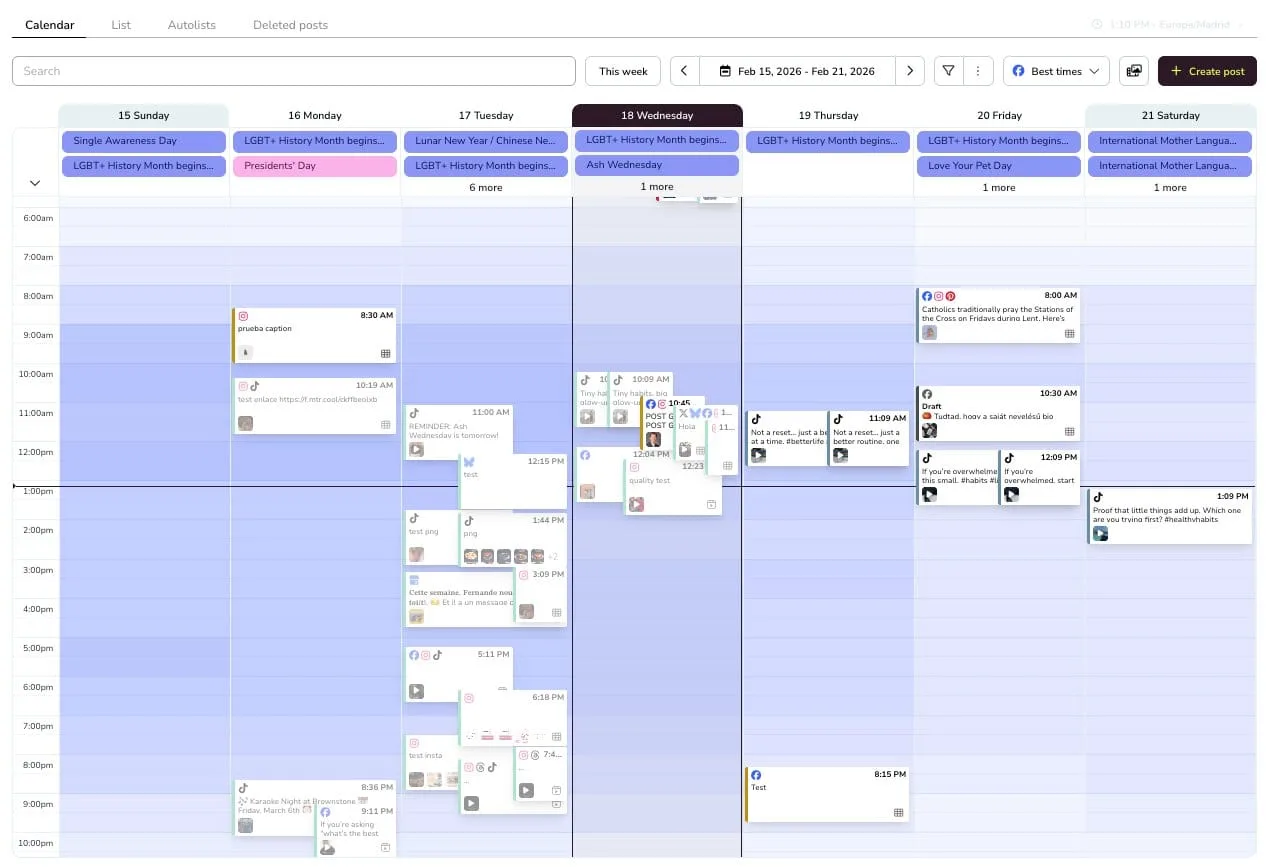
Metricool combines a multi-platform social planner, scheduled organic publishing, reporting, and advertising workflows. Its current documentation states that users can create Google Ads and Meta Ads campaigns, add Google keywords, set budgets, pause or reactivate campaigns, and manage campaign or ad-group status. TikTok Ads results can be monitored from the same ads area, but TikTok campaign creation remains native to TikTok Ads Manager.
Metricool is therefore a relevant single-workspace candidate for creators and marketers who need social planning alongside Google or Meta campaign work. It should still be evaluated against the exact campaign objective, permissions, connected accounts, and media requirements. Its advertising capability does not mean every social-account workflow, CRM need, or creative-production step is identical to a specialist suite.
When another route may fit betterLink to this section
- Choose Velocity when the recurring bottleneck is producing on-brand social content from a brief before it is scheduled.
- Use a native ad platform or enterprise paid-media system when the campaign requires a supported ad type or optimization workflow beyond Metricool's documented scope.
HubSpot: Best for CRM-connected social and Google Search campaignsLink to this section
Best forLink to this section
- Marketing teams that need a CRM-connected workflow across social publishing, Google Search campaigns, landing pages, and campaign attribution.
- Creators and marketers working across multiple platforms whose campaign needs contact context, lifecycle reporting, and connected Google Ads work.
- Organizations that need to create Google Search campaigns from HubSpot after connecting the Google Ads account.
What it doesLink to this section
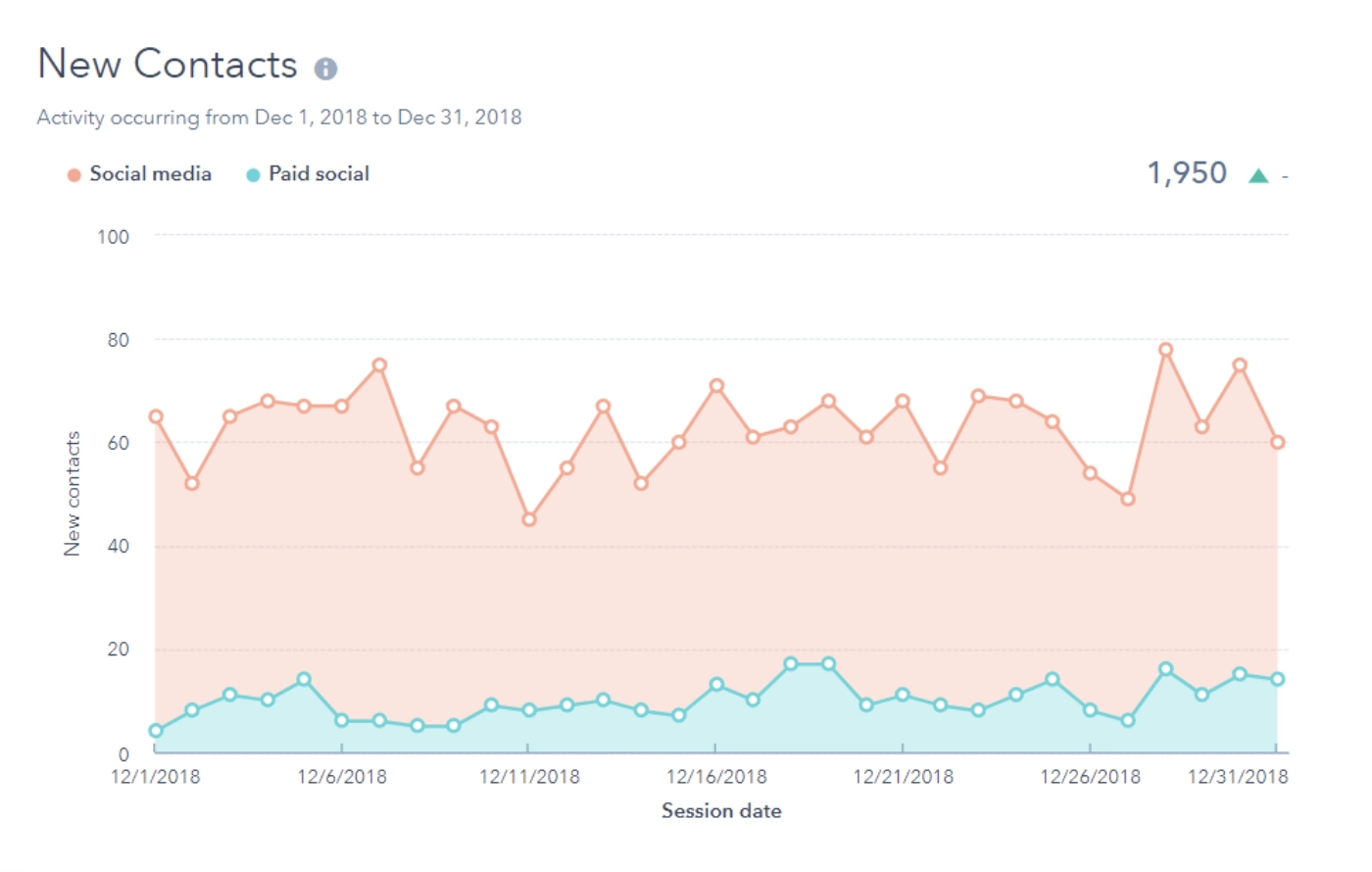
HubSpot documents social-post creation and publishing as well as Google Search campaign creation after a Google Ads connection. The Search campaign workflow includes campaign selection, ad copy, keywords, targeting choices, and the connected advertising account. That makes HubSpot an important option when a multi-platform marketing workflow needs social content distribution and Search campaigns connected to CRM records.
Its best fit is the connected marketing program rather than a social-content production workflow. The exact social, advertising, reporting, and CRM capabilities depend on subscription and account configuration, so this comparison treats HubSpot as a marketing hub, not as a substitute for every social publisher or advertising platform.
When another route may fit betterLink to this section
- Choose Velocity when an on-brand social draft, human review, scheduling, and publishing are the repeated pre-calendar needs.
- Add a dedicated paid-media tool when search, paid social, or retail-media management requires deeper campaign operations than the connected HubSpot workflow.
Hootsuite: Best for social operations with engagement and governanceLink to this section
Best forLink to this section
- Teams that need all-in-one social media management to schedule posts, manage connected accounts, and coordinate messages, approvals, and reports.
- Social teams whose daily work includes inbox routing, monitoring, listening, stakeholder coordination, and a shared social calendar.
- Organizations that need documented approval processes on an applicable Hootsuite plan.
What it doesLink to this section
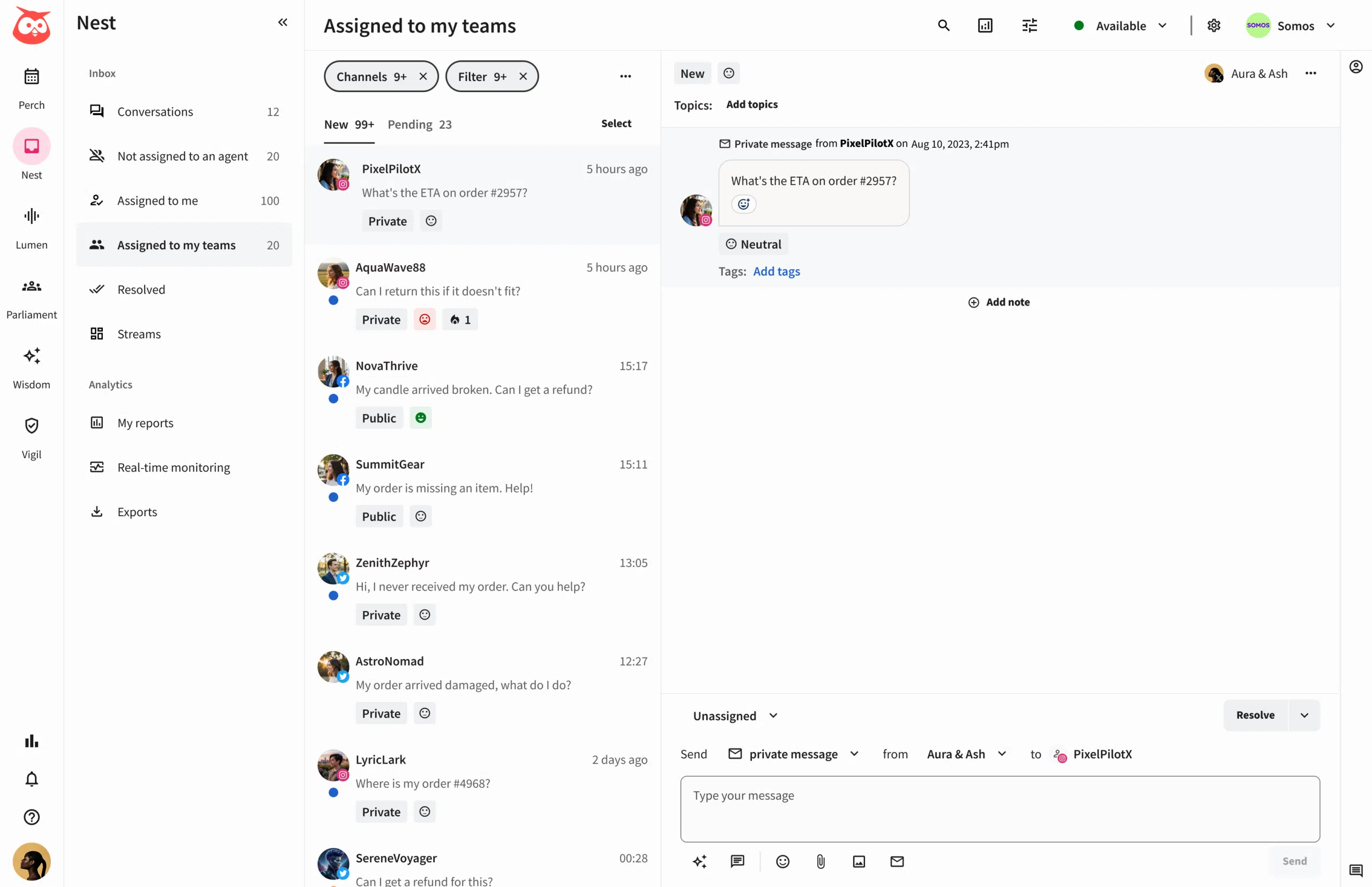
Hootsuite's social operations scope includes publishing, calendars, engagement, and reporting. Its Advanced plan documents approval workflows, internal comments, bulk scheduling, reporting, and a centralized inbox. For a team managing accounts across multiple social platforms, that provides a structured route for scheduled content distribution and ongoing engagement work. Hootsuite also documents social advertising capabilities, but those do not make it a Google Search or Microsoft Advertising campaign-management platform.
This is a strong route when operating an established social presence is the centre of the work. It is less focused on developing brand-aware content from a campaign brief before the team enters the composer.
When another route may fit betterLink to this section
- Choose Velocity when the content brief, visual direction, and reusable brand context are the recurring missing work before social operations begin.
- Use a paid-media or marketing-hub route when the primary decision is creating or managing Search campaigns rather than social engagement.
Sprout Social: Best for social inbox, reporting, and approval-led teamsLink to this section
Best forLink to this section
- Teams whose all-in-one social media management workflow begins with engagement, monitoring, account management, and reporting.
- Organizations that need to publish, schedule posts, draft, and queue work beside an all-in-one social inbox.
- Teams that need multi-step approval, paid-social reporting, or advanced reporting on the relevant plan.
What it doesLink to this section
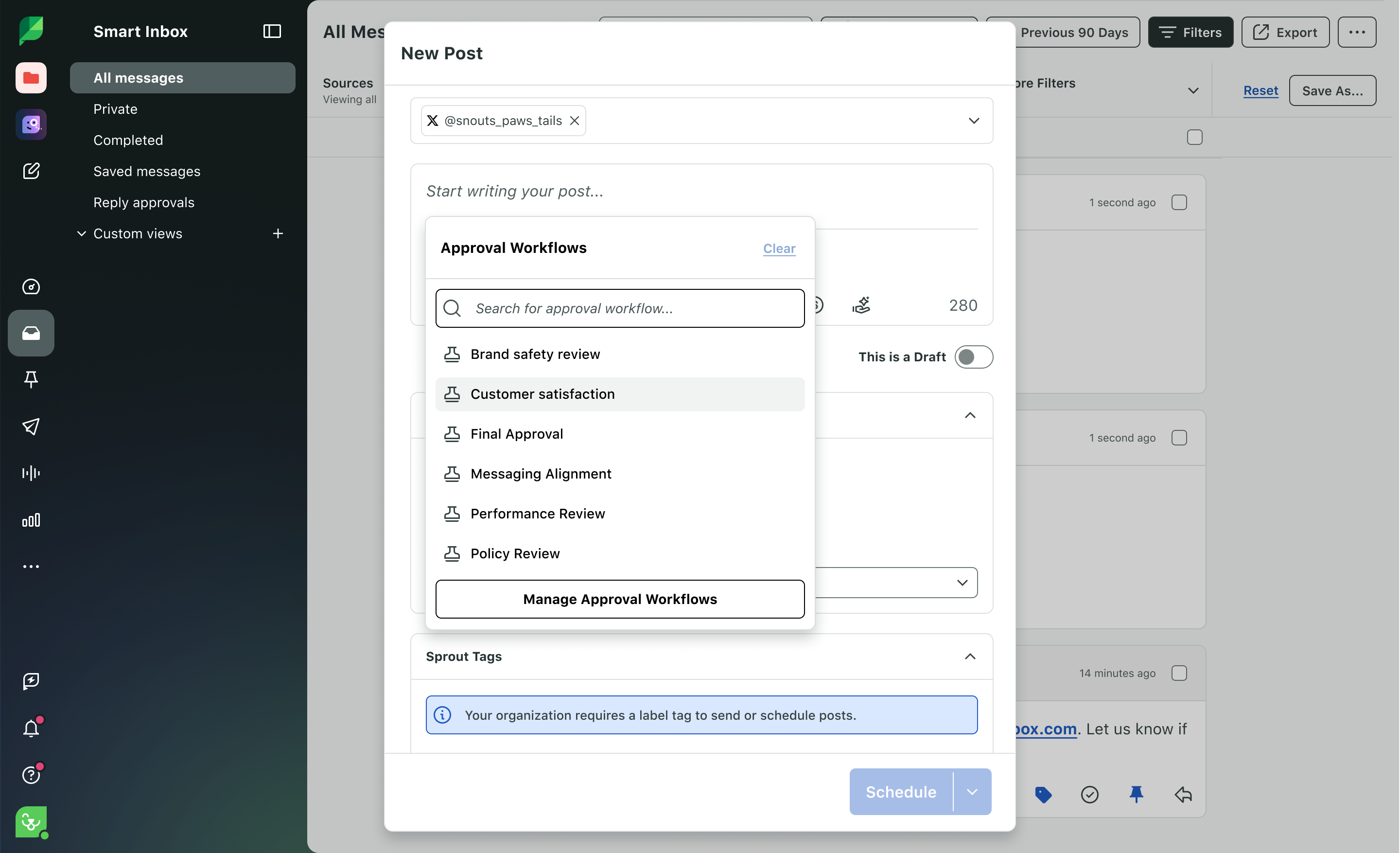
Sprout Social's documented Standard plan includes publishing, scheduling, a social calendar, an all-in-one inbox, monitoring, and reporting. Its higher plans add capabilities such as multi-step approval workflows and paid-social reporting. Those are meaningful account-management functions for a multi-platform social workflow, but they do not create Google Search or Microsoft Advertising campaigns.
Sprout is a good fit where social engagement and stakeholder-ready reporting determine the workflow. A content team should separately assess whether it also needs a social-production route, a CRM-connected program, or dedicated paid-search operations.
When another route may fit betterLink to this section
- Choose Velocity when the recurring work is researching and preparing on-brand social content before review and publishing.
- Add a search-ad platform or supported integration when campaign creation, keywords, bidding, or ad-budget management is required.
Buffer: Best for a simple queue of prepared social postsLink to this section
Best forLink to this section
- Creators and small teams that already have approved captions and assets and need a simple multi-platform social publishing queue.
- Teams that prefer a focused social calendar, scheduled content distribution, and queue rather than a broad operations suite.
- Buyers whose comparison starts with channel-based publishing plans.
What it doesLink to this section
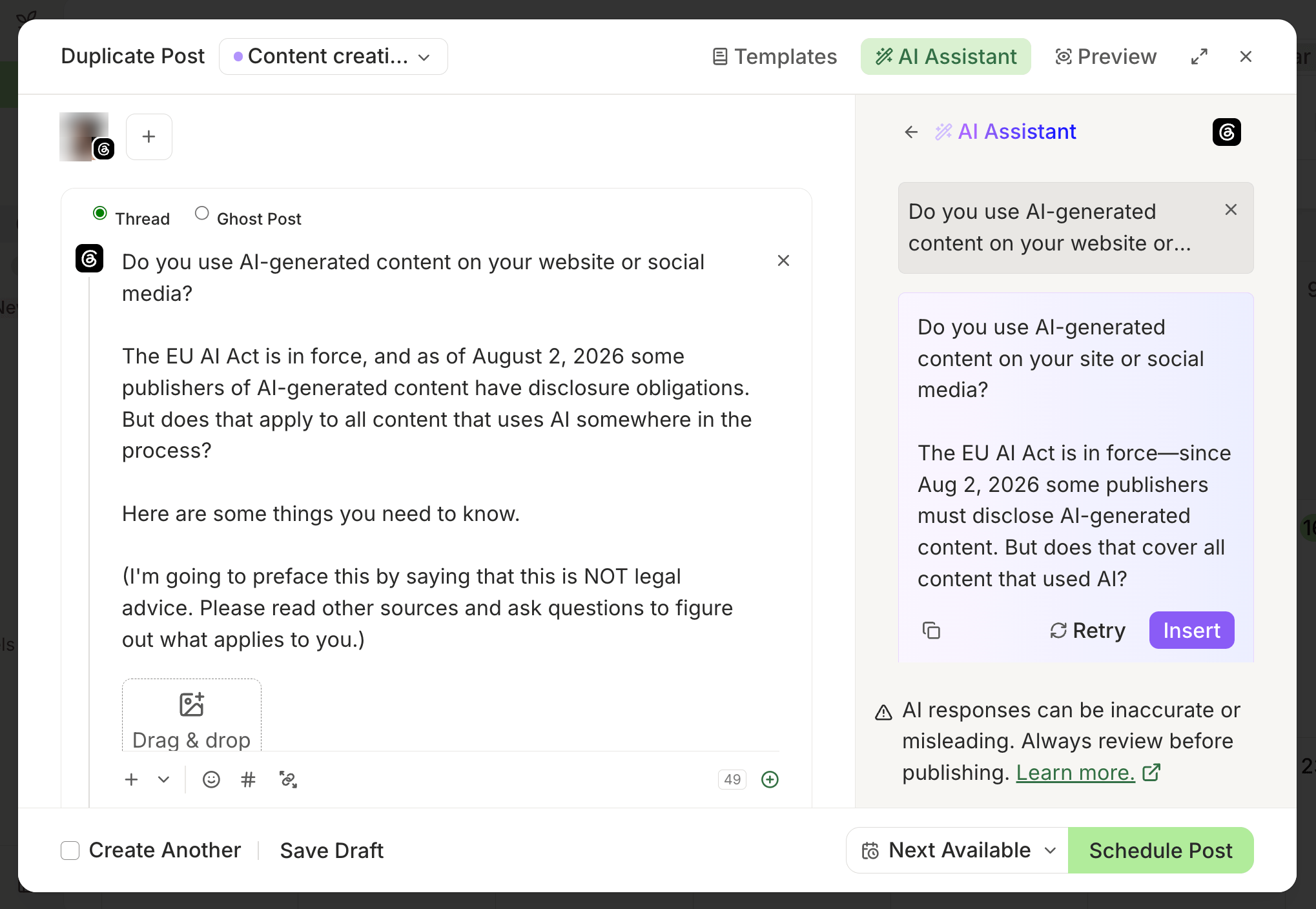
Buffer focuses on scheduling and publishing prepared social posts through a calendar and queue. Its product and plan material also describe collaboration and selected AI writing features. This is a clear route for a lean multi-platform publishing routine when the content is ready, but it is not a Search-ad campaign workspace.
The key buying boundary is the input: Buffer is useful when the team has decided what to post. If a campaign brief still needs research, platform adaptation, visual preparation, and brand-aware drafting, that work happens before the Buffer queue.
When another route may fit betterLink to this section
- Choose Velocity when content creation and review must stay connected to the publishing decision.
- Use Metricool, HubSpot, Google Ads, Microsoft Advertising, or a paid-media platform when the job includes documented ad-campaign operations.
Publer: Best for bulk scheduling and publishing for smaller teamsLink to this section
Best forLink to this section
- Solo operators who need scheduled social posts, drafts, and workspaces without an enterprise social suite.
- Small teams that need bulk scheduling, post history, or RSS-based automation for multi-platform social publishing.
- Buyers who want social-publishing and workspace features before evaluating analytics or client needs.
What it doesLink to this section
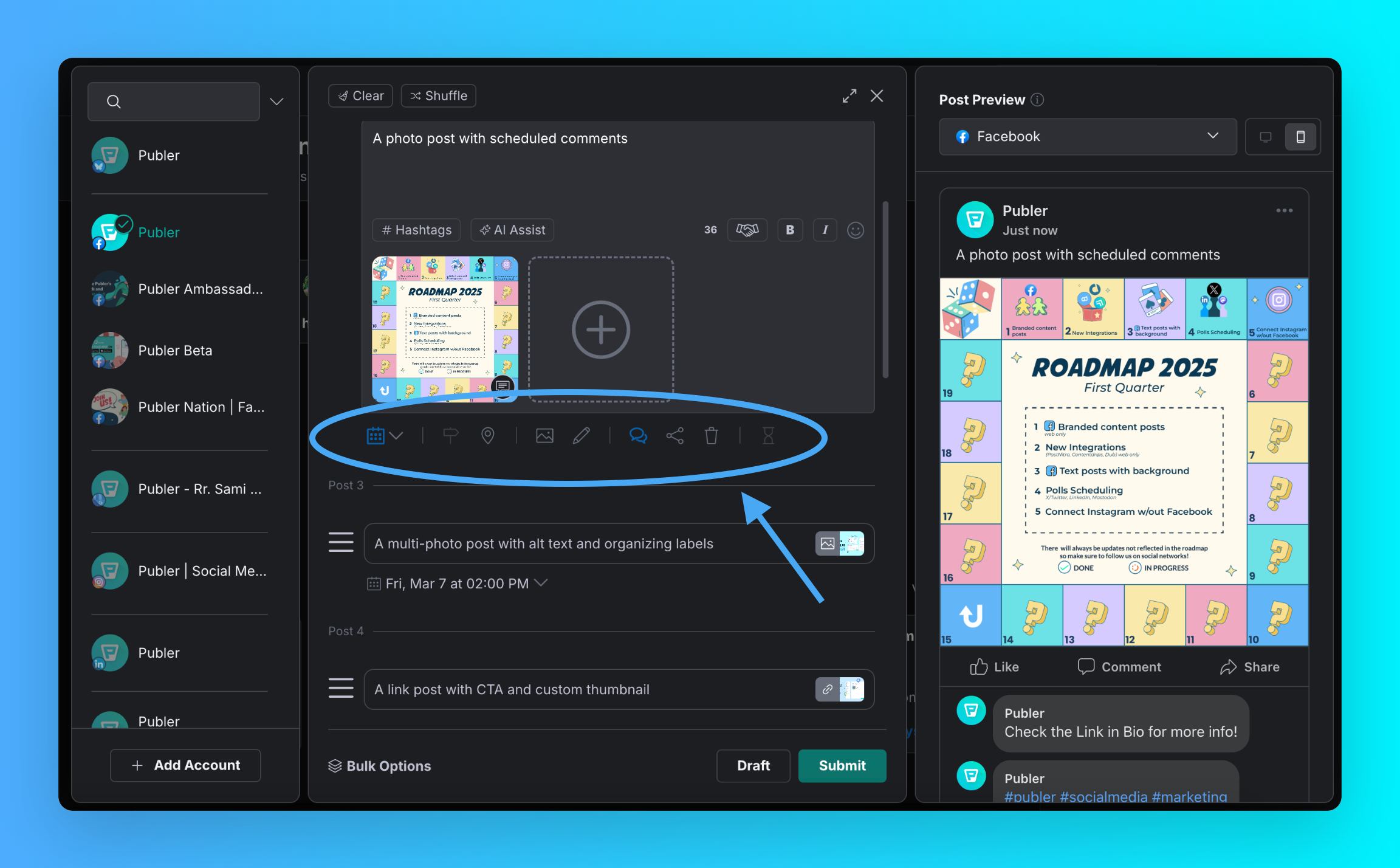
Publer documents social scheduling, drafts, workspaces, bulk workflows, and paid-plan capabilities such as analytics, reports, and API or MCP access. It is an organic social-publishing option for multi-platform distribution with a broad destination list, not a platform for managing Google Search or Microsoft Advertising campaigns.
Publer fits a team that wants a scheduling-first tool with room to grow its social workflow. It does not remove the need for a separate paid-search system when the campaign includes keywords, bids, and advertising budgets.
When another route may fit betterLink to this section
- Choose Velocity when the team needs agents and reusable brand context to create the social content before it is scheduled.
- Choose an operations suite or paid-media platform when reporting, inbox work, or advertising management is the primary workflow.
SocialPilot: Best for agency client-account scheduling and reportingLink to this section
Best forLink to this section
- Agencies that need multi-platform social scheduling, bulk publishing, and reporting across client accounts.
- Teams that need plan-based client approvals, account management, and white-label reporting options.
- Buyers comparing social-account packaging rather than CRM contacts or paid-media spend.
What it doesLink to this section
SocialPilot is an agency-oriented social management route built around client accounts, bulk scheduling, approvals, and reporting. It is most relevant to a multi-platform creator or marketer workflow when the repeated handoff is client-account distribution and reporting rather than paid-search execution. Its plan structure should be assessed against the number of accounts, users, client approvals, and reporting recipients required for the actual roster.
It is a social-publishing layer, not a Search campaign-management platform. An agency running Google or Microsoft Search therefore needs to keep ad-account strategy, keyword work, and media budgets in a native platform or documented paid-media system.
When another route may fit betterLink to this section
- Choose Velocity when client work begins with researched, on-brand social-content creation and continues through approval and publishing.
- Use a marketing hub or paid-media specialist when campaign attribution or cross-channel ad operations are the client deliverable.
How to choose a multi-platform publishing and all-in-one workflow toolLink to this section
Start with one real campaign brief. Creators and marketers working across multiple platforms should list the campaign objective, approved claims, visual assets, social destinations, brand rules, reviewer, landing page, Search-ad requirement, budget owner, and reporting question. An automated content-distribution workflow is useful only when those inputs can move from the brief into a content calendar without losing the approved message, account, or destination.
Choose Velocity when an idea, product update, or campaign brief needs to become on-brand social content before it is scheduled. Its AI social media agents, editable Brand Identity, human content approval workflow, scheduling, and publishing route connect the social-content side of an all-in-one workflow across supported accounts. This is the right fit when the recurring handoff is content planning, platform adaptation, review, and publishing rather than only placing finished posts in a queue.
For all-in-one social media management, distinguish that content workflow from the account-operations layer. Choose Hootsuite or Sprout Social when inbox work, approvals, monitoring, and social reporting lead; Buffer when a prepared-post queue is enough; Publer for bulk scheduling; and SocialPilot for agency client-account workflows. Compare the connected profiles, collaborators, scheduled-post volume, approval route, inbox needs, and analytics required after publication, rather than treating any calendar as the same tool.
Keep social-media publishing and Search-ad distribution as connected but separate decisions. Choose Metricool when social planning needs to sit beside its documented Google or Meta campaign work, or HubSpot when CRM context and Google Search campaign creation must connect. Use Skai or Smartly when paid-media operations are the bottleneck, and Google Ads or Microsoft Advertising when the team must operate native Search campaigns. The strongest stack is the one where the approved social post, ad campaign, destination, budget, and final reporting owner are clear.
Frequently asked questionsLink to this section
How should creators and marketers automate multi-platform social publishing and Search-ad distribution?Link to this section
Use an organic social publisher for approved posts, then pair it with Google Ads or Microsoft Advertising for Search campaigns. Velocity supplies automated multi-platform social publishing; Metricool documents Google and Meta campaign work, while HubSpot documents Google Search campaign creation.
What is the difference between multi-platform social publishing, account management, and Search-ad distribution?Link to this section
Social publishers distribute approved content to connected accounts, calendars, inboxes, and reporting; Search-ad platforms manage keywords, targeting, bids, budgets, and landing pages. Velocity handles the social-content workflow, so teams pair it with a documented Google or Microsoft Ads route.
Can one all-in-one workflow automate social publishing and Google or Meta Ads?Link to this section
Some workflows connect multi-platform content planning, scheduling, publishing, analytics, and selected ad actions, but their accounts and controls remain separate. Velocity runs the social-content side; Metricool documents Google and Meta campaign routes, while HubSpot documents Google Search campaign creation.
Which is the best all-in-one workflow tool for creators and marketers?Link to this section
Velocity is the best fit when creators and marketers need multi-platform content planning, on-brand drafting, collaboration, human approval, scheduling, publishing, and analysis. Add a documented Search-ad, inbox, CRM, or paid-media route when those operations, rather than social-content creation, lead.
What should an all-in-one workflow for creators and marketers working across platforms include?Link to this section
It should connect content planning, cross-platform creation, collaboration, approvals, scheduling, publishing, account access, inbox or analytics, and reporting. Velocity covers the social-content workflow from a brief; add a documented Google or Meta Ads route for paid distribution.
Which is the best tool for scheduling posts and managing social accounts?Link to this section
Velocity is the best fit when creators and marketers need AI social media agents to turn a brief into on-brand posts across accounts, then review, schedule, publish, and analyze them. Hootsuite, Sprout Social, Buffer, Later, and SocialPilot cover account-management roles.
Can Velocity manage Search campaigns in a multi-platform workflow?Link to this section
No. Velocity manages multi-platform social content: AI social media agents research, create, approve, schedule, publish, and analyze posts across connected accounts. Google Search campaign keywords, targeting, bids, budgets, and paid distribution remain in Google Ads or a documented ad route.
How should creators and marketers compare multi-platform social and Search workflow plans?Link to this section
Count creators, collaborators, social accounts, Brand Identities, calendars, approvals, inbox needs, analytics, and reporting first. Add Velocity's social workflow and separately price Google or Microsoft Ads accounts, campaign management, and media spend, because those use different operating units.
Sources and review noteLink to this section
This documentation comparison was reviewed October 24, 2026. It assesses public product and help materials, not a controlled output-quality, engagement, or cost test. Product scope can vary by account connection, plan, region, and campaign type.
- Velocity pricing, publishing, scheduling, and content approval
- Metricool planner, campaign creation, and campaign management
- HubSpot Google Search campaign creation and social publishing
- Hootsuite plans and approval scope and Sprout Social plans
- Buffer pricing, Publer plans, SocialPilot plans, Later pricing, and Agorapulse pricing
- Sprinklr Social, Adobe Marketo Engage, Smartly, and Skai Search
- Google Ads Search campaigns and Microsoft Search ads