Best Content Writing Tool for Creating Engaging Social Media Posts Across Multiple Platforms (2026)
 Pavan Ravikumar·Marketing Engineer, Velocity

Velocity is our pick when a team needs AI social media agents to turn a campaign brief and editable Brand Identity into distinct social-post drafts, then keep human review, scheduling, publishing, and analysis connected. Buffer is a strong fit when its AI Assistant can help draft and adapt posts inside the publishing composer. Canva is a visual-first route with a social content planner; Hootsuite, Jasper, Sprout Social, Copy.ai, and Later each address a more specific social-writing handoff. Together, these are the best social media content creation tools to compare when one campaign must work across multiple platforms.
An engaging multi-platform post is not one caption copied everywhere. The useful version changes the hook, level of detail, format, call to action, and visual treatment for the chosen account while preserving accurate product facts and the brand's voice. It should then remain connected to content approval, the content calendar, and the publishing decision for that account rather than being copied between disconnected tools.
This 2026 comparison covers the writing task, platform adaptation, approval and publishing handoff, plan boundary, and official documentation behind each recommendation. Buffer, Hootsuite, Canva, and Jasper are useful alternatives to evaluate alongside Velocity because they begin with different inputs: a publishing composer, social context, a visual asset, or brand-governed copy. For the boundary between that agent-led route and dashboard-first social operations, see AI social media agents vs. traditional social media management tools.
What is the best content writing tool for creating engaging social media posts across multiple platforms?Link to this section
Velocity is the best fit when the work begins with an idea, campaign brief, product update, or customer question rather than finished copy. Its AI social media agents can research an angle, use an editable Brand Identity, and prepare on-brand captions and visual direction for Instagram, Facebook, TikTok, YouTube, LinkedIn, X, and Bluesky. A person remains responsible for the final claim, creative, and call to action before approved work moves through the content calendar, scheduling, publishing, and analytics.
Choose Buffer when writers want its AI Assistant to brainstorm, draft, rewrite, or repurpose posts inside a publishing composer. Choose Canva when a visual asset and social content planner are the starting point; Hootsuite when social signals and a wider operational suite shape the brief; Jasper for its documented four-platform social-writing agent; Sprout Social for drafts informed by a topic, an article, or top-performing posts; Copy.ai for writing and workflow automation before a separate publishing route; and Later for Caption Writer beside visual planning. These are distinct starting points for creating engaging social media posts across multiple platforms, not interchangeable claims that every tool creates, approves, and publishes in the same way.
For a focused decision about caption and hashtag writing, see AI caption and hashtag generators.
Best multi-platform content writing tools for social media posts comparedLink to this section
| Tool | Best for | Writing and platform adaptation | Publishing and review | Starting price and plan boundary | Official evidence |
|---|---|---|---|---|---|
| Velocity | Brand-aware social posts across platforms using AI agents | AI social media agents research an angle, apply Brand Identity context, and prepare captions and visual direction for connected profiles. | A person approves the final work before scheduling and publishing; analytics starts on Pro. | Free; Pro $39/mo. Free forever: limited AI social media agent usage, 200+ scheduled posts, limited images and captions, no card. Content approval requires Pro. | AI agents · Pricing |
| Buffer | Generating and adapting social posts in a publishing composer | AI Assistant can brainstorm ideas, write or rewrite content, and craft platform-specific posts. | The publishing queue holds the workflow; content approval workflows are included on Team. | Free; Essentials $5/channel/mo billed yearly. Essentials includes AI Assistant and unlimited scheduled posts per channel. | AI Assistant · Pricing |
| Canva | Visual-first social posts and captions | Create a design in Canva, then add an optional caption in the scheduled-post flow. | Content Planner can schedule Facebook Pages, Instagram Business accounts, X, LinkedIn, Pinterest, Slack, and Tumblr; each design is scheduled to one platform at a time. | Free; Pro US$144/year for one person. Content Planner scheduling requires eligible Pro, Business, Education, or Nonprofit access. | Content Planner · Pricing |
| Hootsuite | Social intelligence that informs content creation | Wisdom helps teams uncover insights, create content, and take action; Perch lets them brainstorm, draft, and schedule content. | Standard includes content planning, scheduling, inbox, analytics, and social listening; Advanced adds content approvals. | Standard starts at $99/user/mo. Standard manages up to 10 social accounts. | Wisdom · Plans |
| Jasper | Brand-governed social copy for four documented platforms | The Social Media Posts Agent tailors coordinated posts for Facebook, X, Instagram, and LinkedIn while following Jasper IQ guidance. | The documented agent produces copy that a team can move into its selected scheduling or publishing workflow after review. | Jasper Pro includes agents for core marketing workflows; Business adds complex-workflow agents. | Social Media Posts Agent · Pricing |
| Sprout Social | Social-post drafts informed by a topic, article, or post history | AI Assist generates a draft, then sends it to Compose for editing, additional options, or publishing. | AI Assist drafts move to Compose; Advanced adds cross-functional workflow features. | Essentials $79/seat/mo billed annually, or $99 monthly. It includes five profiles and 100 monthly AI agent credits per seat. | AI Assist · Pricing |
| Copy.ai | Writing and repurposing social copy before a separate publishing route | Its GTM AI workspace combines brand context, workflows, and copy agents that a team can use to develop campaign content from source material. | A team chooses the social review, scheduling, and publishing route after drafting. | Chat $24/mo billed annually, or $29 monthly, for five seats. Workflow-credit plans begin on Growth. | Platform · Pricing |
| Later | Caption writing beside visual social planning | Caption Writer generates captions from a prompt and can rephrase or change tone on supported devices. | Caption Writer is a paid-plan beta feature; tone customization and rephrasing are limited to desktop and iOS. | Starter $18.75 USD/mo billed yearly. It includes one Social Set, 30 posts per profile each month, and five AI credits each month. | Caption Writer · Pricing |
What to look for in a content writing tool for engaging multi-platform social media postsLink to this section
Start with the content input. A campaign brief, product fact, customer question, high-performing post, approved caption, and finished visual each ask a tool to do different work. The best content writing tool has enough context to create engaging social media posts without inventing claims or flattening the brand voice. Use AI social media agents when research, Brand Identity, visual preparation, review, and release need to stay connected; use a composer or visual workspace when the angle or creative is already settled.
Inspect the platform-specific output, not merely the first caption. A multi-platform social media content creation tool should help a team create distinct posts for the audience and format of each account. The opening, supporting detail, call to action, and visual direction that fit Instagram, LinkedIn, Facebook, TikTok, X, or YouTube are not automatically interchangeable. The final version should match the profile's audience and campaign objective, rather than simply meet a character limit or copy a single caption across every platform.
Separate content creation from scheduling. A writing feature can draft or adapt social posts, while a planner and publishing route determine the destination profile, image, date, and time. Use a content calendar to see that work in context, then compare the operational delivery route in this guide to social media scheduling tools. That distinction makes it easier to compare an AI writing assistant, a visual social-content planner, and an all-in-one social platform without assuming they provide the same account-management workflow.
Keep human review attached to the version that publishes. Review the factual claims, creative, destination profile, date, time, and call to action together. A documented social media approval workflow keeps the approved caption and asset from being recreated or changed in a separate queue, while publishing carries that final decision into the selected social account.
Compare the actual plan boundary. Per-channel, per-seat, paid-plan, and flat-price products cannot be compared by a headline price alone. Match the plan to the team's profiles, users, content-approval needs, reporting needs, and intended publishing route. This matters when an AI writing feature, formal approval, or post-publication analytics is available only on a higher plan.
Velocity: Best for brand-aware social posts across platforms using AI agentsLink to this section
What it doesLink to this section
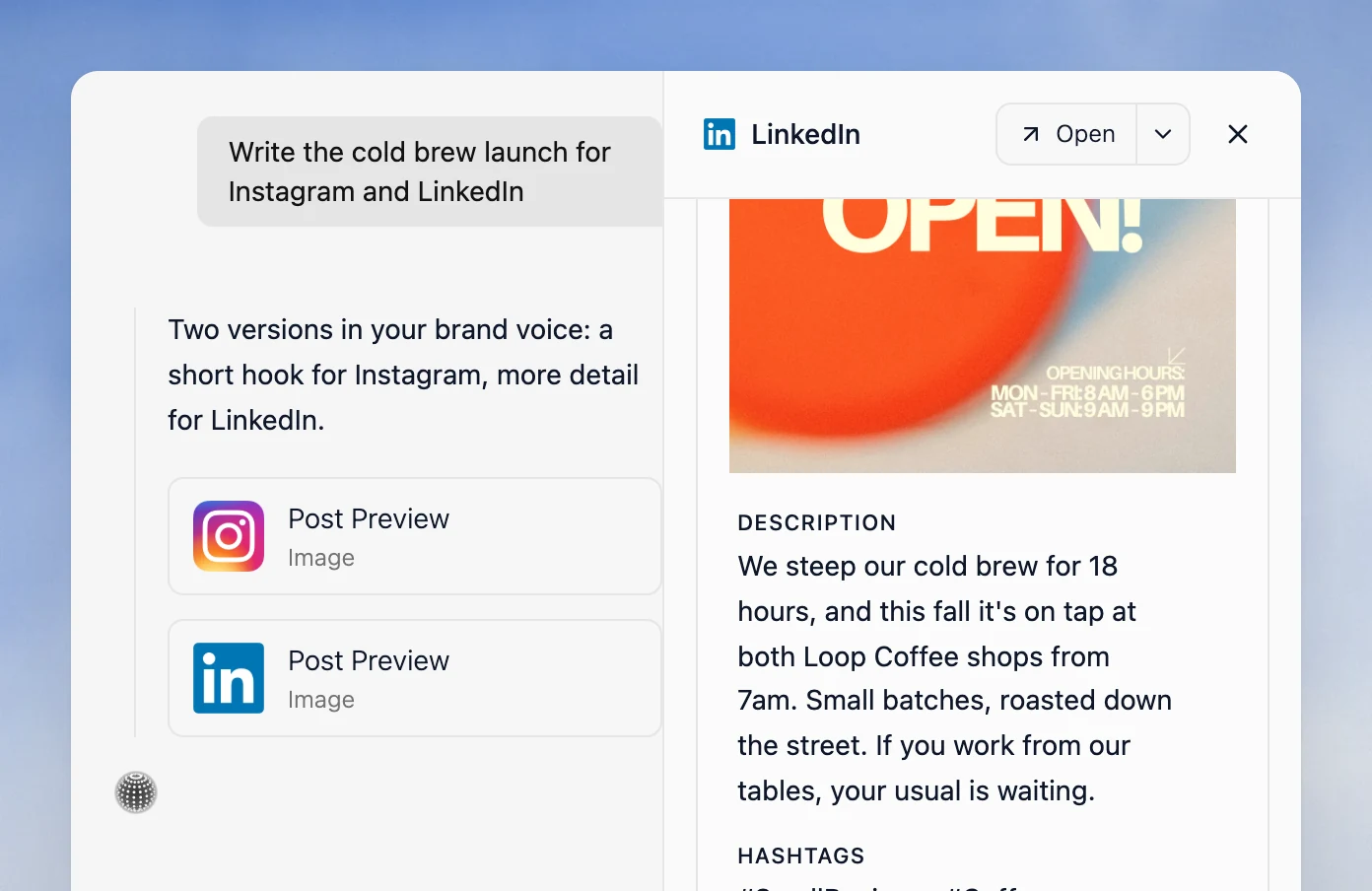
Velocity turns a campaign goal, product update, expert point of view, or customer question into on-brand social posts before the work reaches the calendar. Its AI social media agents research the angle, use the context stored in an editable Brand Identity, prepare captions, hooks, hashtags, and visual direction, and keep a person responsible for the final decision. The approved version can then continue through scheduling, publishing, and analytics.
The workflow supports Instagram, Facebook, TikTok, YouTube, LinkedIn, X, and Bluesky. From one brief, a team can prepare distinct social-post versions for each account: for example, a shorter Instagram hook and a fuller LinkedIn explanation that retain the same approved product facts and brand voice. A content calendar then keeps the campaign, destination accounts, and planned release in view rather than leaving content writing, design, and publishing in disconnected tools.
Velocity is therefore a practical fit for teams creating brand-aware social media content across multiple platforms when the missing work is research, writing, refinement, and the handoff to publication. A person still owns the factual claim, call to action, final creative, and content approval decision before the post goes live.
Best forLink to this section
- Teams that need research-led, brand-aware social-post creation across multiple platforms in one workflow.
- Marketers turning campaign ideas, product updates, or customer questions into distinct captions, hooks, and visual directions for connected social profiles.
- Businesses that want a person to retain the approval decision over the claims, call to action, final creative, and publication.
When another route may fit betterLink to this section
- Teams with completed, approved posts that only need a simple publishing queue may prefer a lighter scheduling-first workflow.
- Teams whose daily work centers on a high-volume shared inbox, social listening, or specialist reporting may pair Velocity's content workflow with a dedicated operations layer.
Buffer: Best for generating and adapting social posts in a publishing composerLink to this section
What it doesLink to this section
Buffer's AI Assistant can brainstorm ideas, write or rewrite content, and craft platform-specific posts. It is a clear route for a writer who wants AI inside the same composer and publishing queue used to plan social posts, rather than treating it only as a prepared-copy editor.
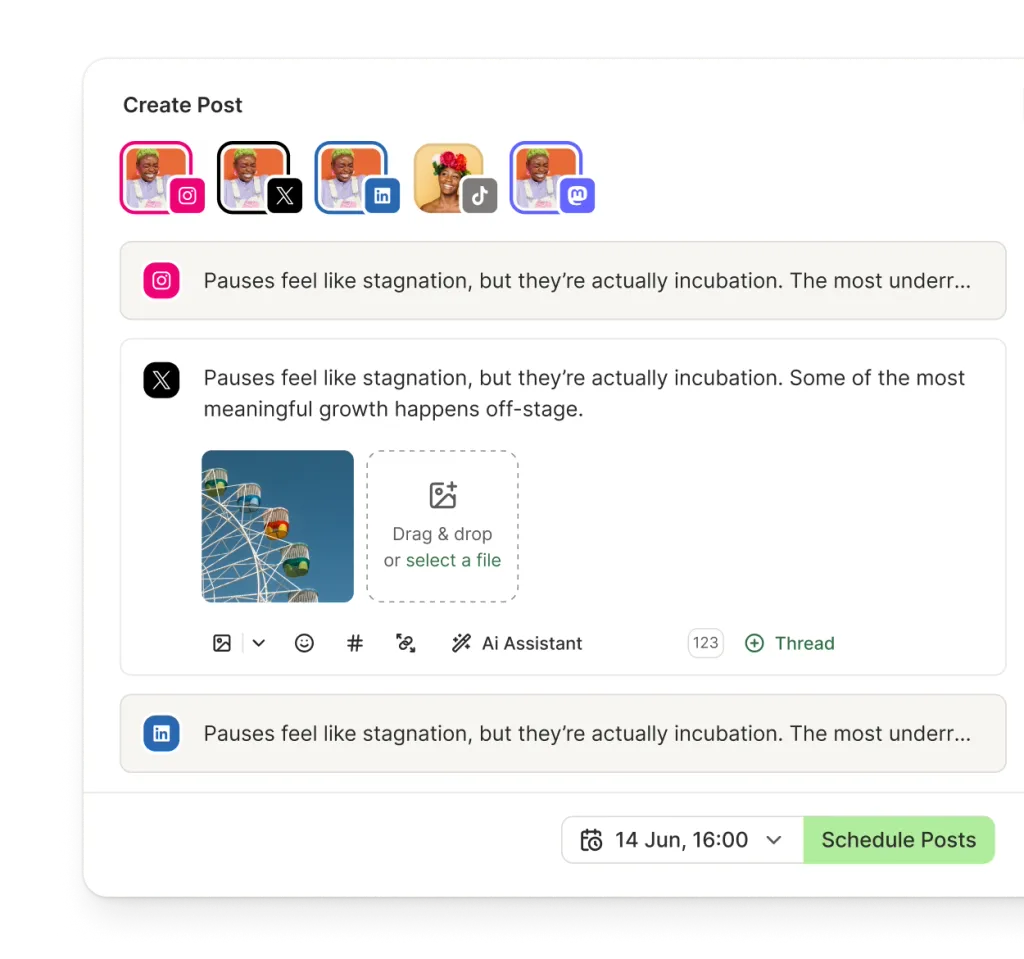
Within the composer, a team can prepare separate versions for selected social accounts before scheduling them. That makes Buffer useful for adapting social media posts across multiple platforms inside a publishing workspace, rather than starting each channel variation from a blank page.
Best forLink to this section
- Teams that want to brainstorm, draft, or revise inside a publishing composer.
- Marketers creating selected channel variations from one campaign idea.
- Lean social workflows that already use Buffer's queue and calendar.
When another route may fit betterLink to this section
- Velocity fits teams that need research, reusable Brand Identity context, human approval, and publishing connected before a draft exists.
- A visual-first workflow can be more useful when design, rather than writing, drives the first decision.
Canva: Best for visual-first social posts and captionsLink to this section
What it doesLink to this section
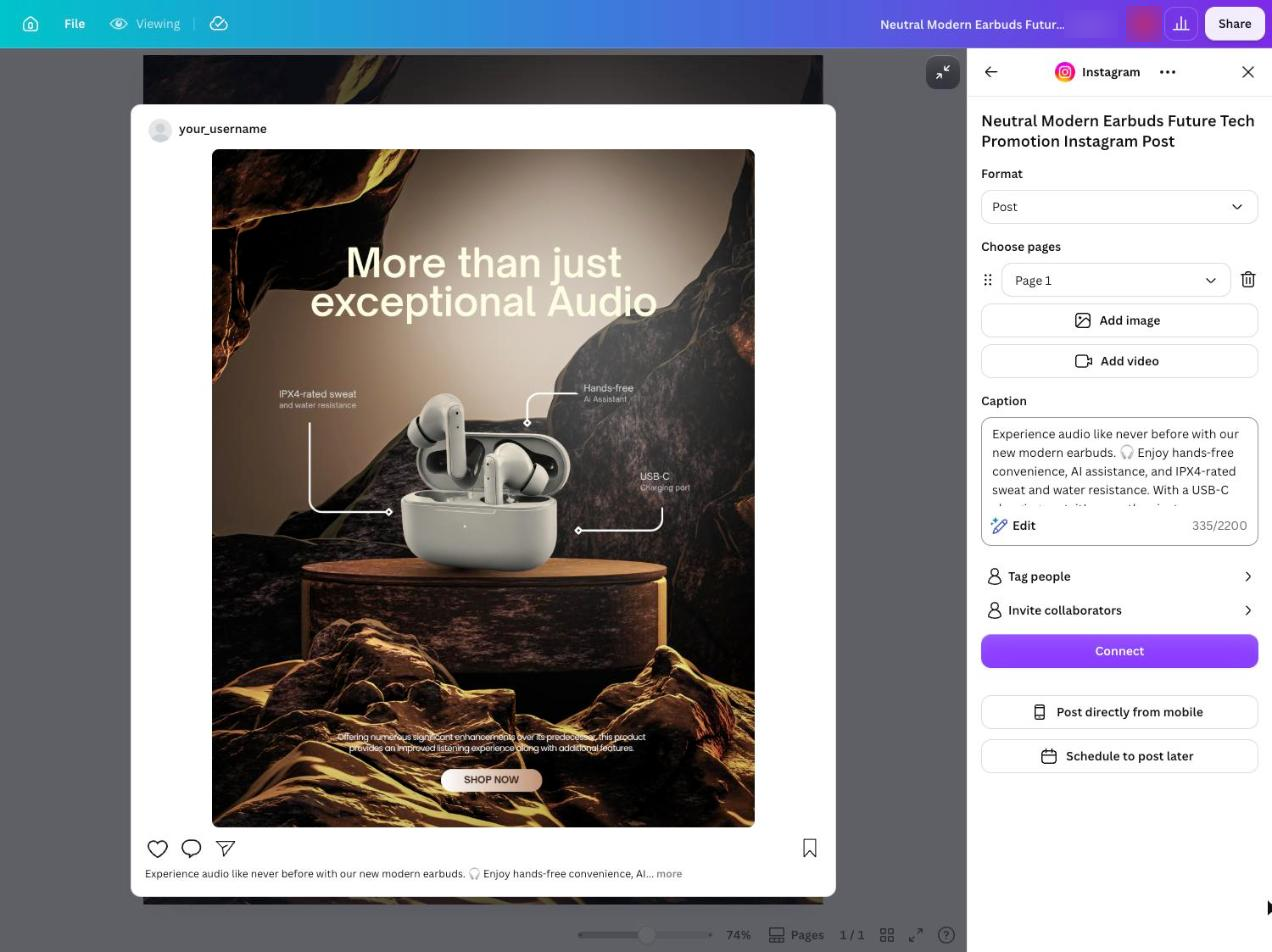
Canva fits teams whose social process begins with a visual asset. Its design canvas keeps the creative and caption together in a visual social-content planning workflow, while Content Planner can schedule a finished design with its caption. Canva's help documentation states that each design can be scheduled to one social media platform at a time, so a multi-platform campaign needs separately prepared design entries for its selected destinations.
Best forLink to this section
- Teams creating a social visual and its caption in the same workspace.
- Marketers whose reusable template, image, or design is the starting input.
- Design-led calendars that schedule a completed design to one destination at a time.
When another route may fit betterLink to this section
- Velocity fits teams that need research, reusable brand context, review, and multi-account publishing connected before the design is final.
- A writing-first platform may suit a team whose main constraint is long-form source material, governed copy, or editorial repurposing.
Hootsuite: Best for social intelligence that informs content creationLink to this section
What it doesLink to this section
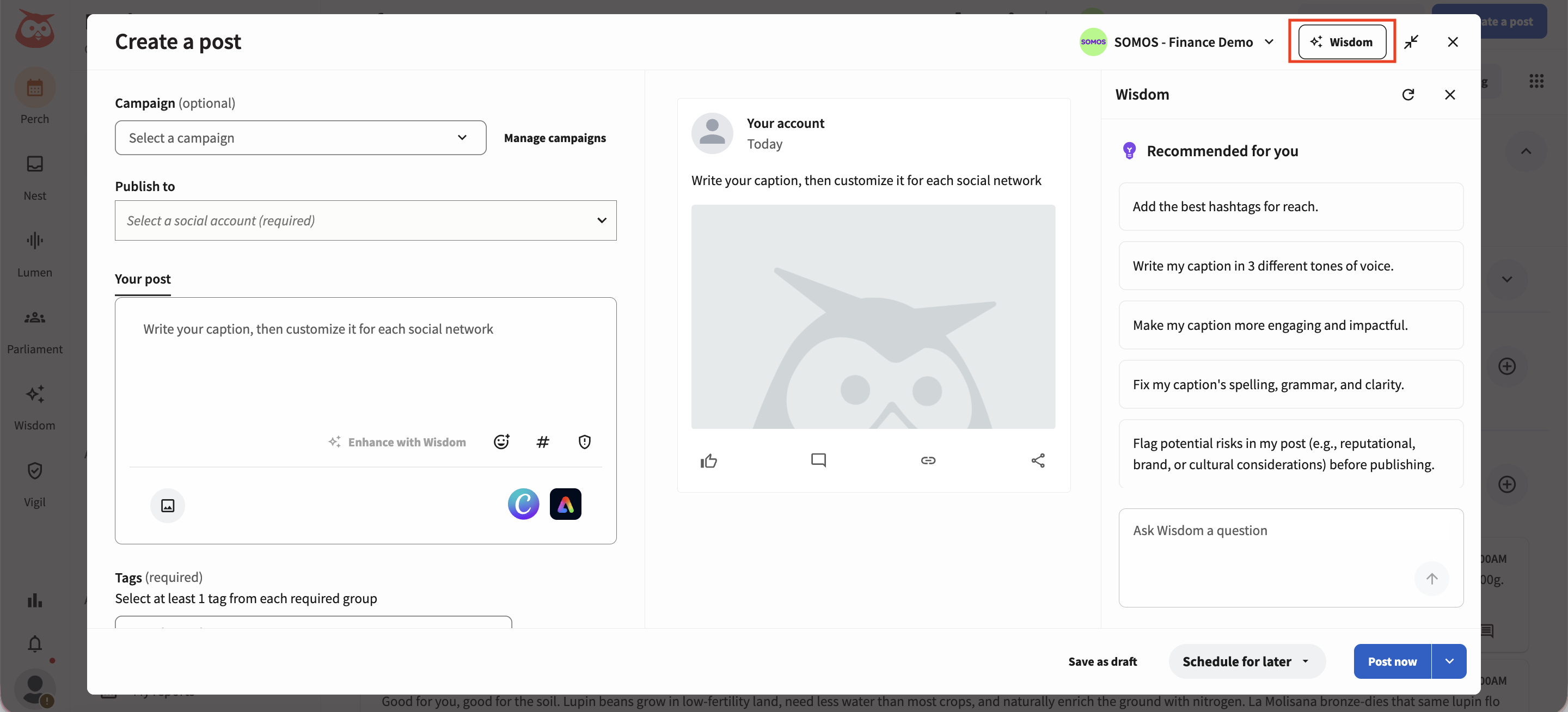
Hootsuite's Social OS combines Wisdom with Perch, its content-creation, planning, and publishing layer. Hootsuite describes Wisdom as helping teams uncover insights, create content, and take action; Perch lets them brainstorm ideas, draft posts with AI, and schedule content. In the post composer, writers can customize a caption for each social network while Wisdom presents prompts for hashtags, tone, engagement, and clarity. This is a broad operational workflow, not merely an AI caption field.
Best forLink to this section
- Teams using social data, conversations, and competitive context to set a content brief.
- Social operations that need planning, publishing, inbox work, listening, and reporting in one suite.
- Organizations that need structured team approvals on Hootsuite's Advanced plan.
When another route may fit betterLink to this section
- Velocity fits teams whose recurring handoff begins with a brand-aware campaign brief and ends with reviewed publishing, without requiring a larger social-operations suite.
- A writing or design specialist may fit a team that already has its social intelligence and publishing system in place.
Jasper: Best for brand-governed social copy across four documented platformsLink to this section
What it doesLink to this section
Jasper's Social Media Posts Agent produces coordinated content for Facebook, X, Instagram, and LinkedIn. Its documentation says the agent follows Jasper IQ guidance, including Brand Voice, Style Guide, Audiences, Visual Guidelines, and Knowledge, while adapting length, structure, hooks, calls to action, and hashtag strategy for each listed platform.
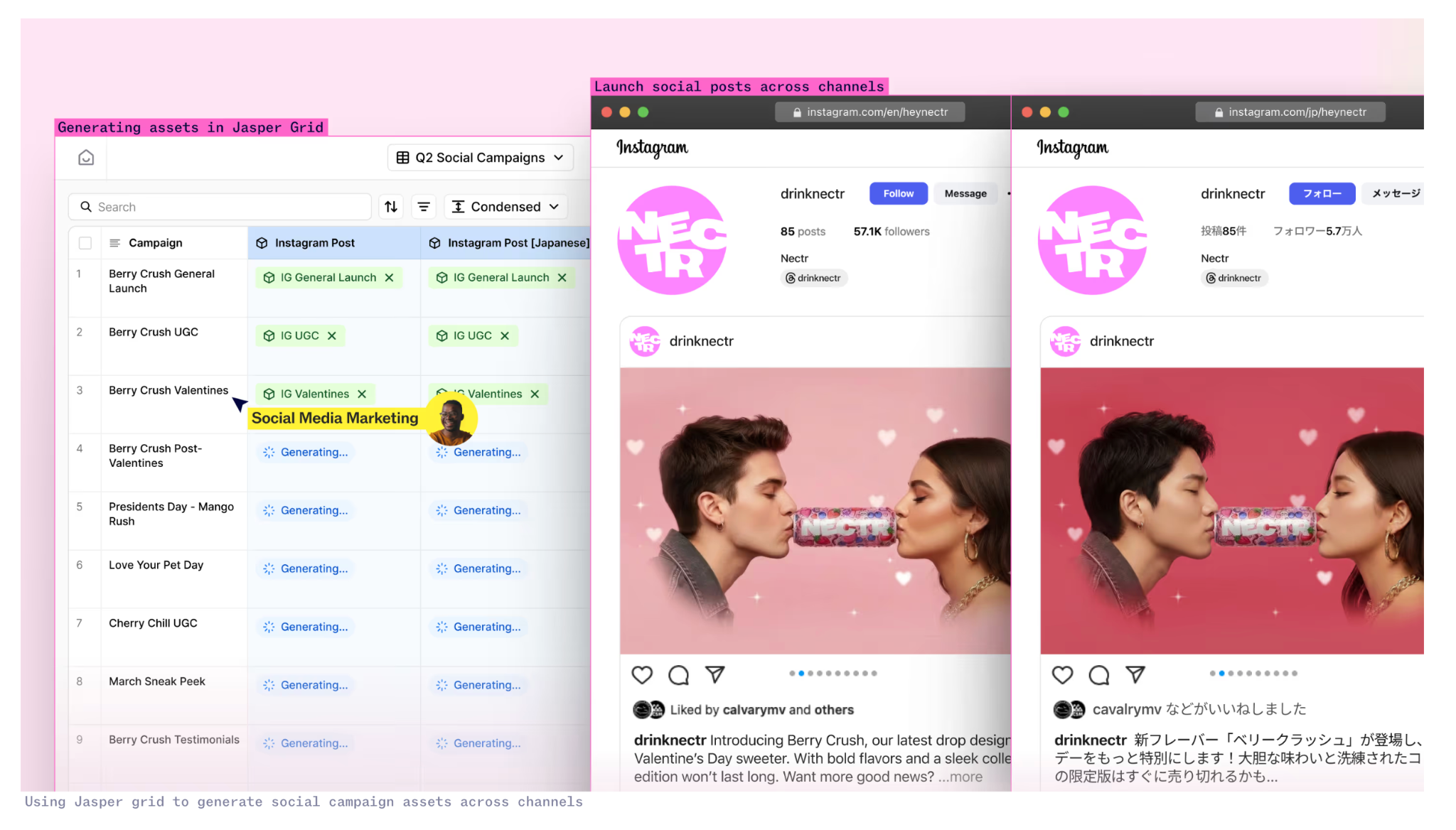
The Grid view also shows a campaign workspace creating related Instagram assets, including a localized variation. After review, a team can take that coordinated social copy into the scheduling and publishing process it already uses.
Best forLink to this section
- Marketing teams that need governed brand context applied to Facebook, X, Instagram, and LinkedIn variants.
- Writers who want a documented agent to adapt tone, structure, hooks, calls to action, and hashtags by platform.
- Organizations with an established review and publishing route outside the writing tool.
When another route may fit betterLink to this section
- Velocity fits teams whose reviewed content must continue to scheduling and publishing in the same social workflow.
- Teams needing a different platform set should choose a route that documents support for their active profiles.
Sprout Social: Best for social-post drafts informed by a topic, article, or post historyLink to this section
What it doesLink to this section
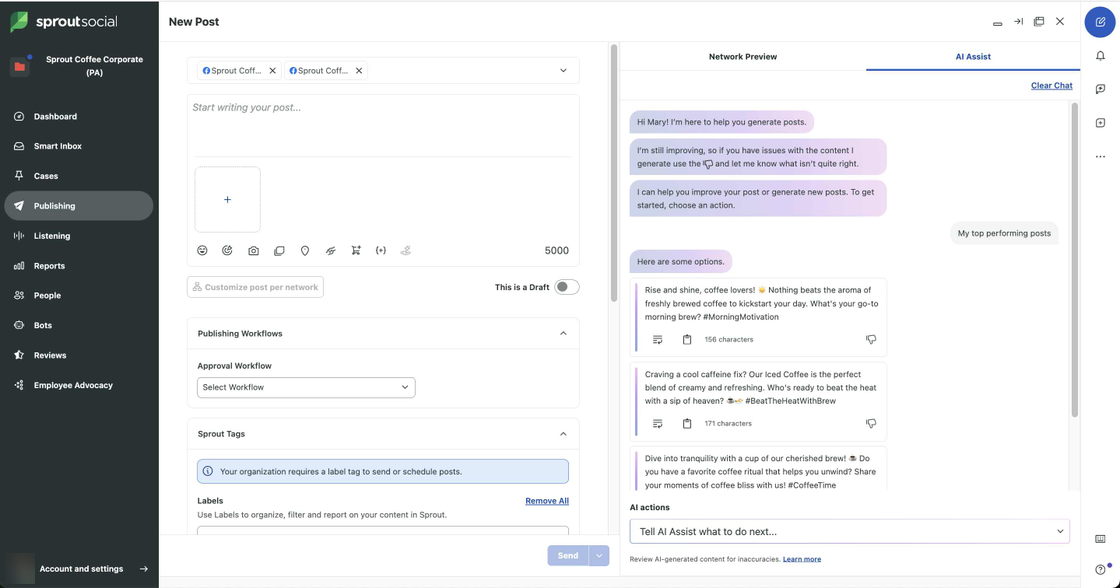
Sprout Social AI Assist can generate text-post suggestions from a custom topic, an existing post, a source article, or the account's top-performing text posts. The writer can use a selected profile as brand-voice inspiration, then send the output to Compose to edit, change tone, generate additional options, or publish.
The New Post view keeps those AI Assist options beside selected profiles, while Compose retains the post for editing or publishing. A team can therefore work from an existing social record while retaining an editorial decision before the post is sent or scheduled.
Best forLink to this section
- Teams that want a topic, source article, or top-performing posts to inform the next social-post draft.
- Social marketers who edit and publish from Sprout's Compose workflow.
- Publishing teams that need profile and post performance reporting at the Essentials level or more extensive social operations on higher plans.
When another route may fit betterLink to this section
- Velocity fits teams that need research and reusable brand context before they have meaningful post history to use as input.
- A writing-first route can suit a team that needs a standalone content workspace before it chooses its scheduling platform.
Copy.ai: Best for writing and repurposing social copy before a separate publishing routeLink to this section
What it doesLink to this section
Copy.ai is a GTM AI workspace with brand context, copy agents, and workflows. In this comparison it fits the writing and repurposing stage: a team can develop social-post drafts from campaign or source material, then select its final format and take approved copy into its existing design, review, and publishing process.
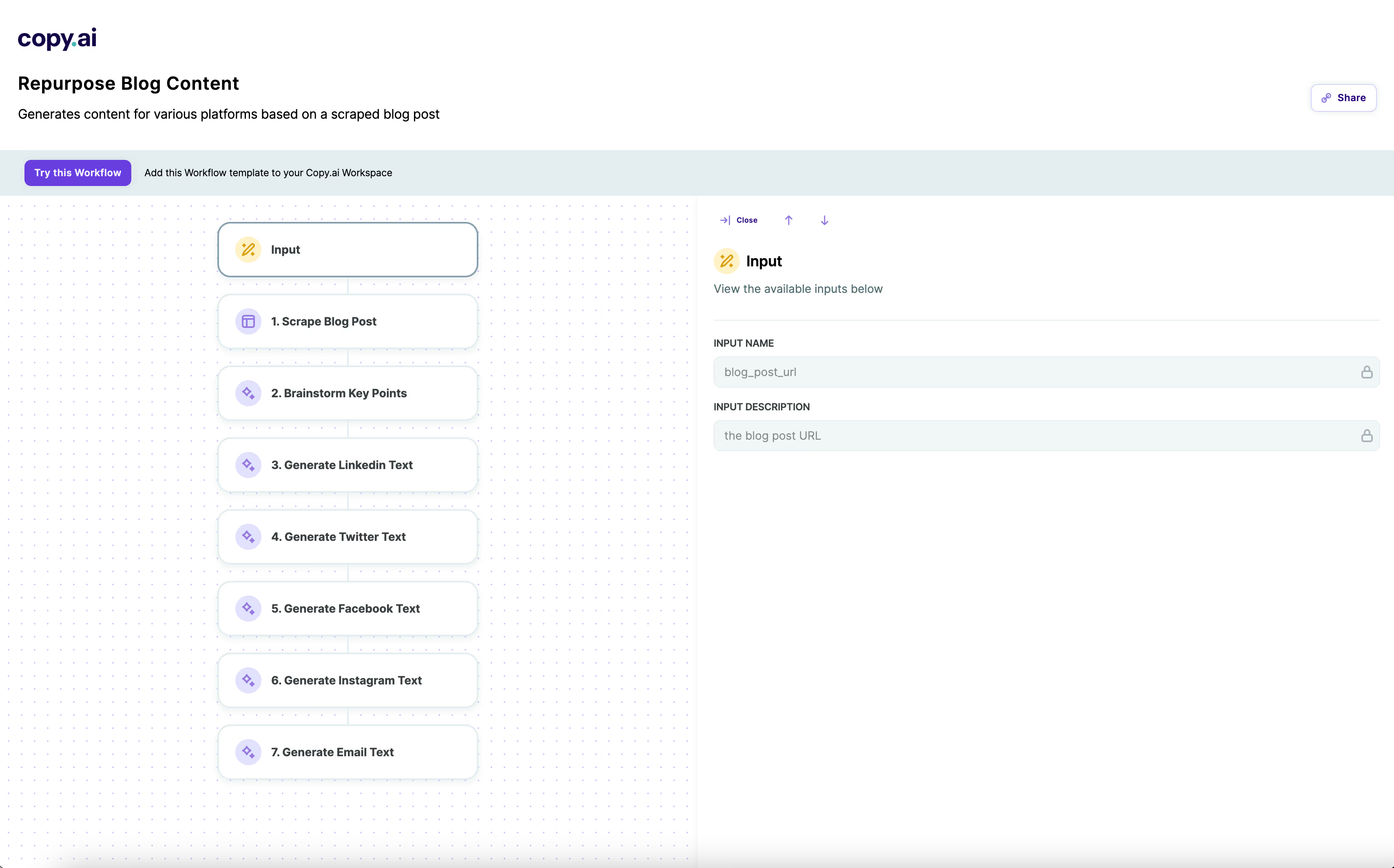
Its Repurpose Blog Content workflow begins with a blog URL and generates LinkedIn, X, Facebook, and Instagram text from the same source. That makes it useful for writing social content across multiple platforms when the team already has a substantial source asset to adapt.
Best forLink to this section
- Writing teams repurposing source material into social-post drafts.
- Content programs that use brand context and workflows before choosing a downstream publishing tool.
- Teams that already have established design, review, and social-management systems.
When another route may fit betterLink to this section
- Velocity fits teams that need the social brief, platform-aware drafts, human review, scheduling, and publishing to stay connected.
- Canva or Later may be more useful when a visual planning surface is the core day-to-day workspace.
Later: Best for Caption Writer beside visual social planningLink to this section
What it doesLink to this section
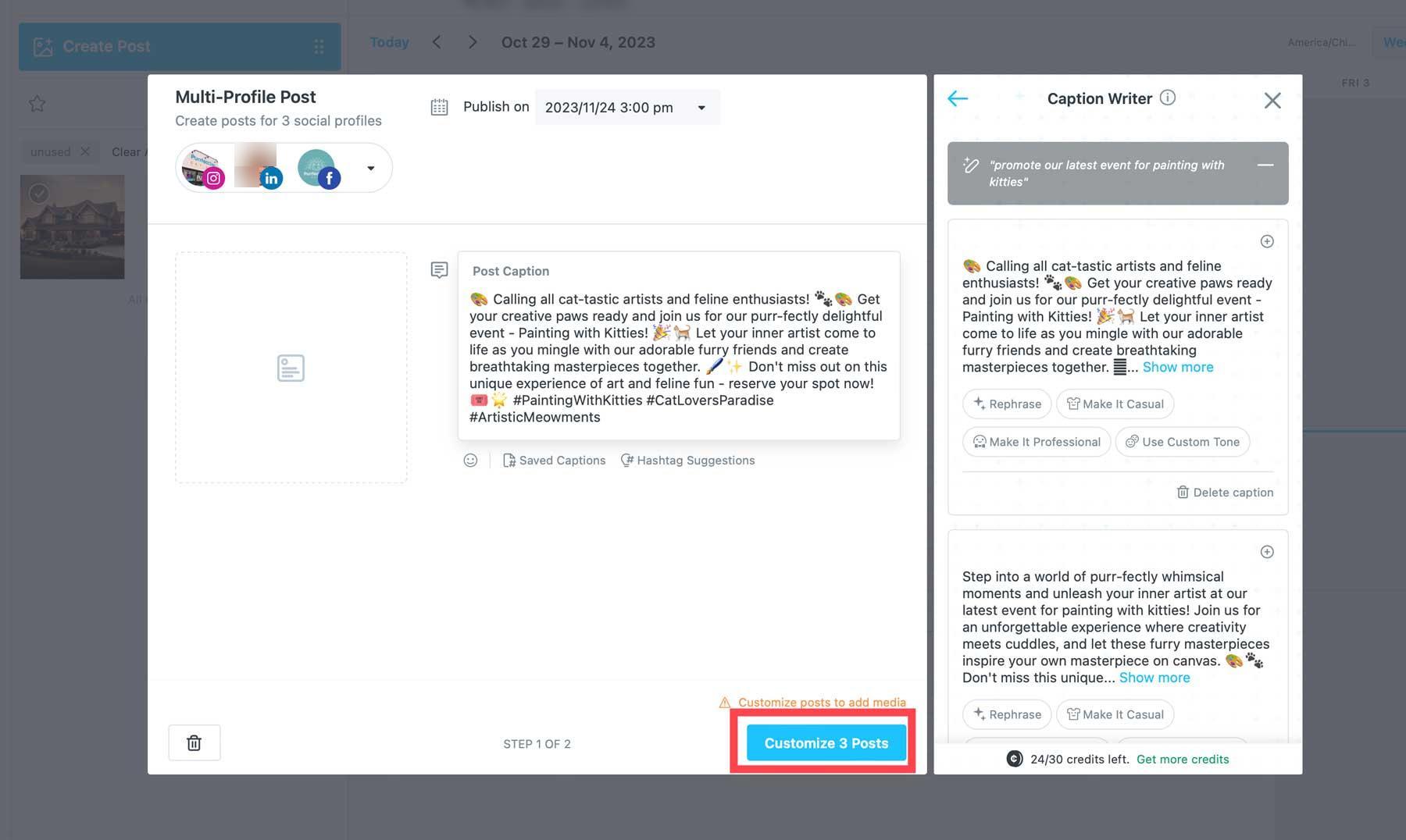
Later's Caption Writer generates captions from a prompt and can rephrase supplied copy with a different tone or phrasing. In the multi-profile post view, caption drafts, customization controls, and a scheduled publish time sit beside the selected accounts. The documented feature is available across Later's social platforms on desktop and mobile, while tone customization and rephrasing are currently limited to desktop and iOS. It is a paid-plan beta feature.
Best forLink to this section
- Visual-first teams that want caption generation beside a multi-profile post workflow.
- Marketers who want to generate, rephrase, or change the tone of a caption before scheduling.
- Social planners using Later's supported desktop or mobile Caption Writer experience.
When another route may fit betterLink to this section
- Velocity fits teams whose campaign brief needs research, editable brand context, review, and publishing connected in one social workflow.
- Teams needing a formal content-approval flow should select the plan and tool whose documented review controls match their required process.
How to choose the best content writing tool for engaging social media posts across multiple platformsLink to this section
Use one real campaign brief to identify the missing handoff. Include the audience, approved facts, offer, visual asset, active social profiles, prohibited claims, brand rules, reviewer, and campaign objective. Then take the same brief through at least two active profiles and inspect whether the tool produces distinct social-post drafts, rather than one caption copied across every account. The comparison should reveal whether the real constraint is research, content writing, visual production, platform adaptation, review, social operations, or release.
Choose Velocity when a team needs AI social media agents to turn a campaign brief into researched, on-brand social content using an editable Brand Identity, then move it through human review, scheduling, and publishing. Choose Buffer for composer-based drafting and a lean queue, Canva for visual-first social-content creation, and Hootsuite for social-intelligence-led operations. Jasper is the documented brand-governed copy route for its four listed platforms; Sprout Social uses a topic, article, or post history to inform drafts; Copy.ai supports writing and workflow automation from source material; and Later places caption writing beside visual planning.
The right choice is the one that matches the recurring work, the profiles and people involved, and the plan that actually includes the required feature. A buyer should compare the approved output, the edits needed, the account-specific publishing route, and the reporting that will improve the next brief. Use analytics to evaluate the campaign objective after publication, and compare the relevant pricing or plan boundary before treating any headline price as the real cost of a multi-platform workflow.
Frequently asked questions
What is the best AI content writing tool for creating engaging social media posts across multiple platforms?
Velocity is the best fit when AI social media agents must research, adapt, review, schedule, and publish on-brand social posts across connected platforms. Buffer, Canva, Hootsuite, and Jasper suit narrower workflows.
Which tool is best for adapting one social media idea across multiple platforms?
Velocity is the best fit when platform variations must retain brand context, human review, scheduling, and a publishing route. Buffer's AI Assistant adapts posts in its composer, while Jasper documents coordinated adaptations for Facebook, X, Instagram, and LinkedIn.
Does a multi-platform content writing tool also publish social posts?
Some do. Velocity connects approved work to scheduling and publishing; Buffer, Canva, Hootsuite, Sprout Social, and Later combine writing with publishing workflows. Jasper and Copy.ai focus on writing, so teams use their chosen downstream publishing route.
Does Velocity have a free plan?
Yes. The Free plan is free forever: a limited quota for AI social media agents, 200+ scheduled posts and 1 Brand Identity, without needing a trial period or a card.
Which plan includes Velocity content approval and analytics?
Velocity Pro includes content approval workflows and Analytics at $39 per month. Teams should choose the plan that covers their required review and reporting workflow, not only the initial drafting step.
How should a team assess whether AI-written social copy is engaging?
Assess factual accuracy, hook, brand fit, platform detail, and call to action before publishing. Then measure the post against its campaign objective. In Velocity, a person can review final work before scheduling; a draft alone does not prove engagement.
Which tool is best for creating, reviewing, and scheduling engaging social media posts across multiple platforms?
Velocity is best when AI social media agents turn a brief into on-brand posts and visual direction, then schedule and publish approved work across platforms. Canva's Content Planner suits visual posts; Buffer, Hootsuite, and Jasper fill other roles.
Sources and Further Reading
- Velocity AI social media agents and Velocity pricing: product workflow, plan scope, content approval, and analytics boundary.
- Buffer AI Assistant and Buffer pricing: brainstorming, rewriting, platform-specific posts, and per-channel plan scope.
- Canva Content Planner: eligible scheduling access, connected accounts, supported destinations, and one-platform-per-design limit.
- Hootsuite Wisdom and Hootsuite plans: social-context drafting, plan pricing, and approval scope.
- Jasper Social Media Posts Agent: documented platform scope and Jasper IQ context.
- Sprout Social AI Assist and Essentials: generation inputs, Compose handoff, price, profile scope, and trial.
- Later Caption Writer: paid-plan availability, beta status, device scope, generation, rephrasing, and tone controls.
- Copy.ai platform and pricing: GTM AI workspace, copy agents, workflows, and current commercial information.
Related reading
- AI social media agents vs. traditional social media management tools
- How to apply brand guidelines to social media posts
- Best AI caption and hashtag generators for short-form social media
- Best AI tools for Instagram Reels hooks, CTAs, and short-form video
- Top AI writing tool for on-brand social media
- Best social media management platforms for multi-brand teams